

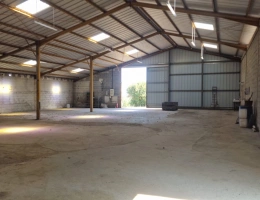
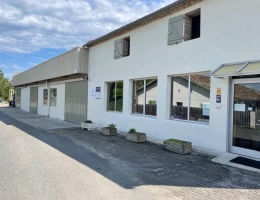
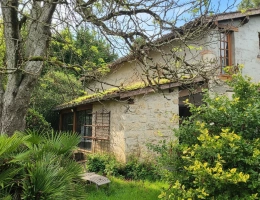
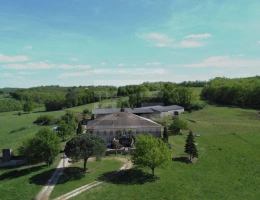
Few departments tie fruit and vegetables together as closely: buying a market garden for sale in Tarn-et-Garonne means entering a recognised production basin organised around the Garonne plain and the confluence with the Tarn, where covered cropping, irrigated field production and nurseries sit side by side. The holdings brought together on this page are passed to us by growers preparing to step back, by rural land specialists and by notaries in Montauban and Moissac; they state the irrigable area, the growing and packing equipment and the contracts in force. Our national record of market gardens and nurseries for sale lets you see the wider picture.
To the listings we add what is usually missing when a decision has to be made: what land is worth on the plain and on the limestone causses, the districts where units come free, the condition of a greenhouse stock and a packhouse, and the controls that apply in the fruit and vegetable trade. The white paper « Créer une exploitation agricole » (in French) supports new entrants, from legal status to the funding plan.
Land value drives much of the asking price for a market garden or nursery. French tax transfer statistics (DVF, vineyards excluded) show, for 2025, a median of €7,301/ha in Tarn-et-Garonne (82), an average of €7,959/ha and 113 sales; 80% of transactions settle between €4,458 and €12,529/ha, against a national median of €5,307/ha.
On the SAFER side, the value of vacant land and pasture is set at €7,540/ha for 2025, moving +0.7% over a year and +20.4% over ten, against €6,460/ha nationally; expect an average discount of 17% where a lease is running.
What such a unit is worth depends first on the equipment and how it is organised. The covered area and the type of structure count, and a recent, well-controlled greenhouse business carries different weight from ageing tunnels; so do the security of the water supply, the washing and grading station, the refrigerated volume and the packing line, the propagation shed, the nursery rows growing on, and then membership of a producer organisation or, conversely, the private customer base passing over with the sale. Our land price observatory places the land component; our financial calculators put the funding to the test.
The working unit is read from the field to the loading bay. On the structures, check the span and the year the multi-span houses were erected, how films and gutters are holding, ventilation and anchoring, and on glasshouses the heating, the thermal screen and the climate control. On the water side, look at the pump station, the filtration, the buried network and the drip lines. Downstream matters just as much: intake, washer, grader, sorting table, packing machine, cold rooms and refrigerated bay. A plant nursery for sale adds benching, sub-irrigation, a potting area and a container stock to be valued separately.
Whether the holding is a vegetable farm or a nursery, the outlets weigh heavily on the valuation. A grower supplying a producer organisation or shippers is worth volume and regularity; a business selling on the valley markets, through producer shops or to garden centres is worth its customers and its standing. In the composite sales common here, house, buildings and land together, ask for a figure against each part before arranging finance, because a dwelling and a working unit are neither written down nor secured in the same way.
The plain, from the confluence at Moissac through Castelsarrasin, Montauban and Valence-d'Agen, holds most of the area: deep alluvial soils, irrigation organised from the Garonne and the Tarn, a network of shippers and the main roads close at hand. It is the most contested and the dearest sector. Westwards, the Lomagne extends the basin with a long tradition of garlic and field crops. To the north-east, the bas Quercy and the causses around Caussade and Saint-Antonin-Noble-Val have shallower soils, where melon and irrigated crops keep to the Tescou, Aveyron and Bonnette valleys.
Those differences show in prices. An irrigated parcel on the plain served by a pressurised network trades far above hillside ground that depends on a reservoir. Urban spread around Montauban adds its own pressure on the land closest to town. Buyers taking over find more open situations towards the Quercy, provided they secure the water and accept longer delivery rounds; a smallholding there can be a realistic first step.
Access to water is the first matter to settle. Ask what the right consists of: service from a collective network and the volume subscribed, authorised direct abstraction from the river, an individual reservoir with its order, or a declared borehole fitted with a meter. Have the annual cost, the pressure available at peak and the record of summer restrictions set out. Then check how parcels are zoned, their exposure to valley floods, easements over buried pipework, and whether the plant protection product store and its filling area meet the required standards.
A handover requires authorisation to farm under the structures control and notification to SAFER, which holds a pre-emption right; rural leases carry on with the buyer. Ask for the traceability of certifications, whether an organic conversion or a retail-imposed standard, and check whether trading commitments follow the incoming farmer. Finally, how seasonal labour is organised and where harvest teams are housed should be examined before anything is signed.
This selection brings together holdings entrusted by their operators, by rural estate agencies and by notaries of the Garonne valley. State the area you want, the budget and the line of production, then set up an alert to follow new listings. The search can continue among market gardens for sale in Occitanie.


