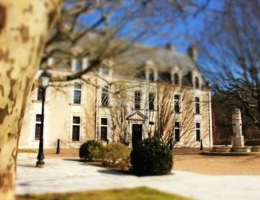
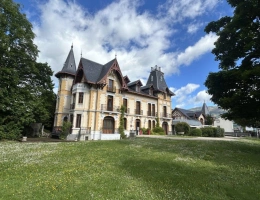
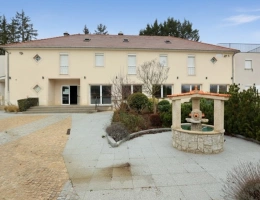
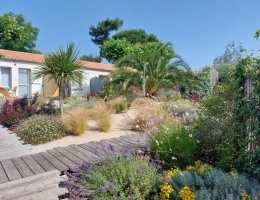
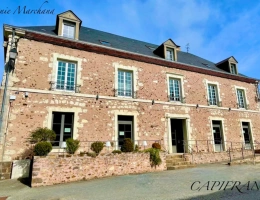
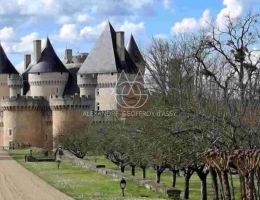
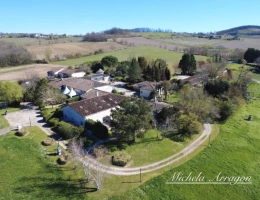
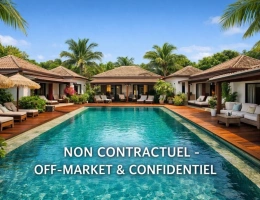
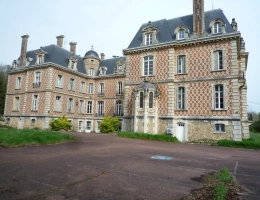
Looking for a hotel for sale in France outside the cities means judging more than the room count: the building, the grounds and the leisure clientele matter just as much. On 25 September 2026, ma-propriete.fr lists 22 properties in this sub-category: châteaux run as hotels, small country hotels, manor houses sold with their business, holiday estates and serviced holiday residences. We do not cover city or chain hotels; these are characterful establishments in rural and coastal France, alongside our other tourism properties for sale.
This page is for buyers who want to run a hotel themselves, investors seeking a château hotel or holiday residence, and owners preparing to sell.
These figures cover the asking prices of the 22 listings on ma-propriete.fr on 25 September 2026. A listing can sit in several sub-categories: 8 are also listed as châteaux. The median asking price is €2,027,500: half the properties are offered above it, half below. The middle half sits between €1,450,000 and €3,180,000, and eight in ten between €669,000 and €4,600,000. The range runs from €405,000 to €15,000,000.
| Asking price band | Number of listings |
|---|---|
| €250,000 to €500,000 | 1 |
| €500,000 to €1M | 4 |
| €1M to €2M | 6 |
| Over €2M | 11 |
Source: listings published on ma-propriete.fr on 25 September 2026.
Nothing is priced below €250,000 and half the listings exceed €2M: large, often historic properties sold with their grounds. Examples include a château hotel with a vineyard near Bordeaux, an 80-bedroom property on 14.8 hectares in Seine-et-Marne, a residence of 11 classified furnished units on the Île d'Oléron, an estate of 25 gîtes with restaurant and spa, a château hotel in Normandy and a hotel-restaurant with chalets in Corsica.
Twenty-two listings describe what is on offer, not the market, and a few new ones can move the median. An asking price is not a sale price, and may cover the building alone or the building plus business, furniture and land. For context, our prestige property price observatory (in French), built on official DVF sales data, gives regional benchmarks, and our article on historic monuments suited to tourism projects shows protected buildings converted to hospitality.
Value starts with capacity: lettable rooms ("keys"), function rooms, a restaurant and a professional kitchen; then the grounds, pool, spa and outbuildings. In a château or a manor or maison de maître, character draws guests, but roofs, heating large volumes and park maintenance are heavy recurring costs. A small boutique hotel struggles to absorb them; a larger one spreads them over more nights. Have an architect cost the works before you offer. Manager's accommodation and a seminar room are assets. Listings use French trade terms: hôtel-bureau (rooms and breakfast only), hôtel-restaurant, boutique hotel and apparthôtel (serviced apartments, close to a holiday residence).
A French hotel is an ERP (établissement recevant du public, a building open to the public) of type O, subject to fire-safety and accessibility rules checked by the local safety commission: ask early for the safety register and inspection reports. Star classification is valid for 5 years, so check when it expires. Serving alcohol with meals requires a restaurant licence and a permis d'exploitation (licensee training certificate); a bar open to non-residents needs an on-premises drinks licence (licence III or IV), to be checked with the mairie (town hall).
Country hotels draw leisure travellers, short breaks, foreign visitors and events. Seminars fill weekdays out of season, weddings fill weekends, which is why estates with function rooms overlap with our wedding and reception venues for sale. Many rural hotels close for several months, which weighs on annual occupancy and RevPAR (revenue per available room: room revenue divided by rooms on offer). Seaside properties concentrate trade in summer and face coastal planning rules. A mountain resort can support two seasons, winter and summer.
You can buy the walls and the business together: the building plus the fonds de commerce (goodwill, name, contracts, furniture, equipment). Buying the business alone means taking on a bail commercial (commercial lease) with the building's owner, whose term, rent and repair obligations become decisive. Buying the walls only suits investors who hand operations to a manager, sometimes under a brand. The notaire, the public official who handles conveyancing, deals with the building; the business sale has its own formalities (publication, registration duties), usually handled by a lawyer or accountant.
For a trading hotel, study the accounts: turnover by activity, EBITDA (EBE in French) restated for items specific to the seller, payroll, forward bookings and average room rate. Staff come with the business: their employment contracts transfer automatically, and where the hotel has fewer than 250 employees the seller must inform them before completing the sale. Agree a handover period during which the seller introduces you to booking tools, suppliers and regular guests. Commission audits of ERP compliance, roofs and services. A closed or derelict hotel is a renovation project, priced on works rather than trading. For a smaller venue with a restaurant and a few rooms, see our country inns for sale.
Hotels are funded with business loans: banks look at your experience, forecasts and deposit. Try our financing plan calculator (in French) and notary fees calculator (in French). For furnished units in a holiday residence, read about the tax rules for holiday lets.
Selling? A listing can omit the name and address: you choose how precisely it is placed on the map to protect staff and guests, and it can appear under both tourism and prestige properties. Prepare accounts, classification, safety reports, inventory and lease. Buyers also compare châteaux for sale without a business, so show what trading adds.
On ma-propriete.fr, on 25 September 2026, the median asking price across 22 hotel listings is €2,027,500, ranging from €405,000 to €15,000,000. These are country and character hotels, not city hotels. Price depends on what is sold (walls, business or both), capacity, condition and, above all, trading results. Notary fees, financing costs and working capital come on top.
Nationality is not in itself a barrier to buying French property or a fonds de commerce. What matters is how you will run it: residence status, company structure and the licences required. Non-EU buyers should check visa and residence rules with a French lawyer before signing the compromis de vente, the binding preliminary contract.
The walls are the real estate; the business (fonds de commerce) is the trading activity: goodwill, name, bookings, contracts and equipment. Owning both gives full control over works and resale but needs more capital. Buying the business alone ties you to a landlord through a commercial lease, so check its term, rent and repair clauses. The walls alone suit investors who let the hotel to an operator.
The building must stay approved as an ERP after the safety commission's inspection. Star classification is optional and valid for 5 years. To serve alcohol with meals you need a restaurant licence and the permis d'exploitation, obtained through an approved training course; an existing licence must be transferred to your name via the mairie.
To hear about new hotels for sale in France as soon as they are listed, set up an email alert; filters above the listings combine sub-category, location, budget and land area. Our white papers (in French) cover rural tourism projects, and our borrowing capacity calculator (in French) gives a first estimate. Owners and agents can list a hotel for sale to reach buyers browsing this page.