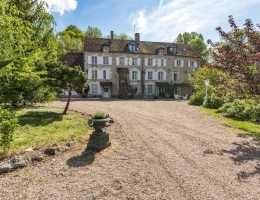
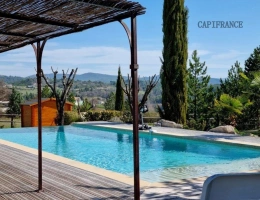
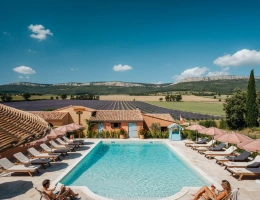
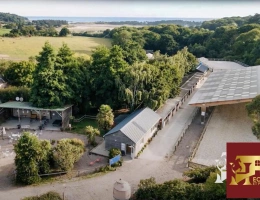
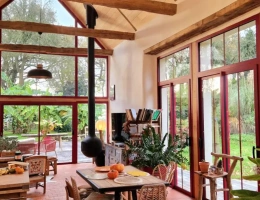
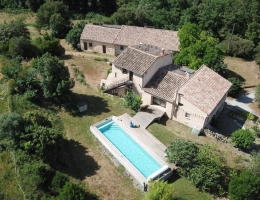
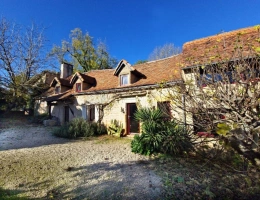
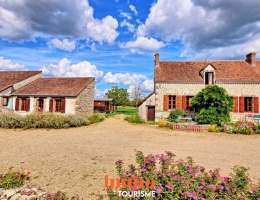
Looking for a glamping site for sale in France means looking beyond the structures themselves: a treehouse, a yurt or a gypsy caravan is only worth as much as the land it stands on, the permits that cover it and the guests who book it. On 25 September 2026, ma-propriete.fr lists 10 properties in this sub-category, published by estate agents, notaires and private sellers. They include a guest property with a traditional roulotte caravan, an estate combining gîtes (holiday cottages) and unusual accommodation, a 4-star campsite sold as a going concern on 7 ha, a 6.3 ha hospitality and events estate in the Luberon, a holiday centre with its own woodland in Corrèze, a historic mill near Chambord and a 1.58 ha tourism project to develop in the Périgord Noir.
This page serves buyers taking over an established glamping business, people seeking land for their own treehouses or eco-lodges, and owners preparing to sell. It sits within our wider selection of tourism properties for sale. Starting from scratch? Read our guide to developing an unusual accommodation project.
Asking prices of the listings published on ma-propriete.fr on 25 September 2026 range from €189,000 to €2,820,000. The gap reflects very different properties, from land still to be developed to a 180 ha estate in a single block.
With only 10 listings, the sample is too small to give a reliable average or to compare regions. An asking price is also not a sale price: negotiation, the condition of the structures and the strength of the accounts all shape the final figure.
Value rests on three things. First, the land: size, woodland, a lake or stream, views, seclusion and, above all, the zoning set by the local urban plan (the PLU). Second, the permits: a site where every unit has been properly approved is worth more than land where everything remains to be obtained. Third, the business: booking history, platform visibility, contracts and ancillary buildings such as washrooms and owner's accommodation. The units themselves, often demountable and exposed to the weather, weigh less in the price than buyers expect.
A treehouse for sale cannot be judged like a house: its lifespan depends on the health of the host trees and on how it is fixed to them. Have the trees checked by an arborist and ask for inspection reports on platforms and railings. Cabins on stilts or on water need sound supports and safe access. Yurts, tipis and safari-style lodge tents need regular canvas maintenance and winter protection. Roulottes and tiny houses need water, power and wastewater connections checked. Domes and bubbles attract short-break guests but require careful management of heating, condensation and privacy. Converted shipping containers, pods, Finnish kotas, safari lodges, trapper tents and eco-lodges complete the range, each with its own lifespan and upkeep.
French planning rules depend on the floor area or footprint created. Subject to local rules and protected areas, a structure under 5 m² of footprint and floor area and up to 12 m high needs no formality; 5 to 20 m² requires a prior declaration (déclaration préalable) to the mairie (town hall); above 20 m², full planning permission (permis de construire) is needed. Zoning is decisive: agricultural (A) and natural (N) zones strictly limit new buildings. Light leisure dwellings (HLL) and demountable units follow their own rules when placed on a campsite or residential leisure park. Beyond 6 units or 20 guests, tents, yurts or lodges fall under campsite rules and need a development permit; an aire naturelle allows no lodges. Separate authorised units from the rest: an unregularised unit is a liability, not an asset.
Unusual accommodation sells an experience: sleeping in a forest, beside a lake or facing a valley. Guests are mostly couples and families on short breaks, with off-season demand when units are heated. Access, meal options and nearby activities such as hiking or canoeing drive bookings more than the novelty of the structure. Enough land lets you space units apart to protect guests' privacy.
Taking over a trading site usually means buying the real estate (land and structures) and the fonds de commerce, the business itself: customer base, name, booking website, platform accounts and equipment. Check the permits for each unit, contracts, deposits received, insurance and recent accounts. The notaire, the public official who conveys property in France, handles the real estate; the sale of the business follows its own formalities, often with a lawyer or chartered accountant.
Buying land to create a site costs less upfront, but shifts the risk to planning. Before signing the compromis de vente (the binding preliminary contract), obtain a certificat d'urbanisme opérationnel (planning certificate), discuss zoning and the project with the mairie, and make the sale conditional on permits being granted. On an isolated site, also check the septic system, inspected by the local SPANC service, and water and power supplies; solar panels or rainwater harvesting can cut some running costs. Our leisure land and properties with lakes are possible starting points, subject to their planning status. A campsite offers a more established framework for lodges and HLL: browse our campsites for sale and our white paper on creating a rural campsite (in French).
To prepare financing, use our notary fees calculator (in French) and financing plan calculator (in French); as trade is often seasonal, budget cash for the closed months. See also our articles on the taxation of holiday lets and insurance for tourist accommodation. Sellers should gather permits, site plans, accounts and booking history in advance.
Usually yes, in some form. Subject to local rules and protected areas, a structure under 5 m² and up to 12 m high needs no formality, one of 5 to 20 m² requires a prior declaration, and anything larger needs full planning permission. Most cabins, yurts, domes and tiny houses let by the night exceed the first threshold. Check the plot's zoning and speak to the mairie before buying.
Yes. French law does not restrict property purchases by foreign buyers, and the process is the same as for French residents: an offer, a compromis de vente, then the final deed signed before a notaire. Running the business is separate: depending on your nationality, you may need a visa or residence permit to work in France, and you must register the business and choose a tax regime, with help from a local accountant.
No single type guarantees success. Compare installation costs, material lifespan, maintenance, off-season potential and capacity per unit. A treehouse costs more to build and inspect but commands higher rates; a yurt or lodge tent costs less but often closes in winter. Some estates combine glamping with a gîte to spread demand across the year. To test your assumptions, try our holiday rental simulator (in French).
Sometimes, never automatically. Woodland is usually in a natural (N) or agricultural (A) zone, where new buildings are tightly controlled; some communes create dedicated sectors (STECAL) for tourist accommodation, others exclude it. Clearing rules and wildfire risk also apply. The purchase of farmland may involve the SAFER, the body that oversees rural land sales; our land valuation studies show its farming or forestry value. Ask for a planning certificate and consult the mairie before committing.
To follow this market, set up an email alert and receive new treehouse, eco-lodge and glamping listings as soon as they are published. If you own a site, you can list your property for sale, choosing how precisely it appears on the map; an estate with a lake and woodland can also appear under lakes and woodland.