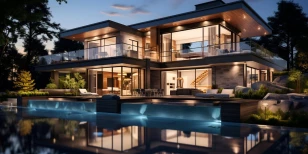
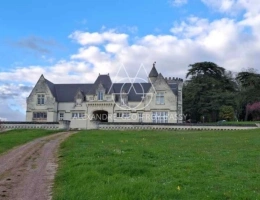
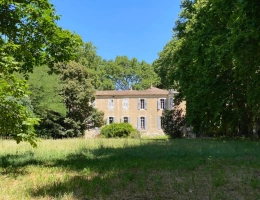
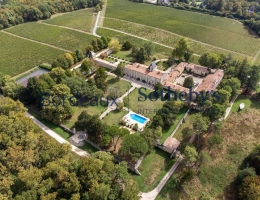
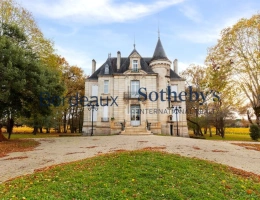
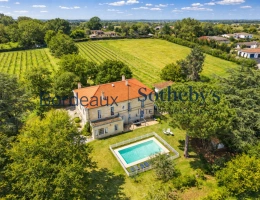
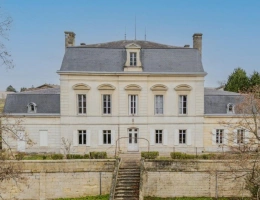
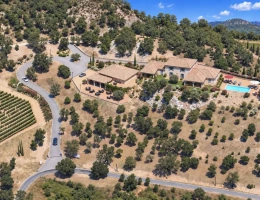
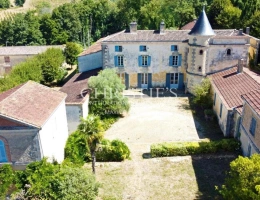
A wine chateau for sale brings three assets together in a single property: a residence of character, a vineyard under an appellation and a production facility, with winery, vat room and tasting cellar. It is the most sought-after form of rural luxury property, and this page gathers these exceptional estates: chateaux of the Bordeaux region with their classified vines, chartreuses of the Entre-deux-Mers, Provençal bastides on their hillsides, master houses in Champagne or Burgundy, Rhône valley estates with a view. Wine properties without a heritage dimension, parcels and businesses of all sizes, are listed in our vineyard property category, sorted by wine region.
Here you will find price benchmarks for the residence and the vines, the characteristics of these estates, the essential checks before committing to a vineyard, and answers to the most frequent questions. Our guide to buying luxury property in France supports you through the whole process.
The value of a wine chateau adds up two distinct markets: the residence, which follows luxury property prices, and the vines, which depend almost entirely on the appellation. Our observatory measures them separately from the actual transactions in the DVF database.
For the buildings, large rural residences of more than 300 m² sold in 2025 at a median price of €822,000 and an average of €1.32 million, at a median of €2,308 per m² of living space; the median has risen by 17% since 2020. For the vines, the 2,951 sales of parcels analysed in 2025 give a median price of €23,985 per hectare but an average of €205,441: the gap reflects a market in which Champagne and Burgundy pull values upwards, while Bordeaux, Cognac and the Languedoc are going through a correction. The table below shows the median price of a hectare of vines by wine region over the 2020-2025 period.
| Wine region | Median price (€/ha) | Average price (€/ha) | Sales 2020-2025 |
|---|---|---|---|
| Champagne | 1,000,000 | 1,006,200 | 2,293 |
| Burgundy | 129,500 | 402,700 | 1,008 |
| Cognac | 45,200 | 44,700 | 657 |
| Beaujolais | 42,200 | 51,000 | 959 |
| Provence | 38,300 | 53,800 | 810 |
| Bordeaux | 22,600 | 110,200 | 1,388 |
| Rhône valley | 20,800 | 65,800 | 3,179 |
| Loire valley | 16,700 | 32,100 | 1,524 |
| Languedoc-Roussillon | 14,100 | 18,600 | 6,275 |
| South-West | 10,400 | 17,100 | 332 |
A 20-hectare estate under an ordinary Bordeaux appellation thus represents, at the median price, less than €500,000 of vines, whereas the same area in Champagne exceeds €20 million: the residence does not carry the same weight in the price from one wine region to the next. To these two components are added the winery and equipment, wine stocks, the brand and the distribution contracts, all valued separately. Detail by appellation and department is in our observatory of vineyard prices, and building prices by region in our observatory of luxury property prices; our financial tools and calculators then let you cost the purchase.
Source: DVF (DGFiP), transactions from 1 July 2020 to 31 December 2025, processed by ma-propriete.fr; rounded prices. Residences: houses of more than 300 m² on less than 10 ha, excluding Paris.
The wine chateau as found in the Bordeaux region is an eighteenth- or nineteenth-century residence, chartreuse or neo-classical chateau, extended by fermentation and ageing cellars, a vat room, winegrowers' cottages and a park. Elsewhere the form changes: bastide and mas in Provence, master house surrounded by its cellars in Champagne, Burgundian estate with an underground vat room, Loire clos with troglodyte caves. In every case the buyer acquires both a home and a working facility: the quality of the restoration, the level of equipment in the cellars and the condition of the vineyard are read together.
Areas range from a few hectares of vines around a fine house, for a lifestyle or wine-tourism project, to crus of several dozen hectares with an established brand and distribution network. In between, the family estate of 15 to 40 hectares with a residence of character forms the core of the offer.
The Bordeaux region, Saint-Émilion and the Libourne district, the Entre-deux-Mers and the Graves, offer the largest number of chateaux with vines. Provence and the Var, driven by demand for rosé and by tourism, the southern Rhône valley, the Languedoc with its large estates and the Loire valley from Saumur to Chinon complete the offer; Burgundy and Champagne remain rare and very expensive, the vineyard there often being worth more than the residence. The South-West, from Bergerac to Gaillac, and the Cognac region offer comparable properties at more accessible levels.
The vineyard first: age and health of the vines, grape varieties, appellation classification of the parcels, planting rights, current tenancy or sharecropping agreements and the SAFER's pre-emption right. The business next: accounts for the last three financial years, wine stocks and their valuation, brand and labels, contracts with merchants or the cooperative, staff, equipment and compliance of the facilities. The residence last: survey of the old buildings, roofs and timbers, compliance of the cellars and their effluent. Wine regions have very different markets; comparison with actual sales under the same appellation is the only way to judge a price.
The transaction most often concerns a company, with a prior audit, negotiation over the value of stocks and a handover period with the seller. Buyers are families looking for a home and an activity, French or foreign investors drawn by wine and heritage, winegrowers expanding, or groups. Our complete guide to buying a wine estate describes each step, and our analysis of the profitability of a vineyard helps to distinguish a heritage project from an economic one. The white paper on creating a wine estate goes deeper into the business side, and the article on the taxation of luxury real estate into purchase structures.
In the Bordeaux region, any estate may put the word "chateau" on its label; on ma-propriete.fr, this page gathers the properties whose residence has a heritage value of its own, whatever the estate is called. Businesses without a residence of character belong to the vineyard category.
No, but the control of farm structures and the SAFER apply to the vines; a non-farming buyer usually entrusts the running of the vineyard to an estate manager, a contractor or a tenant.
No: Champagne and Burgundy continue to rise, while Bordeaux, Cognac and part of the Languedoc are correcting. In wine regions under pressure, the residence and the setting weigh more in the price than the vines.
Yes, it is one of the main drivers of demand: guest rooms, receptions, tastings; check the zoning of the local planning document and the scope for changing the use of outbuildings before buying.
Listings of wine chateaux and prestige wine estates are placed by private owners, specialist agencies and notaries; filter them by wine region, price, area of vines and type of residence, then set an e-mail alert to follow new properties as they come to market. To widen your search, browse chateaux for sale or all vineyard properties by wine region. If you are selling an estate of this kind, place your listing to reach qualified buyers in France and abroad.