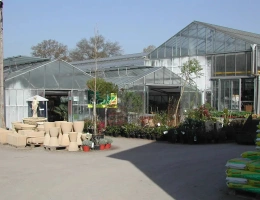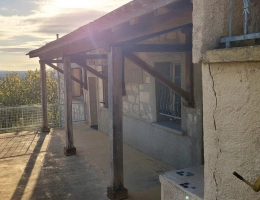

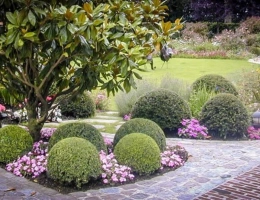
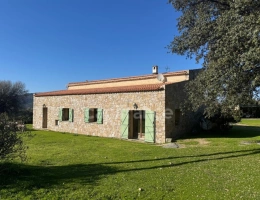
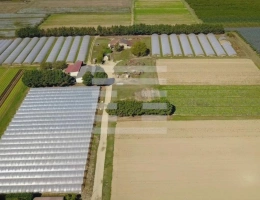
Looking for a market garden for sale in France? This page brings together the vegetable and horticultural holdings currently offered by growers preparing their handover, rural estate agencies and notaries: open-field vegetable farms, protected-cropping units fitted with glasshouses or polytunnels, small-scale market gardens selling direct, and the ornamental horticulture businesses and plant nurseries that rely on the same skills and equipment. Each listing states the cropped area, the share under cover, the water supply, the packing and cold-storage buildings and the route to market, so you can compare offers before contacting the seller. It complements all the farms for sale in France on ma-propriete.fr.
Beyond the listings, you will find the benchmarks buyers usually lack when taking over a vegetable farm or a horticultural business: farmland prices region by region, the production basins and the green belts around the main cities, what to check on water, greenhouses and the customer base, and the steps of a takeover that goes through. Our white paper « Créer une exploitation agricole » (in French) gives the legal and financial framework of setting up.
On a market garden the cropped area is small, yet every hectare counts: the value of the land sets the cost of expanding, the cost of putting up new greenhouses and the price of the holding when it changes hands. Close to towns, land pressure weighs further on plots that other uses would gladly take.
Across France, 14,328 sales of agricultural land were recorded in 2025, at a median price of €5,307/ha (average €6,059/ha; 80% of transactions between €2,500 and €10,537/ha). The SAFER benchmark of land values puts vacant land and pasture at €6,460/ha (+0.9% year on year) and tenanted land at €5,350/ha (+2.5%), an average discount of around 17% where a tenant farmer is in place.
| Region | Sales 2025 (DVF) | DVF median price (€/ha) | SAFER vacant land (€/ha) | 1-year change | SAFER tenanted land (€/ha) |
|---|---|---|---|---|---|
| Brittany | 1,297 | 5,500 | 6,540 | +0.3% | 5,180 |
| Pays de la Loire | 1,873 | 3,267 | 4,100 | +1.5% | 3,350 |
| Normandy | 1,442 | 8,305 | 9,610 | +2.9% | 8,410 |
| Hauts-de-France | 1,365 | 7,976 | 10,890 | -0.5% | 7,650 |
| Grand Est | 1,233 | 5,611 | 6,510 | -4.4% | 6,120 |
| Île-de-France | 214 | 7,465 | 8,190 | +5.7% | 7,000 |
| Centre-Val de Loire | 1,195 | 5,480 | 6,260 | -6.1% | 5,700 |
| Bourgogne-Franche-Comté | 1,303 | 2,773 | 2,740 | -6.2% | 2,750 |
| Nouvelle-Aquitaine | 2,103 | 4,538 | 5,770 | +5.5% | 3,900 |
| Occitanie | 995 | 7,015 | 7,260 | -0.3% | n/a |
| Auvergne-Rhône-Alpes | 1,230 | 3,887 | 5,100 | +4.9% | 4,140 |
| Provence-Alpes-Côte d'Azur* | 59 | 13,518 | 12,260 | +2.8% | n/a |
| Corsica* | 19 | 5,012 | — | — | n/a |
Market gardening and horticulture cluster where water, climate and nearby consumers come together: the Mediterranean rim, the Loire and Rhône valleys, the South-West, the vegetable coast of Brittany and the green belts of the largest cities. On this kind of holding the hectares tell only part of the story: soil quality, a secure water right, greenhouses in working order and an established route to market often weigh more in the price than the area itself. From one region to the next, the benchmark varies fourfold, from €2,740/ha in Bourgogne-Franche-Comté to €10,890/ha in Hauts-de-France. See the full analysis, department by department, on our agricultural land price observatory, estimate your plots with the land value tool, and work out notary fees and borrowing capacity with our financial calculators. * Fewer than 100 recorded sales: indicative value. n/a: no tenanted-land benchmark published for this region.
A vegetable or horticultural holding is judged first on its growing structures, and a greenhouse business stands or falls on them. Cover takes very different forms: heated multi-span glasshouses, cold polytunnels and mobile shelters, each with its own age, insulation, heating and level of automation. A recent glasshouse with a thermal screen, controlled ventilation and drip irrigation is not worth what a tunnel whose plastic is at the end of its life is worth. Water access governs the rest: a declared borehole, a farm reservoir or a connection to a collective irrigation network.
Then come the downstream facilities, common to both families: a washing and packing line, a cold store, grading equipment and an on-farm shop on the vegetable side; potting areas, benches, shade structures and standing stock of pot plants, cut flowers and young plants on the ornamental side. In a plant nursery for sale, or in a horticultural business supplying the trade, the growing stock is a value in its own right, inventoried and assessed separately from land and buildings, as are the machinery and the customer base of garden centres and florists.
Vegetable farms for sale follow two patterns. The specialised basins first: the Val de Loire and the Nantes area, the vegetable coast of northern Brittany, the South-East between Provence, Vaucluse and Roussillon, and the Garonne valley and the Landes, where holdings are larger, frequently under cover, with producer organisations and packing stations close at hand. Ornamental horticulture and nurseries partly follow the same map, with long-established clusters in the Val de Loire, Anjou, the Var and the Lyon area, where climate and tradition fixed the businesses.
The second pattern is peri-urban: in the green belts of the large cities, a smallholding draws its value from proximity to markets, box schemes and producer shops, and direct selling makes up for a limited area. Supply there is scattered, often made up of micro-farms and market gardens run on agroecological lines, and competition between candidates for a takeover is keen, particularly around Île-de-France, Lyon, Bordeaux and Toulouse.
Water comes first. The borehole must be declared or authorised, the abstractable volumes allocated, and the commune may be subject to restriction orders in dry spells: without secure irrigation, a protected-cropping unit loses most of its capacity. Then check that the greenhouses match the planning permissions granted, the condition of covers and frames, the pesticide store and, on an organic holding, the certification in force and the conversion period still to run on each parcel.
The second point is the business model. A vegetable farm selling direct, like an ornamental business supplying garden centres, rests on a customer base, market pitches and trade contracts that do not transfer automatically with the land. Seasonal labour, its accommodation and the contracts in force deserve the same scrutiny, as does the assignment of the rural lease, which requires the landlord's agreement and remains subject to the structures control and to SAFER's pre-emption right.
The sale of a market garden takes several forms. When the seller owns the land and the greenhouses, the sale covers land, structures, machinery and growing stock, each valued separately; when the business sits in a company (EARL, SCEA or a horticultural trading company), the purchase covers shares, which keep leases, contracts and certification in the company's name but commit the buyer to its liabilities. Our article selling the assets or the shares of a farming company details what each of the two routes involves. Gradual takeovers, where the buyer first joins as a partner or as an employee, are common here, the time needed to take on the market pitches and the customers.
For the buyer, purchasing a market garden for sale in France follows a set order: define the project and its financing, confirm the agricultural qualification, analyse the accounts, the outlets and the state of the greenhouses, then secure land and water before signing. Our complete guide to buying a farm in France and the article finding a farm to set up in agriculture set out each step. For the seller, the handover is prepared well ahead: the complete guide to selling a farm helps set a consistent price and choose between an outright sale, letting and a transfer of shares.
There is no reliable benchmark price: a micro-farm with one tunnel and a box-scheme customer base and a heated glasshouse business with its own washing and packing line belong to two different markets. The price is built item by item: land at the regional farmland price, greenhouses according to type, age and equipment, cold store and machinery at their value in use, growing stock at inventory, plus the commercial value of the outlets already in place.
Yes. Nationality is not a restriction, and buyers from inside and outside the EU take on French holdings every year. Nothing prevents a non-farmer from buying land or greenhouses, but cropping them means passing the structures control and obtaining the agricultural professional qualification to claim setting-up aid. Market gardening attracts many career changers: training, a placement with an established grower and a realistic sales forecast are needed in practice.
Every sale of agricultural land or buildings is notified to SAFER, the rural land agency, by the notary, and it may exercise its pre-emption right, with exceptions such as a sale to the sitting tenant or to a family member. In peri-urban areas it pays particular attention to keeping plots in agricultural use when other uses compete for them. The structures control rules bear on installation and on taking on extra land.
Greenhouses are valued on type, age, equipment and replacement cost, with a marked discount for ageing frames or covers near the end of their life; the packing station and cold store on their condition and actual usefulness. In a nursery, the stock of young plants and pot plants is counted in a joint inventory and valued by species, grade and the growing time still required. Have each item priced by a rural surveyor before negotiations open.
Agricultural structures fall under French planning law: depending on their height and footprint they require a prior declaration or a building permit, and they must comply with the rules applying to the agricultural zone in the local planning document. Before buying, ask the seller for the permissions obtained for the existing greenhouses and check with the town hall what the land still allows, especially if your plan is to increase the area under cover.
The market gardens, horticultural businesses and nurseries for sale on ma-propriete.fr come from private growers, rural estate agencies and notaries' offices. Filter by region, area, price or the presence of greenhouses, and set up an e-mail alert to be told of every new holding put on the market. Selling your market garden or your nursery? Post your listing and address the investors and farmers currently searching.