

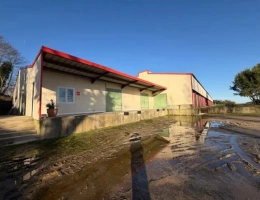
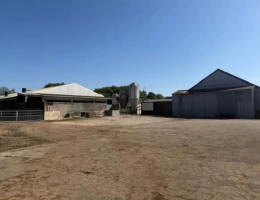
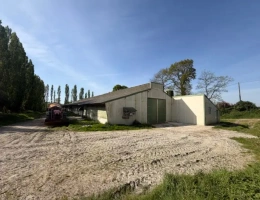
Brittany is France's leading vegetable region, and a market garden for sale in France found here may be an open-field holding on the north coast, a block of heated glass, an ornamental unit growing pot plants and cut flowers, or a nursery raising field-grown shrubs. Growers arranging their handover, rural agencies and notarial offices bring these properties to the market, and every entry sets out the area, how much is under cover, where the water comes from, any membership of a producer organisation and the selling channels used. They add to the market gardens and nurseries for sale across the country.
Alongside the listings, you will find here what places an asking price before you visit: regional land values, the departments where supply concentrates, the state of the glasshouse and tunnel stock, and the checks specific to these crops, from water rights to the transfer of goodwill. The white paper « Créer une exploitation agricole » (in French) supports the setting-up project itself, from legal status to funding.
Land value drives much of the asking price for a market garden or nursery. French tax transfer statistics (DVF, vineyards excluded) show, for 2025, a median of €5,500/ha in Bretagne, an average of €5,803/ha and 1,297 sales; 80% of transactions settle between €3,510 and €8,658/ha, against a national median of €5,307/ha.
On the SAFER side, the value of vacant land and pasture is set at €6,540/ha for 2025, moving +0.3% over a year and +16.8% over ten, against €6,460/ha nationally; expect an average discount of 17% where a lease is running.
Area alone does not capture what such a holding is worth. The price is built on soil quality and drainage, on the structures and their age, on heating and thermal screens, on irrigation, a licensed borehole, the washing line, cold storage and standing space for young plants. It also takes in cooperative shares, supply contracts and, where selling is direct, a customer base built up over many seasons. Compare land values with our land price observatory, then test your assumptions with our financial calculators.
Breton vegetable growing is largely done in the open, on deep silty soils and in a mild climate that stretches the season, with winter crops where frost stays rare. Blocks of glass are found mainly for heated production: look closely at the boiler house and its fuel, the thermal screens, the climate controls, rainwater collection and the state of the glazing, since running costs follow directly from them. Along the coast, wind means checking how tunnels are anchored, how gable ends hold up and where the shelter belts are. Recent, well-regulated glass sells far above an ageing set of structures.
Then examine the post-harvest chain: washing and grading line, cold room, palletising, loading bay, and on the ornamental side the benches, shading and container beds. A plant nursery for sale also carries stock value, the young plants still being grown on, which is assessed separately. Where a sale takes in a dwelling house, land and buildings, ask for a clear split: the house, the production tool and the goodwill are not funded in the same way or over the same periods.
Northern Finistère, around Saint-Pol-de-Léon and the Léon country, is the historic vegetable basin, with its cauliflowers, artichokes and shallots, its cooperatives and its packing stations. Côtes-d'Armor continues that belt through the Trégor and the Paimpol area, where the coco de Paimpol bean grows alongside other field vegetables. Ille-et-Vilaine, driven by demand around Rennes, mixes protected crops, direct selling and ornamental growing, while Morbihan combines open ground, glass and young-plant production, from the Vannes country across to Ploërmel.
On the coast, a vegetable farm rarely comes up and sells dearly: residential and tourist pressure is strong there. Inland, takeovers are more affordable, though access to water and the distance to packing stations both need careful weighing. New entrants are therefore better served by searching across the region as a whole than by fixing on a single area.
The whole region is designated a nitrate vulnerable zone: fertiliser use, cover crops and spreading periods are regulated, and some bays fall under reinforced programmes against green algae strandings. Check where irrigation water comes from, whether the abstraction permit is valid and what limits can apply at the end of summer. Near the shore, the loi littoral, the French coastal planning act, heavily restricts new building: extending the glass or adding a packhouse is not always feasible, which is worth investigating before you make an offer.
The sale goes through the structures control, the administrative authorisation required to take over farmland, and through SAFER, which may pre-empt; rented parcels continue under the lease in force. A greenhouse business is judged as well on its range and its accounts, and a smallholding on how dependable its regular orders are. Finally, verify that organic certification carries on, check the cooperative shares attached to the holding, and assess the availability of seasonal labour, housing included.
The properties you see here are entrusted to us by private owners, by rural estate agencies and by notaries. Pick a department, a range of areas or a budget, create an alert so you hear as soon as a holding is published, and browse more widely through the farms for sale in Brittany.