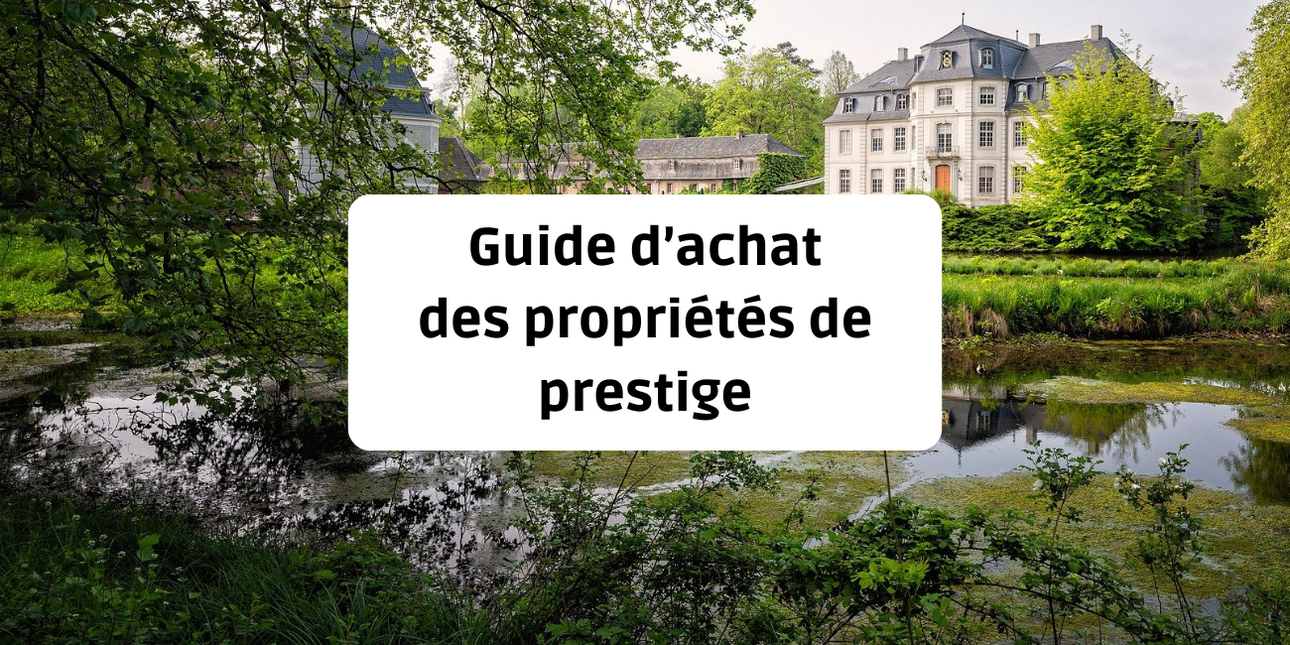
In France, the French art of living goes hand in hand with elegance, heritage and authenticity. Fine residences (majestic châteaux, opulent manor houses, refined country mansions) embody this exceptional way of life. These exclusive properties stand out through their unique history, their noble materials (cut stone, antique woodwork) and their preserved natural setting. Beyond prestige, they offer wealthy investors (HNWIs, family offices) a safe-haven asset: in times of economic instability, luxury bricks and mortar retain or increase their value.
In this comprehensive guide, we explain why and how to acquire an exceptional rural estate in France, covering the choice of region, the legal structuring and the key stages of the transaction.
The rural prestige market in figures (2020-2025)
To put your project in context, here are the orders of magnitude drawn from official DVF data from the tax administration, which we analyse in detail in our Observatory:
Access all statistics by region, department and territory type →
Prestige real estate in France, and large rural properties in particular, is renowned for weathering crises. In 2024, despite an unstable global context, the high-end market showed great resilience. Exceptional properties – châteaux, agricultural estates, renovated hamlets – retain their appeal among wealthy buyers.
Official data confirms this resilience: while the number of sales logically declined after the post-Covid peak of 2021, prices did not fall. The average price per square metre rose from €2,814 in the second half of 2020 to €3,587 in 2025, an increase of nearly 27% over the period. This decoupling between volume and price is explained by the profile of buyers, who are often little dependent on bank credit: for them, falling in love with a property and its rarity take precedence over interest rates.
In times of financial uncertainty, investing in tangible assets such as a historic estate makes it possible to secure one's wealth and ensure transmission across generations.
Quality real estate portfolios are considered effective hedges against inflation: for example, rising agricultural prices drive up the value of land, making agricultural estates a genuine safe-haven asset. HNWIs (High Net Worth Individuals) and family offices indeed count prestige real estate among the pillars of their wealth strategy, in order to diversify their holdings outside financial markets.
Buying a country property in France means treating yourself to a piece of history. Each château, manor house or country mansion is a living witness to French heritage. France is world-renowned for the richness of its rural architecture, its varied styles (medieval, Renaissance, classical, neo-Gothic) and its unrivalled art of living.
By crossing the threshold of a former château, you invest not only in square metres, but in the continuity of a cultural legacy. This gives these properties an incomparable charm: French formal gardens, centuries-old inner courtyards, exposed timber framework.
This explains why the purchase of such a property is often described as the acquisition of a true heritage jewel – a legacy passed down from generation to generation.
Many buyers dream of owning a listed château or manor house. These historic monuments offer extraordinary prestige, but also entail specific obligations.
Buildings classified as "Historic Monuments" are subject to particular provisions aimed at their conservation. Owners must, for example, submit any renovation project to the State services (DRAC) for review, in order to respect the sensitivity of these buildings. There is, however, no type of work strictly prohibited on a historic monument, but architectural adaptations (roof, volumes, etc.) are often regulated.
 Preserving the authentic charm (original stone and beams) is essential. While the technical challenge is great, the result is worth it: these character residences offer an incomparable living environment and a sentimental value hard to match. The charm of the outbuildings (stables, chapels) and gardens, often centuries old, also contributes to the appeal of these properties.
Some wealthy investors are looking for very large estates combining leisure and farming. Typical agricultural estates extend over several dozen hectares of cultivated land (vineyards, cereals, orchards) and offer potential farm income. They make it possible to diversify a real estate portfolio and to create a sustainable farming operation.
Estates may also include large private forests (an attractive and tax-efficient financial investment). Indeed, forests gain value over the long term (portfolio diversification) and give rise to tax advantages: income tax reductions and exemptions upon transmission.
Many buyers also include hunting estates in their project. Regions such as the Sologne or the Périgord, rich in game and ponds, are prized for big-game hunting (deer, wild boar) and small game. These rural properties often fit into a spirit of preserved nature, with hectares of forests and meadows laid out for leisure. For an investor, it is the combination of prestige, leisure (hunting, horse riding, fishing) and heritage value, all in a protected environment.
France is also full of prestigious regional buildings with distinctive architectural characteristics. In the South-West, the chartreuse is a large rectangular master's house, generally built in the 18th century, often in local stone and partly single-storey. Many chartreuses are today surrounded by a centuries-old wooded park and outbuildings (farm buildings), creating a true main courtyard. These houses, "built in cut stone or rubble stone, generally bright and widely open to nature", are highly sought after for the tranquillity of their living environment.
In Provence, Provençal bastides and Provençal mas illustrate the Mediterranean art of living. Bastides (often with an additional storey and four-sided roofs) were once aristocratic summer residences, surrounded by gardens and lavender fields. The Provençal mas, a building generally single-storey with thick walls covered with Roman tiles, is typical of the sunny plains.
Finally, there is the gentilhommière (country mansion), a fine country residence blending bourgeois comfort with a rustic feel. Each type of building brings its own cachet: lauze (stone slab) roofs of the South-West, ochre façades of the Luberon or pale stone of the Provençal bastides – each region has its architectural codes, for an "art of living" that appeals to an international clientele in search of authenticity.
Certain territories have become strongholds of prestige rural real estate.
Beyond the prestige of the building, the choice of location is crucial. An isolated estate must offer a preserved natural setting (rich terroir, panoramic views, absence of nuisances: noisy roads, high-voltage power lines, excessive agricultural or aircraft nuisance). Care must also be taken regarding the connection to modern infrastructure: quick access to high-speed train stations (Paris, Lyon, Nice, etc.), international airports and main motorways.
For example, an estate in Normandy or the Sologne will be better valued if it remains within 1–2 hours of an airport. The quality of Internet/4G coverage is also a key factor for modern buyers (remote working, video surveillance). In summary, the essential criteria are:
Buying an exclusive property requires careful attention to one's wealth structure. It is common to set up an SCI (Société Civile Immobilière, a real estate holding company) to acquire a property, which makes joint ownership easier and optimises transmission. With regard to taxation, the owner must be prepared for:
Nevertheless, seasonal or prestige rentals (or for events) can provide additional income. These revenues should be quantified and integrated into the overall strategy (income tax on property rental income, VAT for short-term rentals, etc.).
Foreign buyers encounter a few additional particularities:
Valuing an exceptional estate is a complex exercise. There is no standard "square metre": the valuation must take into account the total area (hectares) and the quality of the building. The assessment will rely on:
The appraisal takes into account the historical uniqueness and the international appeal, often to the detriment of direct rental profitability.
The most exclusive part of prestige real estate often takes place Off-Market: the most coveted properties are not published on conventional portals. They circulate through private networks and family offices. To access these highly confidential sales, you need to mobilise a network of real estate expertise and specialised brokers.
Recommendations from notaries, the discretion of a personalised search mandate and connections with private sellers (often represented by the major prestige names – Barnes, Sotheby's, Daniel Féau, etc.) are essential. In practice:
To bring such a project to fruition, nothing replaces the support of a professional in luxury rural real estate.
Our real estate advertisers specialising in prestige properties have a network of specialised partners – surveyors, seasoned notaries, heritage architects – who guarantee you tailor-made and ultra-protected support.
Their in-depth knowledge of prestige rural areas in the Sologne, Provence, the Luberon, the Loire Valley or the Périgord will enable you to identify, on an exclusive basis, "the rare gem" that exactly matches your criteria.
Finally, discretion and confidentiality are part of the in-house culture: each project is handled with the utmost care to protect your privacy.
Our free connection service will allow you to get in touch with these prestige real estate professionals.