

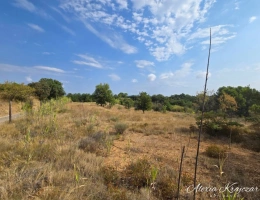
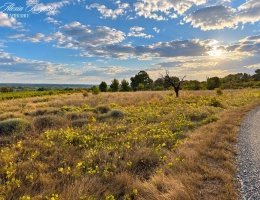

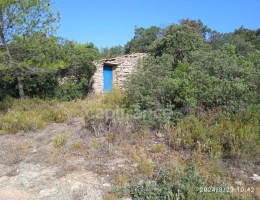
Between lagoons, vineyard plain and garrigue, a market garden for sale in Hérault takes widely differing forms: early field vegetables on the light coastal soils, greenhouses on the Mauguio plain, an ornamental growing business on the Montpellier fringe, or a plant nursery for sale supplying garden centres and local authorities. The files gathered on this page come from growers arranging their handover, from rural property firms and from Languedoc notaries; they set out how water is obtained, how much ground is covered and what customer base goes with the business. You will find them in our selection of market gardens and nurseries for sale.
This page goes further than the particulars: land values in the department, the communes where sales cluster, how to read a set of greenhouses and an irrigation connection, and the caution required where urban pressure runs high. To build your project, our white paper « Créer une exploitation agricole » (in French) covers the route, from support schemes to working capital needs.
Land value drives much of the asking price for a market garden or nursery. French tax transfer statistics (DVF, vineyards excluded) show, for 2025, a median of €10,000/ha in Hérault (34), an average of €11,191/ha and 29 sales; 80% of transactions settle between €4,795 and €20,470/ha, against a national median of €5,307/ha. * Fewer than 30 recorded sales: indicative value.
On the SAFER side, the value of vacant land and pasture is set at €13,290/ha for 2025, moving -1.4% over a year and +74.0% over ten, against €6,460/ha nationally; expect an average discount of 17% where a lease is running.
An asking price here reads as the sum of soil, water and equipment. Into it go the nature of the plot and its drainage, connection to the regional irrigation network or a properly declared borehole, the area under glass and plastic with its heating, the cold store, the washing and packing line, the dispatch bay, and for ornamentals the benches and container beds. Goodwill counts just as much: markets, producer shops, garden centres, packers. Cross-check with our land price observatory and our financial calculators.
The climate allows early cropping, provided the structures keep up. You will come across wide multi-span houses, glass sometimes heated and inherited from ornamental growing, low tunnels for early vegetables and broad field areas run on drip. Look at the age of the frames and how the gutters hold, their resistance to the wind that sweeps the plain, the thermal screens, the climate control and the fertigation unit. Then check the cold chain: refrigeration capacity, cooling room, loading bay. A greenhouse business in ornamentals is judged on other things, its benching, shade structures, sub-irrigation and listings with garden centres.
The route to market steers the whole valuation. A holding within a producer organisation and supplying packers is worth its volumes and regularity; one selling on the markets of Montpellier, Sète or Béziers is worth its customer base and its pitch. Where house, greenhouses and land change hands together, have each component costed on its own, since a production tool and a home follow neither the same loan terms nor the same securities.
The coastal plain in the east of the department holds most of the vegetable ground: around Mauguio, Pérols, Lattes, Candillargues and Marsillargues, alluvial soils and regional irrigation support salads, melons and asparagus. Westwards, the lower Hérault valley from Gignac to Pézenas and Agde mixes vegetables, orchards and vines, while the shores of the Thau lagoon, from Mèze to Marseillan, carry smaller units selling locally. The Biterrois, from Béziers to Vias, offers irrigable ground that remains within reach. Around Montpellier, ornamental growers and nurseries draw on a dense consumer market.
Pressure on land follows the map of building: close to the coast and the main roads it runs high, with vines and development schemes lifting plot values. In the uplands, from the Lodévois to the monts d'Orb and the shores of the Salagou, relief and altitude limit the areas but keep prices measured, with a summer clientele that small mixed holdings are built to serve. A smallholding here can carry a modest vegetable farm without demanding heavy investment from the outset.
Water is checked before anything else. Have the supply contract spelled out, the flow subscribed and the annual standing charge where the plot depends on the regional network, or, for a borehole, the abstraction licence, its meter and the restrictions applied in dry summers. Near the lagoons, ask for a water quality analysis and a test of salinity in the surface horizons. Then examine the zoning in the local planning document, any flood risk prevention plan covering the low ground, and whether the consents obtained for greenhouses and sales rooms were properly granted.
The sale remains governed by the structures control, the French authorisation required to farm, and by SAFER's pre-emption right, frequently used in sought-after areas. Rented land keeps its rural lease. Verify the organic certification and how long it has run, the commitments signed with buyers, which may stay personal to the seller, then how seasonal labour is organised and housed, a sensitive matter in a department where accommodation is expensive.
This section brings together holdings entrusted by private owners, by agencies specialising in rural property and by Languedoc notaries. Set your criteria for area, budget and district, create an alert to follow new arrivals, then widen out to market gardens for sale in Occitanie.


