

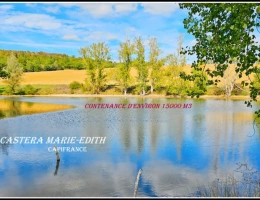




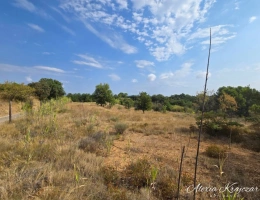
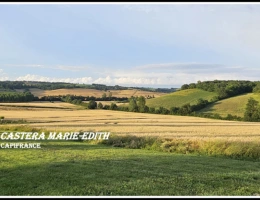
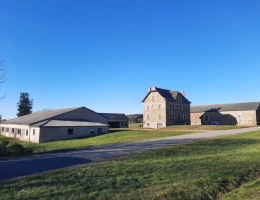
Looking for a market garden for sale in Ariège points you towards a department of small holdings, where vegetables are grown on the alluvial terraces of the lower valley and in the inland valleys, within reach of the Toulouse consumer market. The properties gathered here come from growers seeking a successor, from firms specialising in rural property and from notaries based in the department; they set out the area actually worked, how much is under cover, where the irrigation water comes from and which sales channels are already running. You can weigh them against the national offer by browsing the market gardens and nurseries for sale.
Beyond the listing itself, this page brings together what you need when the decision comes: what land is worth in this department, the districts where holdings come up most often, how to read an ageing set of tunnels, and the checks specific to setting up in foothill country. Our white paper « Créer une exploitation agricole » (in French) follows the project through, from legal structure to the opening budget.
Land value drives much of the asking price for a market garden or nursery. French tax transfer statistics (DVF, vineyards excluded) show, for 2025, a median of €7,533/ha in Ariège (09), an average of €7,099/ha and 26 sales; 80% of transactions settle between €3,541 and €9,991/ha, against a national median of €5,307/ha. * Fewer than 30 recorded sales: indicative value.
On the SAFER side, the value of vacant land and pasture is set at €5,900/ha for 2025, moving +0.7% over a year and +7.7% over ten, against €6,460/ha nationally; expect an average discount of 17% where a lease is running.
Extent accounts for only a share of the value here. What counts is the aspect and drainage of the plots, how secure the water supply stays in late summer, the condition of machinery built for narrow beds, a compliant packing room and enough cold storage, and then the business itself: market rounds, weekly vegetable boxes, arrangements with producer-run shops or school kitchens. Put every one of those through our land price observatory and our financial calculators.
Growing here is seldom done under large covered areas. What you will meet are single-span tunnels or low multi-spans, sometimes put up by the seller, so look at the anchoring, the rust on the hoops, the age of the film and the venting arrangement before settling on a figure. Then turn to the irrigation network, its filtration, its controller and the buffer tank that carries the holding through hot spells. Machinery matters as much as the structures: a narrow tool carrier, a film layer, a planter, a brush washer. A plant nursery for sale is assessed differently, on its container beds, its shading, the drainage of the standing areas and the stock growing in the ground.
Ask how turnover splits between vegetables, young plants and cut flowers, since those activities call on different equipment and do not hand over in the same way. Where the house, the barn and the land make up a single lot, get each component valued on its own: older foothill buildings are priced by the residential market rather than by farming references, and a single global figure is hard to defend in front of a lender.
The lower Ariège plain, around Pamiers, Saverdun and Mazères, holds the deepest and most easily irrigated soils; it is also the most contested, since arable farming and the nearby Toulouse conurbation keep demand firm. The Lèze and Arize valleys, towards Le Fossat and Le Mas-d'Azil, carry a fabric of mixed smallholdings living off markets and farm-gate sales. The Mirepoix country and the foothills of the pays d'Olmes count many recent organic start-ups. Further west, the Couserans and the Saint-Girons area offer smaller areas, a wetter climate and prices that remain within reach.
Distance to the selling point shapes the economics of each district: a grower in the north of the department supplies Toulouse and its producer outlets without difficulty, while a Couserans holding organises itself around valley markets and a local clientele. Check how plots are reached in winter, the true gradient and how fragmented the holding is, three points that listings rarely spell out and that bear heavily on how the working week is organised.
Start with water: a spring, a river intake, a borehole or a hillside reservoir each carry their own permit and obligations, and the restriction orders issued in dry summers reach the tributaries of the Ariège as well. Have the abstraction licence handed over, along with the meter readings and the quality analysis where water is used to wash vegetables. Then look at how the parcels are zoned in the local planning document, particularly around villages that are spreading, and at whether permanent covered structures and buildings raised over the seasons were properly consented.
If the holding is certified organic, ask the certifying body for the conversion history parcel by parcel and for the terms on which the contract continues after the sale, failing which your first harvest sells at conventional prices. The handover remains subject to the structures control, the French authorisation regime for taking over farmland, and SAFER, the rural land agency, holds a pre-emption right it sometimes uses in favour of a new entrant. Finally, have the position of current rural leases clarified, along with unregistered rights of way.
Retiring growers, rural property firms and notaries based in the department entrust us with holdings week by week. Set the filters on area, budget and the valley you have in mind, ask to be told as soon as a new offer appears, then widen your search to the market gardens for sale in Occitanie.


