

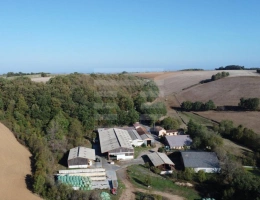
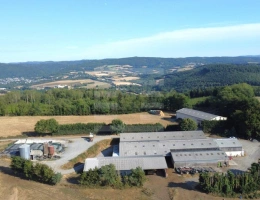
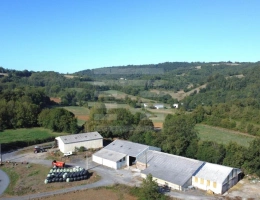
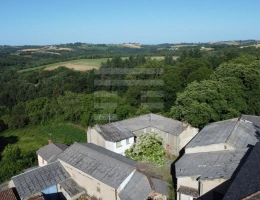
Between Toulouse and the Massif Central, this department grows mostly for its immediate neighbours: a market garden for sale in the Tarn is usually a human-scale unit on the low terraces of the Tarn or the Agout, selling through the markets of Albi, Castres and Gaillac, producer-run shops and school canteens. The files gathered here come from retiring growers, from rural agencies and from local notaries, with details of the covered area, access to water and the outlets already in place. You will find them again in our overview of market gardens and nurseries for sale.
This page goes further than the listings: it gives the level of local land values, shows where holdings come up, explains how to read a set of tunnels or a container nursery, and lists the checks a takeover requires. If you are setting up, the white paper « Créer une exploitation agricole » (in French) covers the procedures and the funding of the first seasons.
Land value drives much of the asking price for a market garden or nursery. French tax transfer statistics (DVF, vineyards excluded) show, for 2025, a median of €6,000/ha in Tarn (81), an average of €6,408/ha and 86 sales; 80% of transactions settle between €2,887 and €10,000/ha, against a national median of €5,307/ha.
On the SAFER side, the value of vacant land and pasture is set at €6,530/ha for 2025, moving +3.3% over a year and +5.5% over ten, against €6,460/ha nationally; expect an average discount of 17% where a lease is running.
On this kind of holding, value rarely sits in the hectares. It sits in the water supply and how secure it is, in the covered area and its age, the washing and packing room, the cold store, planting and harvesting machinery, the shed, and above all in the goodwill: market pitches, box-scheme subscribers, listings with producer shops and garden centres. Place the land component with our land price observatory and test the balance of the project with our financial calculators.
A viewing starts with the structures: hoops and covers on cold tunnels, frames and vents on multi-span houses, ventilation, anchoring and, on the few glasshouses, the heating, the controls and the thermal screen. Move on to irrigation, from the pump and filtration to the drip lines, then to the washing point, the grader, the cold room and the storage shed. A plant nursery for sale calls for a different survey: container beds, capillary matting or mobile booms, windbreaks, shade houses, a potting area and the living stock still growing on.
On these mixed holdings, machinery and small equipment matter more than buyers expect: planter, hoeing rig, mulch layer, germination chamber, precision drill, insulated trailer. A greenhouse business fitted with heating and climate control is not comparable with bare tunnels, and the difference shows in the asking price. Where the advertisement covers house, buildings and land together, common on valley farms, ask for the dwelling and the working unit to be valued separately: one follows the local rural housing market, the other agricultural references, and lending terms differ.
The low terraces of the Tarn, between Rabastens, Gaillac and Albi, offer the easiest soils to work and the most direct access to the river for irrigation; most of the vegetable area is there, along with several ornamental businesses geared to the Toulouse conurbation. The Agout valley, from Lavaur down to Castres, plays a similar part for the Castres-Mazamet basin. The Lautrec country, known for its pink garlic, combines that crop with field vegetables. North and east, the Ségala and the foothills of the Montagne Noire lean towards livestock, with small mixed holdings and direct selling.
Prices follow that geography. Toulouse pulls up irrigable land in the west of the department, where residential demand adds to farming demand, while the hill districts stay noticeably more affordable. For a first venture, those margins offer areas within reach, provided you confirm that water is genuinely available and that the customer base stays inside a sensible delivery round. A smallholding with a water point and no buildings can be a reasonable starting block.
Irrigation is checked with the paperwork in hand: river abstraction under permit or declaration, membership of the single collective water management body, the volume allocated for the season, a hillside reservoir and the compliance of its structure, or a declared borehole with its meter. The restriction orders issued when rivers run low need to be known, since they land in the middle of the season. Then check how parcels are zoned, the distances to dwellings that apply to crop treatments, and whether each fixed structure was covered by planning consent or a prior declaration.
The handover follows French rural law: authorisation to farm under the structures control, notification to SAFER which may pre-empt, and rural leases continuing in force. Ask exactly what the goodwill covers, market pitches in particular, since these depend on municipal permits and cannot simply be sold on. Have any organic certification and its start date confirmed by the certifying body, and look hard at seasonal labour and at where workers might be housed, often a constraint in rural districts.
Owner-occupiers, agencies dealing in rural property and the department's notaries feed this section through the year. Set a range for area and budget, focus on a valley, then switch on an alert to hear as soon as a matching holding is published. The same search can be run across market gardens for sale in Occitanie.


