

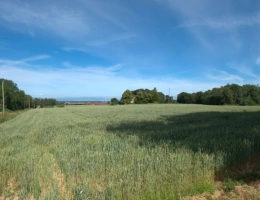

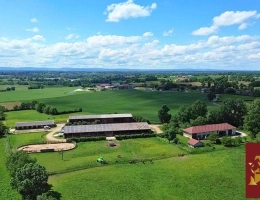
Buying an arable farm for sale in Cantal starts with reading the department properly: this is upland country, grass covers most of the ground, and croppable parcels sit in the basins and the lower valleys, often feeding a herd rather than a grain store. The holdings brought together here are entrusted by farmers handing over, by rural land practices and by notaries, and they state the cropped share, the altitude, the slope, the storage available and the machinery included in the sale. You will find them inside our national selection of arable farms for sale.
Beyond the listings, this page gathers what matters before a visit: what farmland is worth locally, where a cereal farm genuinely comes up, the condition of the buildings and of any drying equipment, and the checks that belong to cropping at altitude. To prepare a setting-up project, our white paper « Créer une exploitation agricole » (in French) lays out each step, from professional qualification through to the financial package.
Pricing the land comes first in any plan to buy an arable farm. On the basis of 2025 DVF sales (vineyards excluded), the median in Cantal (15) works out at €7,381/ha and the average at €7,166/ha, across 136 transactions. The central range covering 80% of sales runs from €3,657 to €10,561/ha; nationally the median is €5,307/ha.
The SAFER benchmark, the market's second yardstick, gives €6,440/ha in 2025 for vacant land and pasture (-2.9% over twelve months, +2.9% over ten years), beside a national €6,460/ha; tenanted land is worth about 17% less.
On this kind of holding the value rarely sits in the hectares. It sits in the shed and its bins, in on-farm drying or storage, in whether the blocks can realistically be combined, in machinery suited to slopes, and in the chosen outlet, cooperative, merchant or the herd itself. The dwelling house and the surrounding grassland are valued on their own terms. Lean on our land price observatory and test your assumptions with our financial calculators.
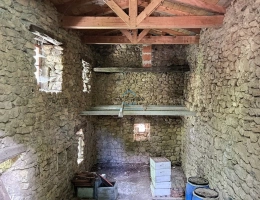
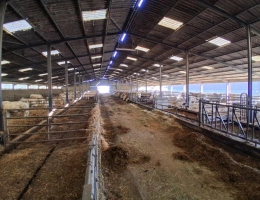
The first question is the field layout: block size, distance from the yard, slope, aspect and whether heavy machinery can get in. A crop farm worked at altitude lives with short weather windows, so grouped parcels and available horsepower decide a great deal. Storage comes next: a sound shed, ventilated bins, a drying bin, an intake pit, and a roller or grinder where the harvest feeds livestock. Many farms here keep their grain rather than deliver it, and that modest equipment shifts the cash position of the business far more than its book value suggests.
Machinery handed over deserves a separate valuation, tractor by tractor, with hours run and service records; the combine is seldom owned outright and usually belongs to a machinery cooperative or a contractor. Where the sale brings together the house, the buildings and the land, ask for a clear split between those headings, because a characterful stone house and a farm shed are not financed in the same way. Basic payment entitlements, forage stocks and the growing crop transfer through their own paperwork, prepared with the seller.
Most arable land is on the Planèze de Saint-Flour, where basalt plateaux carry barley, triticale and rye alongside the grassland. The Alagnon valley towards Massiac, and the fringes of the Aurillac basin, give easier soils and more sheltered situations. The Châtaigneraie in the south-west mixes small cultivated plots with woodland and grass in an enclosed landscape. In the Cézallier and the Monts du Cantal, by contrast, altitude and relief leave little room for anything other than permanent pasture.
Supply is thin, and very few holdings present themselves as purely arable: most are mixed crop and livestock units with a croppable share. Buyers therefore do better to think in workable hectares than in total area, and to look at how much grassland could return to cropping without breaching the rules that protect permanent pasture.
The takeover still falls under the structures control, the French authorisation regime for farming land, with a declaration or a formal application depending on area and on your own position, while SAFER, the rural land agency, can pre-empt a farmland sale and delay signature. A good deal of ground is rented, sometimes under inherited verbal leases: have the situation put in writing, and note the rent, the remaining term and any land-use agreements. A grain farm split between several landowners needs that clarified before any offer is made.
Technically, ask about snow cover, the date growth restarts in spring and the yields actually achieved in recent seasons, since national averages mean little here. Check the access tracks, rights of way, the water supply and any catchment protection zones. Agri-environment commitments entered into by the seller pass on with their obligations, so ask for the list of live contracts and when each one ends.
What you see here is placed by owners, by rural property agencies and by notaries working across the department. Select by area, by budget or by system, put an alert in place so nothing slips past, and widen the search to every arable farm for sale in Auvergne-Rhône-Alpes.


