


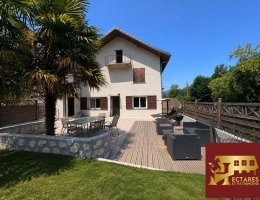
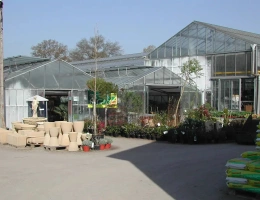
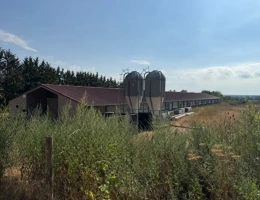
The search for an arable farm for sale in Drôme turns first on water. The Valence plain, the Rhône corridor and the Tricastin grow maize, soft wheat and durum under irrigation, while the hills and plateaux inland farm dry, with shorter rotations. The holdings shown here come from sellers preparing their retirement, from agencies specialising in rural land and from notaries, and they state the irrigable area, where the water comes from, the storage available and the machinery included. They sit alongside our national selection of arable farms for sale.
Before an offer, a few things have to be verified: local land values, the districts where a crop farm comes free, the state of the sheds and the irrigation equipment, and the checks that belong to irrigated systems. To prepare a takeover or a first entry into farming, our white paper « Créer une exploitation agricole » (in French) describes the whole route, from paperwork to funding.
Pricing the land comes first in any plan to buy an arable farm. On the basis of 2025 DVF sales (vineyards excluded), the median in Drôme (26) works out at €8,000/ha and the average at €8,181/ha, across 63 transactions. The central range covering 80% of sales runs from €4,032 to €11,504/ha; nationally the median is €5,307/ha.
The SAFER benchmark, the market's second yardstick, gives €7,190/ha in 2025 for vacant land and pasture (+5.9% over twelve months, +0.1% over ten years), beside a national €6,460/ha; tenanted land is worth about 17% less.
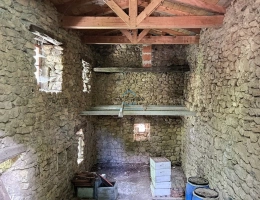
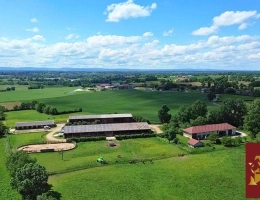
Beyond area, the value of a grain farm here rests on its access to water and on its equipment: a borehole or a connection to a collective network, pivots and reels, a shed with ventilated bins, a dryer, a concrete apron and a workshop. Add the shape of the blocks, whether the soils suit higher-value crops, and the contracts signed with the cooperative or the merchant. Measure it all against our land price observatory, then refine the plan with our financial calculators.
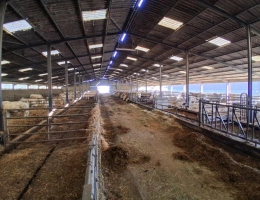
Irrigation equipment governs the rotation and therefore the income. Look at the source, a private borehole, an abstraction from a watercourse or membership of a collective scheme, at the flow available, the age of the pumps, the condition of the buried mains, the hydrants and the reels. Then the storage: a well-roofed shed, ventilated bins, a dryer, a concrete apron, an enclosed workshop. A cereal farm with secure water opens the door to the contract crops this department has long specialised in, seed maize above all, and sells appreciably above ground farmed dry.
Machinery is a heavy heading, especially where the holding mixes combinable crops with specialised production: tractors, cultivation equipment, precision drill, sprayer, mobile irrigation gear. Have it priced line by line. Where the sale includes a house, often old and restored, the residential share can account for a real part of the price, so separate it from the working tool during negotiation. Basic payment entitlements, stocks and the growing crop go through their own documents, timed around the CAP calendar.
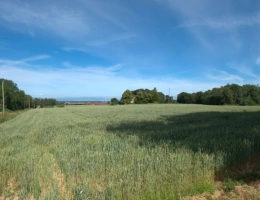
The most sought-after arable land lies in the Valence plain and on the Rhône terraces, between Romans-sur-Isère, Chabeuil and Loriol, where irrigation and soil depth allow varied rotations. The Drôme des collines, north towards Saint-Donat and Hauterives, combines cereals, seed production and orchards. Further south the Valdaine and the Tricastin, around Montélimar and Pierrelatte, grow durum wheat and maize, with lavender and aromatic plant growers as neighbours. The Diois and the Baronnies belong to an entirely different farming world.
Pressure on land is strong in the valley, where housing, orchards and vegetable growing compete for the same fields: holdings sell quickly there and seldom below the market. The hills and plateaux offer more affordable ground in exchange for lower potential. Since this is one of France's most organically farmed departments, part of the supply concerns farms already converted.
The first point is regulatory: clearance under the structures control, France's authorisation regime for taking on farmland, is needed either as a declaration or as a formal application, and SAFER, the rural land agency, may pre-empt a farmland sale. The second is hydraulic: confirm that the borehole is properly declared, that the abstraction volume granted matches the rotation being presented, and that the summer restrictions common on several catchments in the department are reflected in the results you are shown. A weak water right undermines a project whatever the quality of the soil.
Then go through the rural leases in force, their remaining term and rent, along with any environmental clauses. Ask for the cropping history, the state of hedges and grass margins, and where the parcels sit in relation to water catchment zones. If the holding is certified organic, the conversion date and the certification body's inspections pass on with it, as do any production contracts still running.
Private owners, rural transaction firms and notaries keep this page supplied as holdings are released. Filter by area, by budget or by irrigable share, save an alert so new listings reach you as they appear, then open the search out to all arable farms for sale in Auvergne-Rhône-Alpes.


