
Buying a poultry farm for sale in Rhône means working with a compact department, heavily built up in the east and still farmed on its western hills. You will find farm-scale units raising chickens, guinea fowl and ducks, a few turkey buildings, and laying hens whose output largely goes into direct sales. The listings gathered here are entrusted to us by farmers preparing a handover, by rural agencies and by notaries, with a description of the buildings and of the outlet. They join all the poultry farms for sale across France.
Beyond the properties on offer, you will find here the farmland prices recorded in the department, the areas where holdings still come onto the market, the parts of the buildings worth having surveyed, and the regulatory checks specific to poultry keeping. If this is a first entry into farming, our white paper « Créer une exploitation agricole » (in French) sets out the sequence, from legal status to funding.
Land remains the largest item when buying a poultry farm. According to sales recorded by the French tax administration (DVF, vineyards excluded), the median price of agricultural land in Rhône (69) stood at €3,728/ha in 2025, with an average of €4,254/ha across 71 sales; 80% of transactions fall between €2,000 and €7,027/ha, against a national median of €5,307/ha.
The SAFER benchmark of land values (2025 figures) puts vacant land and pasture at €4,630/ha (-6.3% year on year, +0.4% over ten years), against a national average of €6,460/ha; land already let sells around 17% lower.
In a department where land is counted in square metres more than in hectares, the value of a holding rests above all on the buildings and the goodwill: the state of the houses, the ventilation, the heating, the silos and the packing room, but also the place won on local markets and in producer shops. A chicken farm on the market with an established customer base and an approved workshop is negotiated on different terms from a bare building. Place these figures with our land price observatory and our financial calculators.
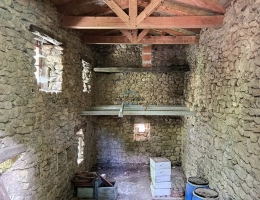
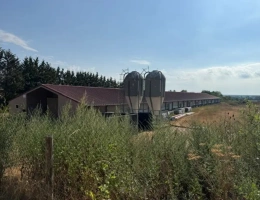
Buildings here are rarely very long: you mostly meet medium-sized houses, mobile huts on range, and laying-hen units on litter, sometimes fitted into converted farm buildings. A survey covers the frame, the roof and the insulation, the ventilation, the heating, the silos, the feed and water lines, the floor and the surroundings. A building that is easy to clean, fitted with a compliant entry room and allowing a full empty period between batches is valued above an older structure whose upgrading is still to be done and budgeted for.
Integration contracts exist here, but a notable share of holdings work through short supply chains: value then shifts to the goodwill, the approval covering the cutting or packing room, the market pitches and the customer book. Find out whether those elements can be transferred before making an offer. Where a dwelling house is included, which is common in the Monts du Lyonnais, separate its residential value, often high this close to the conurbation, from the value of the production tool itself.
Poultry keeping in Rhône is concentrated in the west and north. The Monts du Lyonnais, around Saint-Symphorien-sur-Coise and Saint-Laurent-de-Chamousset, combine dairying, farm-reared birds and orchards on holdings of moderate size. The Arbresle country and the Azergues valley offer intermediate sites, close to Lyon and therefore much in demand. In the Beaujolais, vines occupy most of the slopes, but the Monts du Beaujolais and the Beaujeu country keep livestock holdings. To the south, the Mornant plateau and the fringes of the Pilat complete the picture, with land equally tight.
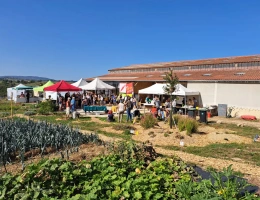
Everywhere, urban pressure and competing land uses limit how many holdings come up each year, and handovers are often settled before any listing appears. Widening the search to Loire, Ain or northern Isère noticeably increases the options. In return, the density of population is a commercial outlet few rural departments can match for a project built on direct selling.
Proximity to housing is the first subject here: it governs the regulatory distances, how far neighbours will tolerate the activity, and whether an extension is feasible at all. Depending on flock size, the unit falls under declaration, registration or authorisation within the French classified installations regime, and the change of operator is notified to the prefecture; the applicable order sets out the conditions to observe. Check as well the flock register, the biosecurity plan, the avian influenza measures and, for outdoor range, the fencing and the protection of water points. The local planning document repays careful reading before any building project.
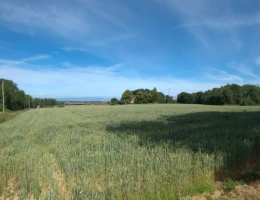
On the land side, the acreage available around the buildings determines manure spreading capacity and therefore room to grow. Rented parcels remain governed by a rural lease, which continues with the incoming farmer with the landlord's agreement, and the transaction stays subject to the structures control, the French authorisation regime for taking over farmland, and to SAFER's pre-emption right. Ask for a separate valuation of buildings, equipment, goodwill and land, and prepare any setting-up support application before signature.
Sellers on this page include farming families, agencies specialising in rural property and notarial offices. Filter by area, by budget or by production, whether you are after an egg farm or a broiler farm, and set up an alert to follow new listings as they appear. You can also browse all poultry farms for sale in Auvergne-Rhône-Alpes.