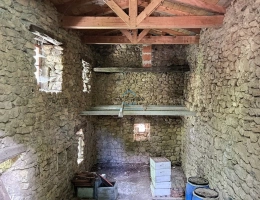
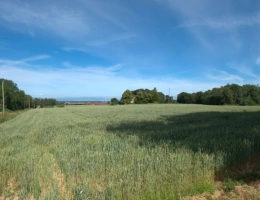
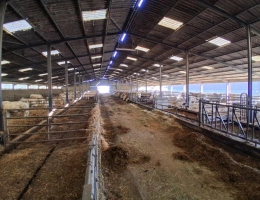
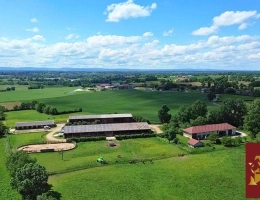
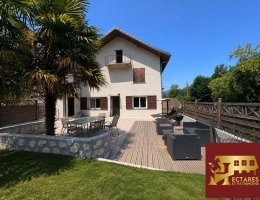
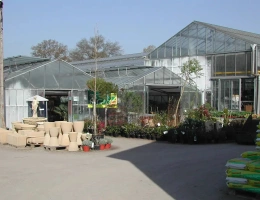
Hunting for farms for sale in the Rhône department means accepting a local rule: here, added value per hectare matters more than area. This is one of the smallest and most populated departments in France, the Lyon conurbation consumes space, and the farming that remains has adapted by backing vines, fruit, vegetables and selling straight to the consumer. Projects that succeed are rarely those chasing wide parcels; they are the ones buying an outlet, a bearing orchard or a proven enterprise. These holdings join our record of farms for sale in France.
This page assembles what is worth knowing before bidding: the level of land values here, the districts still genuinely farmed, the sectors looking for successors, and the legal precautions specific to a territory under urban pressure. Our white paper « Créer une exploitation agricole » (in French) supports the build-up of a project, from status to funding.
Land forms the base of a farm's value. DVF, the property sales database published by the French tax administration (vineyards excluded), records a 2025 median of €3,728 per hectare in Rhône (69), an average of €4,254 and 71 sales; four transactions in five fall between €2,000 and €7,027, against a national median of €5,307.
The SAFER land value benchmark sets €4,630 per hectare for vacant land and pasture offered for sale in the same year, -6.3% over one year and +0.4% over ten, against €6,460 nationally. SAFER publishes no local figure for let land, too few sales being recorded; nationally, land sold with a farm tenancy in place trades at a discount of about 17%.
Against the Auvergne-Rhône-Alpes region, whose median is €3,887 per hectare, this department sits 4% lower. For commune-level detail and comparisons with neighbouring areas, see our land price observatory, then cost your purchase with our financial calculators.
The Beaujolais covers the north of the department and remains its largest agricultural employer; estates pass on with a cellar, winemaking equipment and sometimes an established customer list, while some grubbed-up parcels are returning to grass or to orchard. The Monts du Lyonnais and the western slopes carry fruit growing and market gardening, two sectors where taking over a going concern saves several years of building up to full production. Diversification into visitor accommodation or on-site catering often accompanies these handovers and changes the kind of buildings a buyer should be looking for.
Livestock survives on the heights: dairy holdings and small goat herds processing on site, suckler cattle in the Haut-Beaujolais and the Tarare hills, usually backed by direct sales. A working farm in this department is therefore assessed less per hectare than on the strength of its sales channels: collective farm shops, Lyon markets, restaurants, vegetable boxes. Ask what share of turnover is made outside the long supply chain.
Three areas concentrate the offer. The Beaujolais vineyard, from Villefranche-sur-Saône up to the northern crus and down to the golden-stone country in the south, where estate sales are frequent and values spread widely by appellation. The Monts du Lyonnais, around Saint-Symphorien-sur-Coise and Saint-Laurent-de-Chamousset, still the department's real livestock and mixed-farming country. The Arbresle country and the Tarare hills to the west, more wooded and cheaper, where mid-sized units come free.
Everywhere else — east of Lyon, the lower Azergues valley, the Rhône terrace — farming almost never wins the competition for ground. Looking for an agricultural property immediately next to the conurbation generally leads to small, fragmented and dearly paid areas, whereas the west of the department offers far better parcel coherence. Candidates setting up in market gardening sometimes get round the obstacle by renting their land and buying only the farmstead and its equipment.
In a department this built up, the first reflex is to read the communal planning document: how parcels are zoned, protection perimeters, reserved sites and extension areas govern a holding's future as much as its soils do. Ask too whether a protected agricultural zone or a farmland preservation perimeter applies, since either secures the acquired ground for the long term. Check access to irrigation water, scarce and contested on the slopes, along with rights of way across parcels often hemmed in by housing and roads.
The rest is general law: notification of the sale to SAFER, which holds a pre-emption right; authorisation to farm granted under the regional structure plan; and continuation of the sitting tenant with his priority right to buy. In the Beaujolais, add the appellation specification, the health status of the vineyard, the age of the plantings and the treatment of stock, which is negotiated separately from the land.
Winegrowers without a successor, growers reaching the end of their career, stock farmers in the Monts du Lyonnais: their mandates reach this page through rural agencies and notary offices, or directly when they sell on their own. Sorting by sector, area, presence of a cellar or workshop and budget brings the relevant files up quickly, and an e-mail alert then takes over. For the wider picture: farms for sale in Auvergne-Rhône-Alpes.