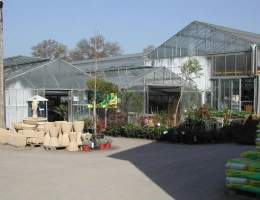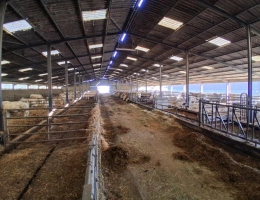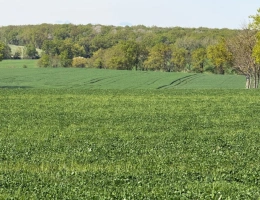
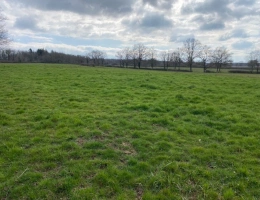
Most farms for sale in Allier share one profile: grass, hedges, a suckler herd and blocks of land that have become scarce elsewhere. That is what draws buyers to the Bourbonnais from regions where the price of a hectare now rules out any ambitious start. The properties shown on this page are entrusted to us by stockmen with no family successor, by landlord families rearranging their assets, by local notarial offices and by handover advisers. Forage area, share of permanent pasture, capacity of the livestock buildings, machinery included and the legal status of each parcel are set out listing by listing. All of them join our inventory of farms for sale in France.
Settling here means reading more than the asking price. This page sets out what land is genuinely worth in each farming district, which systems work, where supply renews itself and which legal checks decide whether a project is feasible at all. Anyone still at the thinking stage will find the method for building a case in our white paper « Créer une exploitation agricole » (in French).
Land forms the base of a farm's value. DVF, the property sales database published by the French tax administration (vineyards excluded), records a 2025 median of €3,520 per hectare in Allier (03), an average of €4,174 and 239 sales; four transactions in five fall between €2,503 and €7,154, against a national median of €5,307.
The SAFER land value benchmark sets €4,220 per hectare for vacant land and pasture offered for sale in the same year, +1.2% over one year and +13.1% over ten, against €6,460 nationally. SAFER publishes no local figure for let land, too few sales being recorded; nationally, land sold with a farm tenancy in place trades at a discount of about 17%.
Against the Auvergne-Rhône-Alpes region, whose median is €3,887 per hectare, this department sits 9% lower. For commune-level detail and comparisons with neighbouring areas, see our land price observatory, then cost your purchase with our financial calculators.
The department is one of the cradles of the Charolais breed, and most cattle holdings offered here are suckler units, sometimes finishing their own stock, run on permanent pasture with little bought-in feed. A buyer finds coherent structures: workable handling buildings, water points spread across the blocks, a pedigree herd sometimes sold with the farm. Sheep enterprises, less visible, occupy the lighter ground and combine readily with cash crops. Along the Allier valley and towards the Limagne bourbonnaise, arable holdings take over on deep silt soils.
The north of the department keeps a few dairy holdings and some on-farm processing, while the Montagne bourbonnaise combines grass, woodland and off-farm work. The Saint-Pourçain vineyard, above the Sioule and the Allier, supplies a narrow but closely watched market of its own. For a new entrant the decisive question is less the production than the ratio between area farmed and capital locked up: a working farm held largely on tenancy ties up vastly less cash than an estate bought outright.
The Bourbonnais hedgerow country, between Moulins, Bourbon-l'Archambault and Cérilly, spreads the hedged pastures the department is known for, with complete livestock units coming back to the market at regular intervals. To the east, the Sologne bourbonnaise, around Le Donjon and Dompierre, adds ponds, wet soils and fragmented parcels. The Allier valley and the silts near Varennes carry the most fertile and most contested ground. To the south-east, the Montagne bourbonnaise, near Le Mayet-de-Montagne, belongs to upland grass and forest; to the west, the Combraille bourbonnaise and the approaches to Montluçon are rougher country.
The highest values cluster along the Moulins-Vichy axis and on the ploughable valley ground; the lowest entry tickets are found in the Combraille, in the Montagne bourbonnaise and on the wet edges of the Sologne bourbonnaise. It is in the central hedgerow country, less speculative and well provided with buildings, that the soundest compromises between available area and financial effort come up.
The Bourbonnais is landlord country: the share of rented ground runs well above the national average, a legacy of an old pattern of ownership. Many holdings therefore come to market with a sitting tenant whose statute protects his occupation and who holds a priority right to buy when the owner sells. Before going further, insist on copies of the leases, their renewal dates, the rent position and the inventory made at entry: those papers decide what you will actually be able to farm, and from when.
SAFER is told of every intended sale by the notary and may pre-empt in order to redirect the property. Permission to farm, issued under the structure plan in force across Auvergne-Rhône-Alpes, is weighed against the area taken on and the applicant's record. One local constraint deserves attention: the upkeep of the hedge network, protected both by planning documents and by farm policy commitments, limits the internal reorganisation some buyers picture carrying out on arrival.
Behind these listings stand sellers with distinct profiles: stockmen whose children left the farm, owning families winding up an estate let out for generations, farmers separating the herd from the buildings. Their instructions arrive mainly as lease dates approach, in late autumn and at the end of winter. Filter by farming system, by area and by borrowing capacity, then hand the watching to an e-mail alert; a seller can list a holding himself. See also farms for sale in Auvergne-Rhône-Alpes.