


The market for a market garden for sale in Cantal is a niche one, in a department that grass-based livestock farming occupies almost entirely. What comes up is usually a small short-chain unit, set up where the climate softens: the Aurillac basin, the Châtaigneraie and the lower valleys to the west. The holdings gathered here come from growers handing over, from agencies specialising in rural property and from local notaries, and state the area cropped, the structures in place, the water available and the customer base built up. They sit alongside the market gardens and nurseries for sale across France.
This page adds what the listings leave out: what land costs here, where vegetable growing is genuinely workable, how to judge a structure exposed to frost and snow, and the approvals that frame a purchase. The white paper « Créer une exploitation agricole » (in French) covers the route to setting up and the funding plan.
Land value drives much of the asking price for a market garden or nursery. French tax transfer statistics (DVF, vineyards excluded) show, for 2025, a median of €7,381/ha in Cantal (15), an average of €7,166/ha and 136 sales; 80% of transactions settle between €3,657 and €10,561/ha, against a national median of €5,307/ha.
On the SAFER side, the value of vacant land and pasture is set at €6,440/ha for 2025, moving -2.9% over a year and +2.9% over ten, against €6,460/ha nationally; expect an average discount of 17% where a lease is running.
In upland country, protection and outlets make the value. Look at the plot's aspect and shelter from wind, how the soil carries in spring, whether the structures are built for snow load, how the irrigation network is drained down against frost, the chilled storage available, the presence of a propagation house, and then the goodwill: market pitches held in Aurillac or Saint-Flour, box scheme subscribers, orders from restaurants and canteens. Our land price observatory and our financial calculators help place that figure in context.
An upland tunnel is not judged like one on the plain. Check the gauge of the hoops, the spacing between them, the bracing and the anchoring, because snow load and gusts test any structure built to the minimum; a tunnel flattened one winter is rarely put back up cheaply. Then look at frost protection, the fleece available, the back-up heating for raising plants, the insulation of the germination room, and the irrigation network's ability to be drained, without which the pipes split. A plant nursery for sale reads differently: hardiness of the range grown, area under shade, a well-drained container bed, a dedicated water reserve.
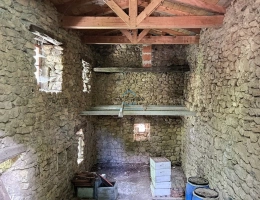
Local buildings, often in volcanic stone under heavy slate, cost a good deal to maintain but give useful volume for storage and packing. Check that the washing room meets food hygiene requirements, that the electrical supply will carry a refrigeration unit, the state of the roof and how vehicles get in when there is snow. Where house, outbuildings and land are sold together, insist on a written split of the price, without which working out the finance becomes guesswork.
The Aurillac basin combines the mildest ground with the department's main customer base: most working vegetable units and the busiest markets are found there. The Châtaigneraie, to the south-west, enjoys a gentler climate and acid soils that suit certain crops, with land still reasonably priced. The valleys of the Dordogne and the Sumène, towards Mauriac and Ydes, offer sheltered situations at lower altitude. By contrast the Planèze de Saint-Flour, the Cézallier and the slopes of the Cantal massif remain grassland country, where altitude and cold leave little room for vegetables beyond what a household consumes.
Demand for land comes mainly from livestock farmers, which holds up the price of grass even in thinly populated districts. Someone looking to grow vegetables is therefore after good situations rather than acreage: a sheltered, well-exposed plot with water laid on and a road that stays passable all year is worth more than a larger holding that sits isolated and becomes awkward to reach in winter.
Climate governs whether the project works at all: a short season, late spring frosts, cold returning early in autumn. Ask the seller for the usual dates of first and last harvests, and what share of turnover is earned out of season thanks to the covered ground. On water, check the status of the spring or catchment, whether it has been declared to the prefecture, the water quality if it is used for washing vegetables, and how the abstraction point is protected. An undeclared spring, common on older farms, must be regularised before commercial use.
The transaction falls under the structures control, the administrative authorisation required to take over farmland, and SAFER, the rural land agency, holds a pre-emption right. Rented parcels remain governed by the rural lease in force, which continues with you. If the holding includes grassland kept for rotation or support reasons, examine its status and any environmental commitments entered into, since these pass with the land and bind you for the remainder of their term.
The sales shown reach us from owner-occupiers, from rural estate agencies and from notarial offices in the department. Sort the results by area, by price and by the commune they sit in, ask for an alert so you follow new files as they arrive, and widen out if you wish to the market gardens for sale in Auvergne-Rhône-Alpes.


