


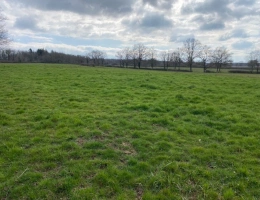
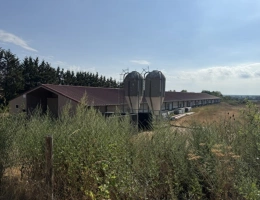
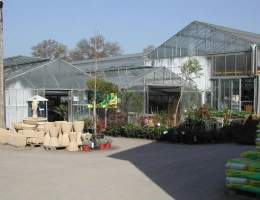
Acquiring a market garden for sale in Haute-Savoie means dealing with a department where demand for food is strong and land is scarce: the Genevois around Saint-Julien-en-Genevois, the Albanais towards Rumilly, the Annecy basin, the Chablais between Douvaine and Thonon-les-Bains, and the lower Arve valley. These holdings come to us from growers arranging their handover, from rural property agencies and from notaries; each one details the area farmed, the equipment under cover, the nature of the water right and the clientele in place. They complete our national selection of market gardens and nurseries for sale.
What a listing leaves out: what land actually fetches in the department, the communes where holdings genuinely come free, the state of a set of greenhouses, and the consents to obtain before growing anything. You will find it below. For the legal and financial shape of the project, lean on our white paper « Créer une exploitation agricole » (in French).
Land value drives much of the asking price for a market garden or nursery. French tax transfer statistics (DVF, vineyards excluded) show, for 2025, a median of €8,000/ha in Haute-Savoie (74), an average of €7,821/ha and 19 sales; 80% of transactions settle between €4,690 and €10,394/ha, against a national median of €5,307/ha. * Fewer than 30 recorded sales: indicative value.
On the SAFER side, the value of vacant land and pasture is set at €9,680/ha for 2025, moving +2.0% over a year and +11.8% over ten, against €6,460/ha nationally; expect an average discount of 17% where a lease is running.
What you buy goes well beyond area. Soil quality and drainage, security of water supply, the age of the multi-span houses and tunnels, heating and thermal screens, the washing station, the cold store, the standing ground for young plants, and on an ornamental site the benching and potting area all feed into the price. To that add the goodwill: market pitches, box scheme subscribers, supply deals with garden centres or mountain restaurants. Weigh the figure quoted against our land price observatory and test your funding with our financial calculators.
The local stock mixes plastic tunnels, recent multi-span houses and a few heated glasshouses inherited from ornamental growing. Look at the frame itself — hoops, bracing, anchoring, gutter height — then at how the film is holding, the automated venting, the insulation and the energy source. On a greenhouse business, attention shifts to the benching, the collection pond, the fertigation unit and the capacity to raise young plants; on a plant nursery, what counts is the living stock and the pace at which it is replaced. Finally study the irrigation network: where the water comes from, the pressure available, the state of the borehole or the mains connection, the validity of the abstraction title, and how densely the drip lines run under cover and in the open.
The downstream end governs day-to-day profitability: washer, grader, cold store, a packing room meeting hygiene rules, a store for young plants, a refrigerated van for delivery rounds. Many holdings bundle a dwelling house, a shed, covered cropping and adjoining land; in Haute-Savoie the house is often worth as much as the business, which complicates funding. Have the value broken down item by item before making an offer, and check what the seller genuinely owns and what remains on lease.
The Genevois and the ring around Annemasse concentrate a dense clientele, high spending power and land contested between farming and development: holdings there are rare and dearly paid for. The Albanais, around Rumilly and Alby-sur-Chéran, offers deeper soils and more attainable area within reasonable reach of Annecy. The Chablais, from Douvaine to Thonon-les-Bains and Évian-les-Bains, combines lowland ground, lakeside markets and a tourist clientele. The lower Arve valley, towards Bonneville, retains a few vegetable farms. Higher up, from the Faucigny to the Mont-Blanc country, production is the work of smallholdings tied to the mountain villages.
Here price owes less to the hectare than to the distance to the eater. Irrigated growing land within reach of Geneva or Annecy trades well above a comparable plot inland, because selling the crop is all but guaranteed. Settle instead in the Albanais or the inner Chablais and the entry cost falls, but the sales network has to be built from scratch. That gap shapes very nearly every search run across the department.
In a department where building keeps advancing, the planning document deserves close reading: farm zoning, reserved sitings, growth areas, rights of way, proximity to a protected wetland. A reclassification that looks favourable can in fact complicate putting up a greenhouse, or attract a developer's interest. Then verify the water: a declared borehole, an abstraction licence still in force, a flow that holds through summer, and the restrictions already familiar on that catchment. Above a certain ground footprint, structures require a prior declaration or a building permit, and many older frames were never regularised.
The takeover remains subject to the structures control, the French authorisation regime for farming land, and SAFER, the rural land agency, uses its pre-emption right often on the department's urban fringe. Let parcels pass on with their rural lease attached. Ask for soil analyses and the input history, especially on a site long run for ornamental production. Where organic certification applies, have the certifying body confirm the commitment date of each field.
Retiring growers, agencies specialising in rural property and local notaries entrust these holdings to us. Use the filters to target an area, a budget or a district, set up an alert so you hear of an offer the day it appears, and if your project can move, open the search to market gardens for sale in Auvergne-Rhône-Alpes.


