

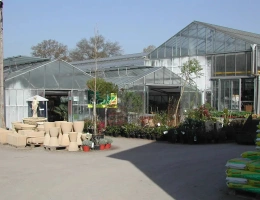
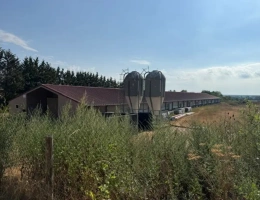
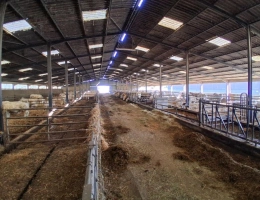
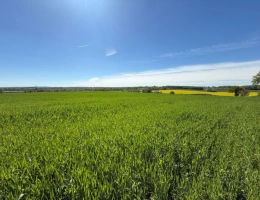
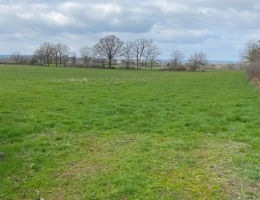
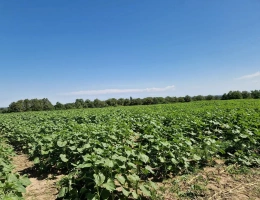
Looking for a goat farm for sale in Allier means working through a grassland and hedgerow department where goats remain a niche, frequently run by newcomers to farming who process their own milk. The holdings shown here are released by farmers stopping work, by rural property negotiators and by notarial offices; the descriptions set out how many dairy goats are milked, how old the shed is, whether a processing workshop exists and how the land splits between meadow and rough grazing. All of them sit within our national overview of goat farms for sale.
The page goes past the adverts: it places local land values, points to the districts where a holding most often comes up, explains what to inspect in a converted building and recalls the checks that apply to goat milk. Where the plan involves setting up in farming, our white paper « Créer une exploitation agricole » (in French) works through the administrative and financial stages.
Land weighs heavily on the budget for a goat farm. Transfers published by the French tax authorities (DVF, excluding vineyards) put the median for farmland in Allier (03) at €3,520/ha in 2025, with an average of €4,174/ha over 239 sales. Eight transactions in ten settle between €2,503 and €7,154/ha, where the national median is €5,307/ha.
A second reference, the SAFER land value benchmark, sets vacant land and pasture at €4,220/ha for 2025, +1.2% in a year and +13.1% over a decade; the French average is €6,460/ha, and a sitting tenant costs a plot roughly 17% of its value.
Behind the advertised acreage sit the items that really make the price: the roof structure and airflow of the shed, the parlour and its bulk tank, the make room, the drying room, the cold store, then the herd itself, its Alpine or Saanen breeding and its replacement rate. The outlet weighs just as heavily, whether a round of markets, farm-gate sales, shelves in a producers' shop or milk taken by a dairy. Place it all against our land price observatory and our financial calculators.
Many caprine units in the Bourbonnais occupy converted cattle buildings: generous height under the ridge but airflow that needs rethinking, floors not always suited to scraping out, feed passages too narrow for a straw-bedded herd. So look hard at the roof covering, the insulation around the milking area, the electrical supply available, dry hay storage and the water reserve. The parlour, herringbone or platform, is judged on maintenance, on the cleanliness of the milk line and on the age of the tank rather than on appearances. A compliant milking block and a drained washing bay spare the buyer work that otherwise has to be priced into the offer.
As soon as a cheese room is attached, the valuation splits in two. Make room, drying room, cold store and sales point form a commercial asset whose worth rests on the approval held, the volume processed and above all the customers tied to it. A herd delivering into collection, by contrast, is worth what the reliability of that collection is worth. Where the sale covers the house, the outbuildings and the meadows, have each block costed on its own: in this department old stone weighs heavily on asking prices while adding nothing to the working tool.
The Montagne bourbonnaise, east of Vichy, holds a share of the goat units: moderate altitude, good grass, sloping grazing and holidaymakers within reach. The south-west, between the Combraille bourbonnaise and the approaches to Montluçon, offers modest farms and land that remains affordable. The bocage around Bourbon-l'Archambault and Cérilly is still dominated by suckler cattle, yet farmsteads come free there regularly. The Sologne bourbonnaise and the Allier valley, more arable and more sought after, yield fewer caprine opportunities on land that changes hands quickly.
Land values here remain among the most measured in France, which makes the department a sensible entry point for a first purchase. The trade-off is distance from consumers: milk and cheese find their value mainly on the markets of Vichy, Moulins and Montluçon, and through short supply chains reaching towards Clermont-Ferrand.
Taking on a goat cheese farm here starts with placing the unit under the French classified installations regime: depending on numbers, the rules run from simple declaration to registration and on to authorisation, and every change of operator is notified to the prefecture. Below those thresholds the departmental health regulation governs siting distances and effluent storage. Then ask for the herd's status on CAEV, the caprine arthritis-encephalitis virus, and on paratuberculosis, together with brucellosis testing records and cell count history, because cleaning up a herd costs time and culls well beyond the purchase price.
No protected designation of origin covers goat cheese in this department, so value rests on direct sales, organic certification or the farm's own name, which makes goodwill all the more decisive. Legally, check the leases on rented meadows, the continuation of the rural lease with the buyer, the passage through the structures control, the French authorisation regime for taking over farmland, and any pre-emption by SAFER. A young farmer grant application is built before signature, never after.
This page gathers listings placed by farmers, rural agencies and notaries across the Bourbonnais. Sort by area, by price or by the presence of a workshop, then set an alert: a smallholding of this kind seldom appears twice in the same season. Preparing a handover of your own? Publish the listing. Then widen the search to goat farms for sale in Auvergne-Rhône-Alpes.