

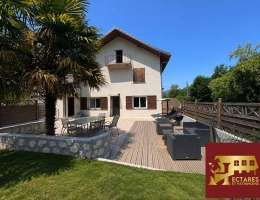
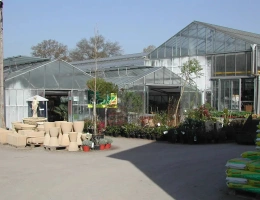
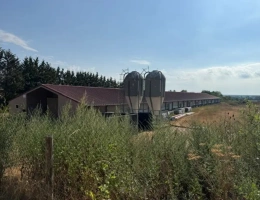
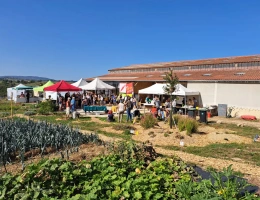
Buying a goat farm for sale in Haute-Loire means accepting an upland setting: the Velay and Devès plateaus, the slopes of the Mézenc, the Margeride, the volcanic domes of the Meygal and the gentler basins of the Emblavez and the Brivadois. A goat herd puts grassland that is hard to mechanise to work, and the milk is most often turned into cheese on the farm itself. The properties entrusted to these pages come from farmers arranging their handover, from agencies specialising in rural property and from notaries, with details of the herd, the milking set-up and the storage buildings. They sit among all our goat farms for sale.
Here you will find what a listing leaves out: the level of farmland prices in the department, the areas putting the most farms on the market, the expensive items in an ageing building and the checks specific to goat units. Our white paper « Créer une exploitation agricole » (in French) guides you on legal status, funding and the required farming qualification.
Land weighs heavily on the budget for a goat farm. Transfers published by the French tax authorities (DVF, excluding vineyards) put the median for farmland in Haute-Loire (43) at €3,487/ha in 2025, with an average of €4,009/ha over 93 sales. Eight transactions in ten settle between €2,112 and €6,592/ha, where the national median is €5,307/ha.
A second reference, the SAFER land value benchmark, sets vacant land and pasture at €4,380/ha for 2025, +2.1% in a year and +10.1% over a decade; the French average is €6,460/ha, and a sitting tenant costs a plot roughly 17% of its value.
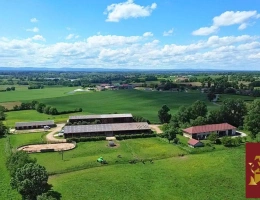
At altitude, the value of a goat farm rests first on the quality of the working tool: a frost-free goat house, a workable milking parlour, a bulk tank and a barn able to hold a serious stock of hay. Then come the herd, its yield and its management, the cheese room and cellars where the farm processes, and the custom attached to the markets of Le Puy-en-Velay, Yssingeaux and Brioude. Compare those benchmarks with our land price observatory and plan your funding with the financial calculators.
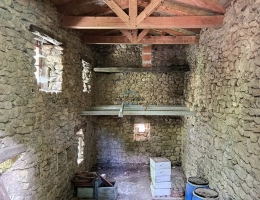
The climate sets the terms: a building here has to stay dry and frost-free without losing its ventilation. So look at the frame, the roof insulation, how the pipework is protected, the orientation of the openings and the bedded area, then the kidding pens and the space kept for young stock, which is busy through the winter. The milking parlour holds most of the technical capital: units, vacuum pump, automatic washing, bulk tank and adjoining milk room. Generous forage storage, essential where grass growth stops early, separates a self-sufficient farm from one condemned to buy hay every year.
Many units in the department process their own milk, so the dairy room is inspected as a tool in its own right, with its make room, drying room, cellar, cold stores and either health approval or the exemption covering direct supply. No protected goat cheese designation covers Haute-Loire; commercial value rests on the reputation of the farm's own brand, the markets it holds and the retailers it supplies. Where a dwelling house is included, ask for the home, the working buildings and the land to be valued separately, or the negotiation becomes unreadable.
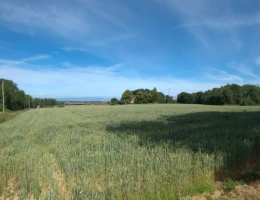
Supply follows the relief and the soils. The Devès plateau and the country around Le Puy-en-Velay hold accessible grassland farms with town customers within reach. The Mézenc and the Meygal, towards Fay-sur-Lignon and Saint-Julien-Chapteuil, gather upland farms with extensive grazing and long winters. The Margeride, on the Saugues side, offers large grassland units at more moderate prices. The Emblavez and the Brivadois, lower and milder, allow more flexible forage systems. The Yssingeaux area, industrial and densely settled, releases less land but brings a useful local clientele.
Handovers come up mainly where the farming population is ageing and family succession is missing, which means the inland plateaus rather than the immediate surroundings of the towns. A buyer willing to take on altitude and distance will usually find complete units, buildings and land together, at a price the peri-urban areas no longer allow. The trade-off is heavier machinery costs, longer delivery runs and a short grazing season that weighs on forage planning as much as on cash flow in the first years.
The classified installations regime applies above a certain herd size, by declaration or registration depending on numbers, and the prefecture must record the change of operator. Ask for the order in force, the spreading plan and the effluent storage capacity, along with any requirements linked to water catchments and wetlands, which are common on these volcanic plateaus. For processing, health approval is reissued after a veterinary inspection and does not simply travel with the sale. The herd's veterinary records should be checked document by document.
On land, establish how much is rented, how long the leases still run and where the landlord stands: the French rural lease continues with the buyer, but the deal goes through the structures control, the authorisation regime for taking over farmland, and SAFER's pre-emption right. A dairy goat holding in a mountain zone qualifies for specific support, including the natural handicap compensation payment, which should be confirmed field by field. Finally, assess winter access, which governs both milk collection and deliveries to customers.
These pages gather properties put on the market by retiring farmers, rural estate agencies and notaries. Pick what suits you by area, price or the presence of a cheese room, and switch on the e-mail alert: a goat cheese farm or a working smallholding rarely stays available for long. You can also browse every goat farm for sale in Auvergne-Rhône-Alpes.