

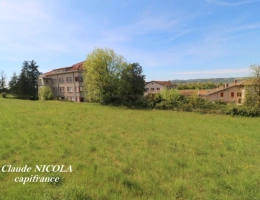
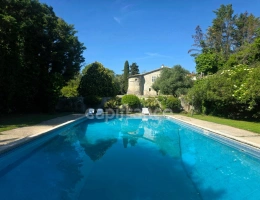
A historic monument for sale in Drôme often takes the form of a Provençal bastide in the south of the department, a former olive-oil mill in the Eygues valley, or a chateau overlooking the Rhône valley. From Valence to Nyons, by way of Die and the Drôme side of the Vercors, this protected heritage blends Provençal and alpine influences. Browse the historic monuments for sale listed by the department's private owners, agencies and notaries. Some of these residences remain tied to a working farm or vineyard still active in the surrounding countryside.
Here you will find the protected typologies present in Drôme, the areas where they occur, the obligations and grants tied to their status, and the checks specific to this type of property before any project. To place the purchase within a full approach, read our guide to buying prestige property in France. Buying such a property means understanding beforehand the steps tied to its protected status.
The Drôme provençale, around Nyons and Grignan, retains bastides and limestone residences with coloured shutters, genoise eaves and terraced gardens. Along the Eygues and the Berre, former oil and flour mills, some still fitted with their millstones, bear witness to a long agricultural past. Further north, around Valence and Romans-sur-Isère, townhouses and master's houses in Rhône stone predominate, while the Drôme side of the Vercors keeps a more mountainous building stock in stone and timber. The bright colours of the shutters, blue or green depending on the village, contribute to the visual identity of the bastides in the south of the department, a choice often regulated during facade work.
Outbuildings recall these past uses: dovecotes and stone huts in the south, water channels near the mills, barns and vaulted cellars on the wine estates. Many of these buildings were altered in the nineteenth century, with verandas or farm outbuildings added. Recent projects favour lime renders and the traditional canal tiles of the southern department. Some mills still have their original millrace and wheel, rare features now sought by buyers wishing to restore a full heritage use.
The Rhône valley, around Valence, Tain-l'Hermitage and Montélimar, holds a significant protected urban and wine-related building stock. The Drôme provençale, from Nyons to Grignan and Dieulefit, draws buyers seeking bastides and mas farmhouses, while the Diois, around Die, and the Drôme side of the Vercors offer a more rural and mountainous heritage, often more secluded. The Royans district, near Saint-Nazaire-en-Royans, completes this set with residences close to the first foothills. Proximity to Vaucluse and the Comtat Venaissin naturally widens the choice for a buyer interested in the Provençal heritage of southern Drôme.
Valence TGV and Montélimar station put the department under three hours from Paris, while the Diois and the Drôme provençale are reached by road from these two hubs. The Rhône valley and the Grignan area rank among the most sought-after zones; the Diois and the Drôme side of the Vercors offer comparable properties at more affordable levels. The A7 motorway runs along the Rhône valley and eases links between Valence, Montélimar and routes towards Lyon and Avignon.
Identify whether the building is classified or registered, since this status determines the extent of oversight exercised by the Architecte des Bâtiments de France over facade, roof and surrounding-area works, as well as the processing times to plan for. The seller is required to inform the buyer of the building's exact status, and the sale of a classified building triggers a mandatory notification to the administration. In the south of the department, summer wildfire risk sometimes requires mandatory vegetation clearance around protected buildings.
The historic-monument tax regime can allow, subject to conditions checked case by case, the deduction of certain restoration costs. On site, have the condition of the canal-tile roofs checked, the stability of the dry-stone terraces common in the south of the department, and drought risk on clay soils, then route the works through a contractor qualified for protected buildings. Also check the condition of traditional irrigation channels serving some estates, whose upkeep is often the responsibility of a local water association to identify before purchase.
Historic monument listings in Drôme come from private owners, agencies specialising in Provençal heritage and notaries; filter them by typology, area and outbuildings, and set an e-mail alert to track new listings. To compare with neighbouring departments, browse historic monuments for sale in Auvergne-Rhône-Alpes. Finally, ask about access to adjoining farmland, sometimes subject to ongoing agricultural leases.