

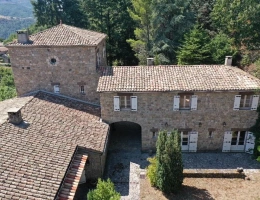
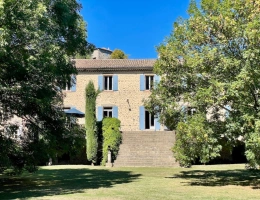

A historic monument for sale in Ardèche is often marked out by walls of limestone or volcanic rock, roofs of stone slabs or round tiles, and a setting perched above the Rhône valley or the inland gorges. From Annonay to Aubenas, by way of the Boutières and the Ardèche plateau, this protected heritage tells the story of the region's silk mills and fortified mid-mountain farms. Browse the historic monuments for sale listed by the department's private owners, agencies and notaries. Some of these buildings have kept their original farming or craft use, while others lend themselves to residential conversion.
This page presents the protected typologies found in Ardèche, the areas where they cluster, the obligations and grants tied to their status, and the checks to make before starting works on this type of building. To widen the reflection to the full project, read our guide to buying prestige property in France. Buying such a property means understanding beforehand the steps tied to its status before starting any works.
Along the rivers of Ardèche, former silk mills, nineteenth-century industrial buildings in stone and brick, bear witness to the rise of the spinning trade before its decline. In the Boutières and on the Ardèche plateau, the limestone or volcanic-stone mas, often perched on a ledge, combines thick walls, small openings and a roof of stone slabs or round tiles depending on altitude. Further south, around the Ardèche gorges, fortified farms and former hilltop castles occupy defensive positions on rocky outcrops. Factory chimneys still visible near some former silk mills bear witness to intense nineteenth-century industrial activity, now almost entirely gone from the Ardèche landscape.
Outbuildings vary with the terrain: silkworm-rearing houses near the rivers, dry-stone sheep folds and rabbit hutches on the plateau, wine cellars and storerooms in the wine-growing areas of the north. Many of these buildings retain older structures despite successive farming uses through the twentieth century. Current restorations favour lime renders and traditional roofing compatible with the department's contrasting climate. The dry-stone terraces surrounding many mas, known locally as faisses or bancels, need regular upkeep to remain stable.
The north of the department, around Annonay and Tournon-sur-Rhône, retains protected industrial and wine-related heritage along the Rhône. The Boutières and the Haut-Vivarais, around Lamastre and Le Cheylard, offer rural mid-mountain buildings, while the centre, around Aubenas and Vals-les-Bains, mixes town residences with surrounding mas farmhouses. To the south, towards Vallon-Pont-d'Arc and the Ardèche gorges, protected heritage grows rarer but occupies remarkable sites overlooking the river. Proximity to the Monts d'Ardèche regional nature park widens the choice of protected properties in a preserved natural setting, particularly sought after by buyers wanting calm.
Ardèche has no station served by TGV; access runs through the TGV station at Valence, in neighbouring Drôme, and then by road, or via regional rail links to Tournon-sur-Rhône and Annonay. The most sought-after areas lie along the Rhône and around Aubenas; the Haut-Vivarais and the south of the department offer comparable properties at more affordable levels. The main road linking Valence to Aubenas remains the department's backbone route, complemented by a network of mountain roads sometimes narrow in winter.
First check whether the building is classified or only registered, as this distinction sets the level of requirement from the Architecte des Bâtiments de France for work affecting facades, the roof or the surroundings, along with the associated processing times. The seller must disclose this status to the buyer before the sale, and any sale of a classified building must be notified to the relevant administration. In areas near the gorges, fast-rising floods on the Ardèche and its tributaries call for particular caution on properties located on the valley floor.
The historic-monument tax regime may, subject to conditions checked in advance, allow certain restoration costs to be deducted. On the technical side, have the resistance of the stone-slab or round-tile roofs checked, the risk of ground movement on the plateau's slopes, and access to secluded plots, then route the works through a contractor qualified and recognised for experience with protected buildings. Also check access to terraced plots, often served by narrow tracks, and the availability of drinking water on secluded plateau properties.
Historic monument listings in Ardèche come from private owners, agencies specialising in rural heritage and notaries; filter them by typology, area and outbuildings, and set an e-mail alert to track new listings. To compare with neighbouring departments, browse historic monuments for sale in Auvergne-Rhône-Alpes. Finally, ask about rights of way tied to former transhumance paths, still found on some of the department's rural properties.


