
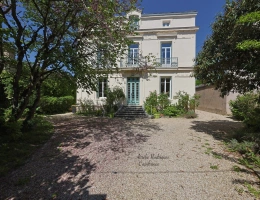

A historic monument for sale in Ain is often recognisable by Bresse brick and timber framing, a fortified farmhouse in the Bugey, or a chateau overlooking the Dombes fishponds: a protected heritage shaped by three very different districts within a single department. From Bourg-en-Bresse to Belley, by way of Nantua and Ferney-Voltaire, these older buildings trace the area's agricultural, religious and border history. Browse the historic monuments for sale listed by private owners, agencies and notaries across Ain. Some of these buildings remain tied to working farms still active in the surrounding countryside.
Here you will find the protected typologies present in the department, the areas where they cluster, the obligations and grants tied to their status, and the checks to carry out before starting any works. To approach the purchase of a character property as a whole, read our guide to buying prestige property in France. Buying a protected building means planning for administrative steps specific to this status, different from those for an ordinary house.
The Bresse district stands out for its timber-framed, solid-brick farmhouses, topped with conical Saracen chimneys and wide overhanging eaves. In the Bugey, around Belley and Nantua, protected buildings become more vertical, with limestone fortified houses set against the first slopes of the Jura. The Dombes, dotted with fishponds between Villars-les-Dombes and Meximieux, retains chateaux and dovecotes tied to historic fish farming, while the Pays de Gex holds more urban residences close to the Swiss border. The steeply pitched roofs typical of the Bresse once limited snow load while freeing up a large usable attic space.
Outbuildings reflect these uses: maize-drying racks in the Bresse, ice houses and pond dykes in the Dombes, mountain barns in the Bugey. Many of these buildings have kept their original roof timbers and floors despite successive renovation campaigns, and some retain decorative elements from the eighteenth century. Recent projects favour compatible materials, notably local fired-clay brick and natural lime. Some farmhouses still retain their original dovecote, a distinctive mark of social status in the old Bresse, now sought after by heritage-minded buyers.
The Bresse, around Bourg-en-Bresse, Pont-de-Vaux and Saint-Trivier-de-Courtes, remains the area richest in protected farmhouses and manors. The Dombes, between Villars-les-Dombes, Châtillon-sur-Chalaronne and Meximieux, suits estates surrounded by fishponds, while the Bugey, from Belley to Nantua and Hauteville-Lompnes, offers more secluded residences at the foot of the Jura. The Pays de Gex, around Ferney-Voltaire and Divonne-les-Bains, draws a cross-border clientele close to Geneva. The proximity of Bourg-en-Bresse, the department's administrative centre, eases access to the services needed to process a works application on a protected building.
Bourg-en-Bresse and Bellegarde, in Valserhône, are both served by TGV, with direct links to Paris and to Switzerland; Geneva airport completes access to the Pays de Gex. The most sought-after areas lie near the Swiss border and around the largest Dombes fishponds; the rural Bresse and the Bugey offer comparable properties at more accessible levels. The A40 motorway efficiently links the Pays de Gex to the Bresse and the Bugey, making the whole department reachable within an hour's drive.
Find out precisely which protection regime applies to the building: a classified building carries stricter constraints than one that is only registered, particularly for the approval of the Architecte des Bâtiments de France on works affecting facades, roofs or the surroundings. The seller must disclose this status to the buyer during negotiations, and the sale of a classified building is subject to a mandatory notification to the relevant administration. On wetland properties in the Dombes, permits for pond-bank works can come on top of the requirements tied to the protection of the building itself.
On taxation, the historic-monument regime may allow certain restoration costs to be deducted, under strict conditions that should be checked before purchase. On site, examine the condition of the timber framing, the stability of any pond dykes, and drainage on the clay soils common in the Dombes, then route quotes through a contractor recognised for experience with protected buildings. Finally, check the strength of the Saracen chimneys, fragile features usually restored to match the original, and the wiring of older installations before any plan for permanent occupation.
Historic monument listings in Ain come from private owners, agencies specialising in rural heritage and notaries; filter them by typology, area and outbuildings, and set an e-mail alert to track new listings. To compare with neighbouring departments, browse historic monuments for sale in Auvergne-Rhône-Alpes. It is also worth asking about access rights to adjoining farm buildings, sometimes governed by planning rules separate from those covering the main house.