




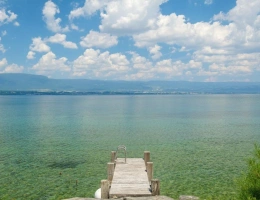
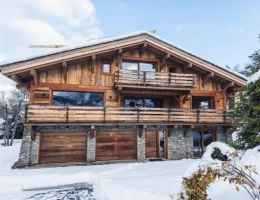

Finding a historic monument for sale in Haute-Savoie often means coming across a Savoyard fortified house set against the mountainside, a former priory on the shores of Lake Geneva, or a nineteenth-century holiday residence built facing the peaks. From Annecy to Thonon-les-Bains, by way of the Arve valley and the Chablais, this protected heritage was built from local stone, larch timber, and at times the rise of alpine tourism. Browse the historic monuments for sale listed by the department's private owners, agencies and notaries. Some of these residences have kept their original purpose, as a family home or working farm, while others await a fresh project.
This page details the protected typologies found in Haute-Savoie, where to find them, the obligations and grants that come with listed or registered status, and the checks specific to a mountain or lakeside building. To widen the reflection to a full character-property project, read our guide to buying prestige property in France. Buying such a property means an ongoing dialogue with the heritage authorities, whose timelines should be built into the purchase plan.
The Savoyard fortified house is recognisable by its thick rubble limestone walls, round turret and small defensive openings, inherited from centuries when the Genevois and the Chablais formed a contested border. On the shores of Lake Geneva, at Thonon-les-Bains or Évian, Belle Époque holiday residences tend to dominate instead, with carved timber balconies and verandas facing the water. In the Arve valley and the alpine valleys, protected heritage also includes older alpine-pasture chalets and religious priories. Steeply pitched roofs, covered in slate or larch shingles depending on the valley, respond to sometimes heavy snowfall at altitude.
Outbuildings vary with altitude and use: hay barns and dairies in the mountains, ice houses and pavilions on lakeside estates, private chapels on some properties. Many of these buildings show traces of nineteenth-century alterations tied to the rise of spa culture and tourism, which can complicate reading the original building campaigns. Recent restorations look for craftsmen skilled in local stone and larch timber framing. The carved timber verandas and balconies of lakeside residences, typical of the late nineteenth century, remain a strong identifying feature worth preserving during renovation.
The Genevois, around Annecy and Cruseilles, holds a significant number of protected residences, as does the Chablais, from Thonon-les-Bains to Évian on the shores of Lake Geneva. The Arve valley, from Bonneville to Sallanches, and the Faucigny retain more rural buildings, while the Chamonix and Mont-Blanc area keeps a hotel and residential heritage tied to the early days of mountain tourism. The heights of the Chablais and the Aravis massif offer more secluded properties. Proximity to the Swiss border and Geneva sustains strong demand for protected properties in the Chablais and the Genevois, whatever their condition.
Annecy station is linked to Paris by TGV, while connections to Chamonix, Thonon-les-Bains and the Chablais run by regional train or by road from Geneva, whose airport efficiently serves the north of the department. The shores of Lake Geneva and the area around Annecy rank among the most sought-after; the Arve valley and the Faucigny offer comparable properties at more accessible levels. The Autoroute Blanche links Annecy to Chamonix and eases movement between the department's different living areas throughout the year.
Establish precisely whether the building is classified or registered, since the two regimes do not impose the same degree of oversight from the Architecte des Bâtiments de France on facade, roof or surrounding-area works. The seller is required to inform the buyer of the building's status before signing, and any sale of a classified building must be notified to the relevant administration, which can lengthen the transaction timeline. In some municipalities bordering Lake Geneva, additional rules limit building near the shoreline, including works connected to a protected property.
The historic-monument tax regime can ease certain restoration costs, subject to conditions that are worth checking with a professional before purchase. On the technical side, inspect the roof timbers and covering, often exposed to heavy snowfall, the insulation of thick walls, and winter access at altitude, and route the works through a qualified contractor experienced with protected mountain buildings. Also check water and drainage compliance at altitude, sometimes managed collectively by inter-municipal bodies with particular rules of their own.
Historic monument listings in Haute-Savoie are published by private owners, agencies specialising in alpine heritage and notaries; filter them by typology, area and outbuildings, and set an e-mail alert to track new listings. To compare with other departments in the region, browse historic monuments for sale in Auvergne-Rhône-Alpes. Finally, ask about rights of way tied to former alpine-pasture paths, still common on the department's mountain properties.


