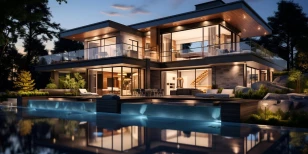

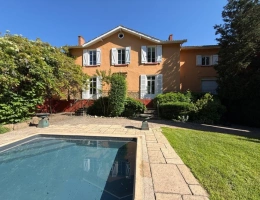
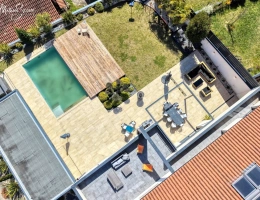
A historic monument for sale in Rhône can turn up as easily in the lanes of Vieux Lyon as on the hillsides of the Beaujolais: Renaissance townhouses on the Presqu'île and around Fourvière, golden-stone fortified houses among the vineyards, and walled wine estates and fortified farms in the Monts du Lyonnais make up a strikingly varied protected heritage. Around Villefranche-sur-Saône, Tarare and the Rhône valley near Givors, this older building stock sits within a landscape of hillsides, rivers and former industrial suburbs. Browse the historic monuments for sale listed by the department's private owners, agencies and notaries. Listings range from converted winemakers' farmhouses to former townhouses now used as a family home.
This page sets out the protected typologies found in Rhône, the areas where they cluster, the obligations and grants tied to listed or registered status, and the checks to make before any restoration project. To place this purchase within a wider approach, read our guide to buying prestige property in France. The usual selection criteria, outbuildings, living space and access, come with regulatory considerations specific to protected heritage here.
Vieux Lyon and the Fourvière hillside retain townhouses with galleries and traboules, built in golden limestone with Renaissance facades and flat-tile roofs. In the Beaujolais, around Belleville and Villié-Morgon, the fortified wine house predominates: a rectangular main range, a corner turret, a vaulted cellar cut into the rock and an adjoining walled vineyard. The Monts du Lyonnais and the Arbresle district hold fortified farmhouses and priories in local granite, many converted into working farms over the centuries. Some of these buildings retain traces of painted or carved interior decoration, uncovered during recent restoration campaigns.
Outbuildings vary with the terrain: a vat house and press in the vineyards, a dovecote and bread oven in the Monts du Lyonnais, a private chapel on some estates. Many houses underwent building campaigns in the nineteenth century that altered openings or added a storey, which can complicate the heritage reading. Recent restorations look for craftsmen able to work the golden stone and the traditional lime renders. The choice of joinery, solid timber rather than PVC, frequently shapes the approval given by the Architecte des Bâtiments de France for a full facade renovation.
The Beaujolais, from Belleville to Monsols by way of Villefranche-sur-Saône, holds the largest number of protected residences tied to the vine. The Monts du Lyonnais, around Sainte-Foy-l'Argentière and Mornant, and the Arbresle district offer more rural houses, while the Rhône valley, from Givors to Condrieu, retains industrial buildings and master's houses linked to the river. To the east, the Rhône side of the Dombes, near Meyzieu, shares with Ain a landscape of fishponds and rammed-earth farms. The rural municipalities west of Lyon, between Yzeron and Saint-Martin-en-Haut, round out the offer with more secluded properties, still sheltered from metropolitan land pressure.
Lyon Part-Dieu and Lyon Perrache stations place the department under two hours from Paris by TGV, and Lyon-Saint-Exupéry airport completes this connectivity for an international clientele. The most sought-after areas remain the Lyon Presqu'île and the heart of the Beaujolais vineyards; the Monts du Lyonnais and the rural east of the department offer comparable properties at more accessible levels. Road links towards Roanne and Mâcon complete this network and bring the most rural areas within an hour of the Lyon basin.
Before making an offer, establish whether the building is classified or only registered: the two statuses do not carry the same restrictions on works or the same level of oversight from the regional heritage office. Any work on the facades, the roof or the immediate surroundings requires prior approval from the Architecte des Bâtiments de France, and processing times need to be built into the project schedule. The seller must inform the buyer of the building's exact status, and the sale of a classified building must be notified to the administration. Some parts of the Beaujolais vineyards also fall within protection zones linked to wine appellations, which can affect plantings allowed near the buildings.
The historic-monument tax regime can allow certain restoration costs to be deducted, subject to conditions that should be checked with a professional before committing. On the technical side, have the roof timbers, tile covering and stone foundations inspected, and route any quote through a qualified contractor experienced with classified or registered older buildings, the only way to meet the requirements set by the regional heritage office. Also check the condition of individual drainage systems on secluded properties, often old and needing to be brought up to standard after purchase.
Historic monument listings in Rhône come from private owners, agencies specialising in heritage property and notaries; narrow the search by typology, area and outbuildings, and set an e-mail alert to track new listings. To widen the search, browse historic monuments for sale in Auvergne-Rhône-Alpes. It is also worth checking for any rights of way, common on wine estates split up over successive inheritances.