
Searching for a historic monument for sale in Isère leads as readily to the townhouses of Vienne, a town of Gallo-Roman origin, as to the fortified houses of the Grésivaudan or the priories set against the Chartreuse massif. Around Grenoble, in the Vercors and the Bièvre, this protected heritage has developed over the centuries along trading routes and alpine valleys. Browse the historic monuments for sale listed by the department's private owners, agencies and notaries. Some of these buildings have stayed with the same families for generations, while others are looking for a new project.
This page sets out the protected typologies found in Isère, the areas where they cluster, the obligations and grants tied to their status, and the checks to make before any restoration project. To approach the purchase of a character property more broadly, read our guide to buying prestige property in France. Buying such a property means planning for the steps tied to its status before committing to a works schedule.
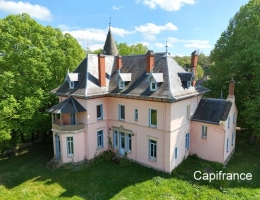
Vienne retains townhouses with classical limestone facades, inherited from a long urban history going back to Gallo-Roman times and carried on through medieval and modern rebuilding. In the Grésivaudan, between Grenoble and Pontcharra, turreted fortified houses predominate, set on higher ground away from flooding by the Isère river. Towards the Chartreuse massif and the Vercors, priories and fortified farms in local stone complete this set, often tied to former religious communities. The Gallo-Roman remains still visible in Vienne, columns and temple vestiges, sit alongside a dense medieval and modern building stock in the old town.
Outbuildings vary with altitude: alpine barns and dairies in the Chartreuse and the Vercors, wine cellars and presses on the Vienne plain, dovecotes and private chapels on Grésivaudan estates. Many of these buildings underwent alterations in the eighteenth and nineteenth centuries that changed roofs or openings. Current restorations look for craftsmen able to work local limestone and larch timber framing. The corner turrets of the Grésivaudan, sometimes topped with a pepper-pot roof, remain a strong architectural marker sought after by buyers valuing authenticity.
The Rhône valley, around Vienne and Roussillon, holds a dense protected urban heritage, while the Grésivaudan and greater Grenoble offer fortified houses and townhouses close to the massifs. The Vercors, around Villard-de-Lans and the Trièves, and the Chartreuse massif retain more secluded buildings, often tied to former pastoral or monastic uses. To the west, the Bièvre and the Côte-Saint-André district retain rural residences in stone and rammed earth. Proximity to Grenoble, the Alpine capital, sustains steady demand for protected properties within around thirty minutes of the city.
Grenoble station is served by TGV, with a direct link from Paris and Lyon, while the Vercors and Chartreuse valleys are reached by road from greater Grenoble. The most sought-after areas lie near Grenoble and in the Grésivaudan close to the massifs; the Trièves and the Bièvre offer comparable properties at more accessible levels. Road tunnels through the Chartreuse massif and passes across the Vercors allow quick links between the department's different living areas.
First establish whether the building is classified or simply registered, since this status sets the level of oversight required from the Architecte des Bâtiments de France for any work on facades, roofs or the immediate surroundings. The seller must inform the buyer of the building's status before the sale, and the sale of a classified building must be notified to the relevant administration, which can lengthen the transaction timeline. Some parts of the Grésivaudan fall under natural-risk prevention plans tied to flooding and avalanches, essential to check before any purchase.
The historic-monument tax regime can allow part of the restoration costs to be deducted, subject to conditions that should be checked before any commitment. On the technical side, have the roofs' resistance to heavy snowfall at altitude checked, the condition of the foundations, and the risk of ground movement in mountain areas, and route the works through a contractor qualified for protected alpine buildings. Also check winter access to secluded properties in the Vercors and the Chartreuse, sometimes limited by snow on secondary roads at altitude.
Historic monument listings in Isère come from private owners, agencies specialising in heritage property and notaries; filter them by typology, area and outbuildings, and set an e-mail alert to track new listings. To compare with other departments in the region, browse historic monuments for sale in Auvergne-Rhône-Alpes. Finally, ask about any farming easements attached to adjoining land, common around the former estates of the Grésivaudan.