TRADUCTION + Do You Need a Diploma to Become a Vigneron or Winegrower?
Updated on 2 June 2026.
The profession of vigneron or winegrower is not reserved solely for the children of winegrowers who have completed a wine-growing course. Indeed, no law requires you to have wine-growing training to become a winegrower, although obtaining a diploma is strongly recommended, particularly from an administrative and financial standpoint.
Whether it concerns buying (or renting) vines or a wine estate, ma-propriete.fr sheds light on this question and on the various forms of support you can claim.
Table of contents
Vigneron, viticulteur or viniculteur
Studies and continuing education to become a winegrower
Initial training
Adult training
The administrative procedures to become a winegrower
The authorisation to farm
The SAFER's right of pre-emption
The administrative procedures to rent vines
Taking back and farming a leased agricultural property
Financing the purchase of a wine estate
Installation grants for young farmers
Bank financing
Other financing tools
Our services to support you in your wine-growing project
The White Paper for creating a wine estate
Our matchmaking service
The distribution of our wine-estate listings throughout France
In conclusion
Learn more
The viticulteur and the vigneron are both passion-driven professions carried out by farmers working in the world of wine.
The viticulteur (grape grower) works on planting, cultivating and maintaining the vines with the aim of producing the best possible grapes. Their activity includes the harvest — that is, the grape picking — without taking part in the wine-making stages. They will often sell the grapes directly to cooperatives, merchants or neighbouring winegrowers. They cultivate the vine and work outdoors, which requires good physical condition since the work is carried out in all weathers.
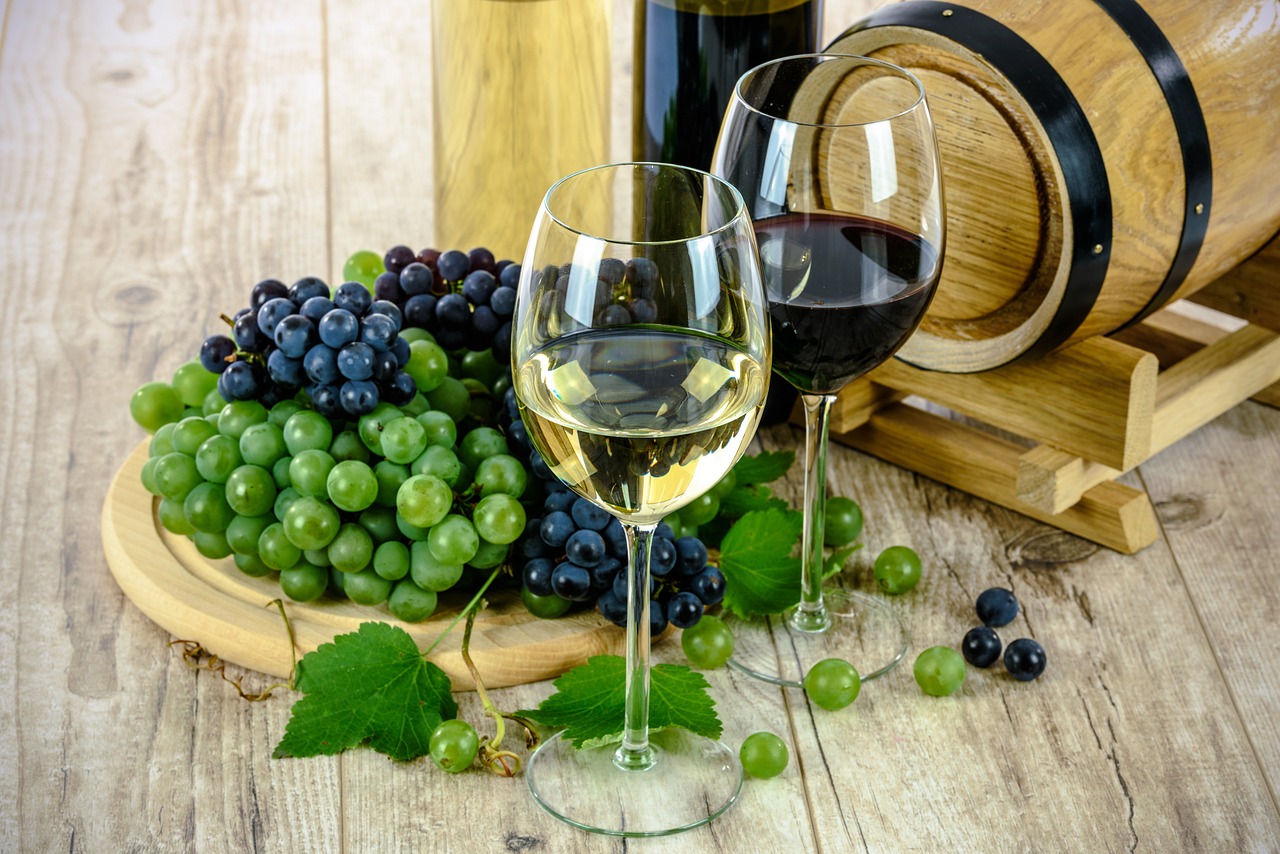
The viniculteur (winemaker) is concerned exclusively with the vinification phase — that is, the production and ageing of the wine — and therefore requires skills in oenology.
While the viticulteur devotes themselves solely to managing the vine, the vigneron is involved in the entire wine production process — that is, from the vine through to the sale of the bottles. They therefore encompass the viticulteur's profession, but additionally include cellar vinification (the viniculteur's work), marketing, management, etc.
While the distinction is clear in dictionaries, as are the skills and qualities required for each role, the difference in everyday vocabulary is often non-existent among winegrowers and consumers alike.
As with all agricultural professions, there are wine-growing courses available within initial training: CAP, BPA (Agricultural Professional Certificate), Bac Pro (vocational baccalaureate), BTSA (Higher Technician's Certificate in Agriculture), an engineering degree in agriculture or agronomy, etc. The range is very wide among the 800 French educational establishments offering agricultural training in France (public and private secondary schools, rural family-learning centres, higher education establishments, etc.). In the Revue du Vin de France you will find a very comprehensive overview of the various training courses on offer.
These courses alternate theoretical and technical lessons with practical placements within wine estates or in companies working in the wine sector (oenologists, merchants, etc.). Note that it is possible to complete your initial training under an apprenticeship contract.
These same establishments very often offer adult training as part of a career change. As indicated previously, even though wine-growing training is not compulsory to become a viticulteur or vigneron, it is strongly recommended, particularly if it allows you to acquire the Agricultural Professional Capacity.
Professional capacity is acquired by holding a level IV agricultural diploma or through 5 years of professional experience.
The Professional Certificate of Agricultural Holding Manager, with a viticulture option, will enable you to obtain this professional capacity if you wish to change careers. It is a specific training course for adults over a period of less than one year, comprising theoretical lessons and placements in wine-growing businesses.
You can benefit from various forms of support to finance your BPREA: the Personal Training Account (CPF), Pôle Emploi, training bodies such as VIVEA, the Professional Transition Project (formerly the Individual Training Leave, CIF), etc.
The purchase of vines, on which you will carry out your new profession of vigneron, will be subject to 2 administrative procedures for which holding a wine-growing diploma can make the difference.
To develop vines or a wine estate (beyond a certain surface area that varies by department), you must first obtain an administrative authorisation to farm under the Structures Control scheme. This procedure requires filing a prior authorisation request form with the Departmental Directorate of Territories and the Sea (DDTM) of your department.
Your request triggers a public notice in order to inform all potential candidates to farm the parcels concerned.
In the event that a competing candidate comes forward, the DDTM will grant the authorisation to farm based on a number of criteria defined at regional level. Between 2 candidates for installation on the same parcels, the authorisation will likely be granted to the candidate holding a wine-growing diploma.
Any sale of rural property is subject to the SAFER's right of pre-emption. This body, tasked with overseeing purchases of agricultural land to encourage installation and prevent price speculation, examines all sale projects and may decide to pre-empt the sale of a parcel of land in order to subsequently transfer it to a candidate it deems a priority. The SAFER may also intervene amicably (outside this pre-emption procedure) but always with the same objective.
If the SAFER is approached by a competing purchase candidate, it will inevitably take the wine-growing training of the various candidates as a decision criterion in authorising the acquisition or pre-empting against the original buyer.
While the SAFER does not intervene in rentals, the Structures Control regulations apply regardless of the mode of farming the vines: purchase or rental.
There is one case where obtaining a diploma is compulsory: it concerns taking back leased property.
Let us take an example:
Your parents or grandparents own land or vines that are leased to a winegrower. The lease is approaching the end of its 9-year term after a first renewal. You therefore wish to prevent the lease from being renewed in order to take back the vines and farm them yourself. You will have to serve notice to your tenant (18 months before the term, by bailiff's writ). And you will have to prove your agricultural professional capacity, whether through agricultural training or 5 years of professional experience.
Wine-growing projects are often capital-intensive because the sum of the various elements to finance is high: vines, cellars, vineyard equipment, vinification equipment, wine stock, etc.
To give an order of magnitude, the wine-growing land alone represents a significant share of the investment. According to the DVF 2025 data from our observatory of vine prices in France, the national median price of vines stands at €23,985/ha — but the range is very wide: from €9,205/ha in the South-West to €125,000/ha in Burgundy and €1,000,000/ha in Champagne. These market benchmarks, drawn from nearly 17,600 actual transactions, are useful for calibrating your financing plan right from the project phase. You can also browse the listings in our wine-estate category to identify the properties available in your target wine region.
You must therefore pay close attention to your financing plan to make your project a success.
Installation grants are intended to provide financial support to young farmers (including winegrowers) for their first installation. In order to obtain these grants, you must be able to prove your professional capacity by holding a level IV agricultural diploma (or 5 years of professional experience) and by completing a personalised professionalisation plan (PPP).
A boost at the start is always welcome! A candidate for installation in viticulture who has obtained the appropriate diplomas can apply for installation grants such as subsidies, support in structuring the project, or tax allowances.
However, the beneficiary must commit to a few conditions for a minimum of 4 years, such as:
The first step in financing is often to approach a bank. While it will carefully examine your financing plan, it will pay just as much attention to your profile and will therefore seek to get to know you: your professional background and your training are the first elements studied.
You must prove your ability to manage the work of the vines, lead a team of employees, canvass clients, sell your products, handle administrative management, etc. Thus, training directly linked to your project will be a guarantee of competence and knowledge of the wine market to convince a banking institution to grant you a loan.
There are also other financing solutions that we present on our blog. Crowdfunding can be used to finance small equipment in the form of donations, or larger investments in the form of loans or even equity participation.
There are also investment funds that can acquire the vines in order to then lease them back to you. This is the case, for example, of Terra Hominis or of Wine Land Groupings (Groupements Fonciers Viticoles) such as the one offered by France Valley in Champagne.
We have written a free white paper dedicated to creating a wine estate, presenting all the steps to follow to make your project a success. You can download it free of charge.
You can also contact wine-transaction professionals through our free matchmaking service. After analysing your project, we forward it to our professional advertisers who are able to support you.
We distribute listings of wine estates for sale throughout France. You can select them by wine region, location (town, department, region), budget or even by the surface area of the vines. You can also create an alert to be automatically informed by email of new listings of vineyards for sale.
You need solid skills to make your wine project a success.
The appropriate training is proof of a minimum level of competence that will be useful in structuring your financing plan and can prove indispensable in certain cases.
Our advice: Even though it is not an obligation, we can only advise you to undertake training if you have the time and the necessary motivation. It will make your procedures easier and will give you skills that will be useful to you on a daily basis.