Updated on 2 June 2026 — this article now includes insight into the link between grape variety, appellation and land value, based on data from our observatory of vineyard prices in France (complete DVF 2025).
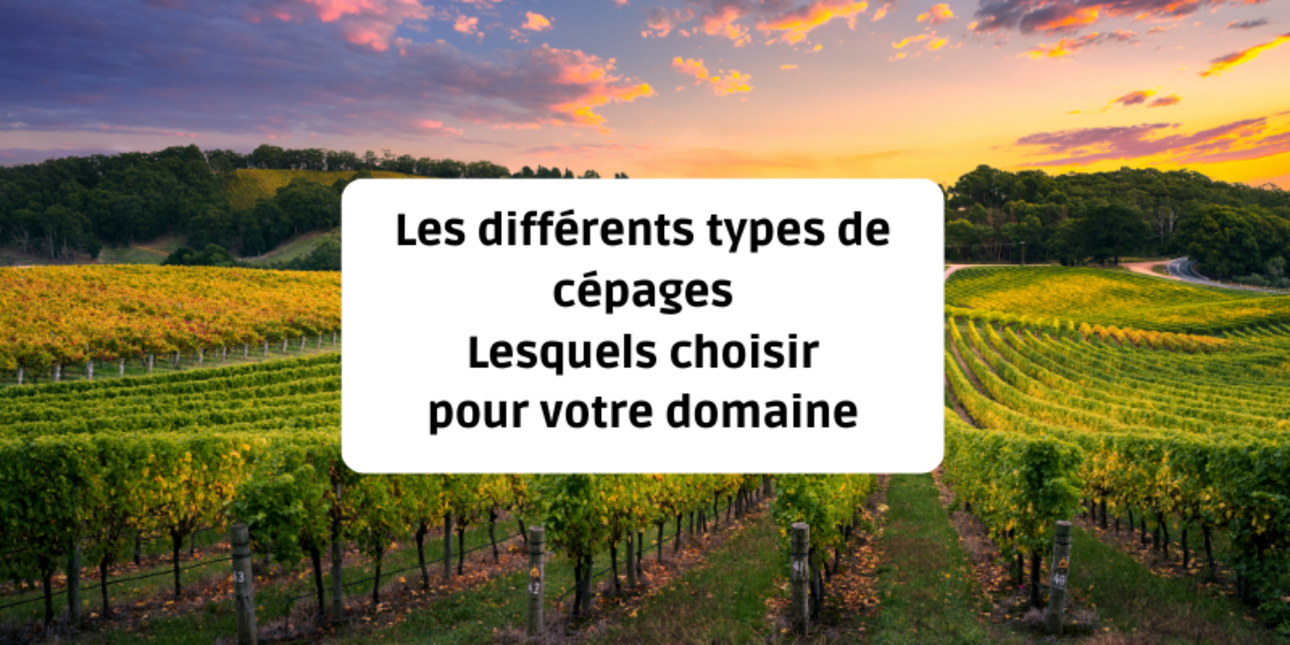
When you are considering buying a wine estate, the choice of grape varieties is a crucial decision that will greatly influence the quality and style of your wines.
This article will guide you through the different types of grape varieties grown in France, their characteristics, and the factors to consider in order to make the best choice for your future estate.
Table of contents
The main French grape varieties
Red grape varieties
White grape varieties
Choosing your grape varieties according to terroir and climate
The terroir
The climate
The exposure
The rules imposed by PDOs/AOCs
The evolution of grape variety choices in the face of climate change
Adapting traditional grape varieties
Introducing new grape varieties
Rediscovering ancient grape varieties
Grape variety characteristics and their influence on wine
Aromas and flavours
Structure and texture
Ageing potential
Grape variety, appellation and land value
Tips for choosing your estate's grape varieties
The art of blending
Conclusion
Find out more
The main French grape varieties
France is renowned for its great diversity of grape varieties, each bringing its own characteristics to the wines produced. Here is an overview of the most important grape varieties by wine colour:
Red grape varieties
- Cabernet Sauvignon: Originating from the Bordeaux region, this black grape variety is known for its power and ageing capacity.
- Merlot: Also originating from Bordeaux, it produces softer, fruitier wines.
- Pinot Noir: The star of Burgundy, this delicate variety produces elegant, complex wines.
- Syrah: An emblematic variety of the Rhône Valley, it gives powerful wines with spicy aromas.
- Grenache: Very widespread in the south of France, it brings warmth and roundness to wines.
- Cabernet Franc: Often used in blends, it brings finesse and herbaceous aromas.
- Gamay: The main variety of Beaujolais, it produces light, fruity wines.
- Carignan: Widely grown in Languedoc-Roussillon, it provides structure and tannins.
White grape varieties
- Chardonnay: A widely planted white variety, it is the basis of the great white wines of Burgundy and Champagne.
- Sauvignon Blanc: Originating from the Loire, it produces fresh, aromatic wines.
- Riesling: The star variety of Alsace, it offers dry or sweet wines of great finesse.
- Chenin: Widely grown in the Loire, it lends itself to all styles of white wine.
- Viognier: Originating from the Rhône Valley, it gives white wines with intense floral aromas.
- Sémillon: A Bordeaux variety used for dry and sweet wines.
- Melon de Bourgogne: The basis of Muscadet, it produces light, mineral wines.
- Ugni Blanc: Very productive, it is mainly used for the distillation of Cognac and Armagnac.
Choosing your grape varieties according to terroir and climate
The choice of grape varieties for your estate depends on several factors:
The terroir
Each grape variety has its preferences in terms of soil. For example:
- Cabernet Sauvignon thrives on well-drained gravelly soils.
- Chardonnay favours limestone soils.
- Syrah prefers granitic or schistous soils.
The climate
Global warming increasingly influences the choice of grape varieties:
- In traditionally cool regions, it is now possible to consider later-ripening varieties.
- In hot regions, the search is for varieties that are resistant to drought and retain good acidity.
The exposure
The orientation of the plots plays an important role:
- Late-ripening varieties such as Cabernet Sauvignon prefer southern exposures.
- Early-ripening varieties such as Pinot Noir can be planted on less favourable exposures.
The rules imposed by PDOs/AOCs
If your estate is located in a Protected Designation of Origin (PDO) or Controlled Designation of Origin (AOC) zone, you will have to comply with certain rules regarding the authorised grape varieties:
- Each appellation defines a list of main and secondary grape varieties.
- The percentages of each variety in the blend may be regulated.
- Some appellations only authorise a single variety (single-varietal).
For example, in the Bordeaux AOC, the main varieties are Cabernet Sauvignon, Merlot and Cabernet Franc for reds, and Sauvignon Blanc and Sémillon for whites.
The evolution of grape variety choices in the face of climate change
Climate change is pushing winegrowers to rethink their grape variety mix:
Adapting traditional grape varieties
- Selecting clones that are later-ripening or more drought-resistant.
- Modifying cultivation practices to preserve the freshness of the grapes.
Introducing new grape varieties
- Experimenting with southern varieties in more northern regions.
- Growing interest in disease-resistant varieties that require fewer treatments.
Rediscovering ancient grape varieties
- Some forgotten varieties, better suited to new climatic conditions, are attracting renewed interest.
Grape variety characteristics and their influence on wine
Aromas and flavours
Each grape variety brings its own aromas and flavours to the wine:
- Cabernet Sauvignon offers notes of blackcurrant and green pepper.
- Chardonnay can develop aromas of apple, pear or butter depending on its method of vinification.
- Sauvignon Blanc is recognised for its herbaceous and exotic fruit aromas.
Structure and texture
The structure of the wine depends largely on the grape variety used:
- Merlot produces supple wines with mellow tannins.
- Syrah produces powerful wines with a fine tannic structure.
- Riesling offers a lively acidity that gives the wine structure.
Ageing potential
Some grape varieties are more suited to ageing than others:
- Cabernet Sauvignon and Nebbiolo are renowned for their excellent ageing potential.
- Gamay and Muscat generally produce wines to be drunk young.
Grape variety, appellation and land value
The choice of grape variety does not only determine the style of wines produced: it also conditions the appellation the estate can claim, and therefore directly its land value. The DVF 2025 data from our observatory of vineyard prices in France clearly illustrate this effect:
- Vines planted with Chardonnay or Pinot Noir in Burgundy trade at a median price of €125,000/ha in 2025.
- Vines with Grenache or Syrah varieties in the Rhône Valley change hands at around €20,357/ha.
- Languedoc or South-West varieties (Carignan, Mourvèdre, Tannat) correspond to land markets at €9,000–14,000/ha.
It is not the grape variety in itself that creates value, but the grape variety–terroir–appellation combination. A plot of Chardonnay outside an appellation is not worth a plot of Chardonnay in Meursault. This means that if you are considering changing an estate's grape variety mix or appellation, you must assess the long-term impact on the land's value.
Tips for choosing your estate's grape varieties
To make the best choice for your future estate, follow these recommendations:
- Study the winemaking history of the region and the grape varieties traditionally grown.
- Analyse the soil and microclimate of your plots.
- Consult neighbouring winegrowers about their experiences with different grape varieties.
- If you are in a PDO/AOC zone, check the authorised grape varieties and their proportions.
- Think about the style of wine you wish to produce and the grape varieties that match it.
- Take into account long-term climate change in your region.
- Do not hesitate to diversify your grape variety mix to spread the risks.
- Consider market demand for certain grape varieties or wine styles.
The art of blending
Blending different grape varieties allows the creation of complex, balanced wines:
- In the Bordeaux region, the classic blend combines Cabernet Sauvignon, Merlot and Cabernet Franc.
- In the Côtes du Rhône, Grenache, Syrah and Mourvèdre are often blended.
- In Champagne, the blend of Chardonnay, Pinot Noir and Pinot Meunier is traditional.
Conclusion
The choice of grape varieties is a fundamental decision for any wine estate. It must take into account numerous factors, from terroir to regulations, as well as climate developments and market trends. This choice also has a direct impact on the estate's land value: the DVF 2025 data show that vineyards dominated by noble grape varieties in recognised appellations reach median prices well above the national median of €23,985/ha. By making the right grape variety choices, you lay the foundations for quality wine production and for an estate whose value can be preserved or developed over time.
Find out more