An arable farm for sale in Yonne belongs to one of Burgundy's strongest cropping areas: the plains of the Sénonais and the Gâtinais, the country around Joigny and the plateaux of the Tonnerrois carry wheat, winter barley, oilseed rape, sunflower and protein crops over large, reorganised blocks. Offers come from farmers arranging their handover, rural property advisers and notarial offices in Sens, Auxerre, Joigny or Tonnerre, and describe soil types, the share held freehold, storage equipment and harvesting machinery. All of them also appear in the national list of arable farms for sale.
The page fills in what the particulars leave out: land values recorded in the department, the cantons where supply turns over, how to size up a local grain store and drier, and the checks that apply to a crop farm subject to the structures control. Our white paper « Créer une exploitation agricole » (in French) supports anyone building a setting-up project.
Pricing the land comes first in any plan to buy an arable farm. On the basis of 2025 DVF sales (vineyards excluded), the median in Yonne (89) works out at €3,094/ha and the average at €3,294/ha, across 164 transactions. The central range covering 80% of sales runs from €2,385 to €4,500/ha; nationally the median is €5,307/ha.
The SAFER benchmark, the market's second yardstick, gives €3,140/ha in 2025 for vacant land and pasture (-12.3% over twelve months, -14.7% over ten years), beside a national €6,460/ha; tenanted land is worth about 17% less.
What makes the value of a holding here goes well beyond the hectare count: soil depth and water reserve, how grouped the blocks are, drainage in working order, ventilated bins and a drier, loading facilities, the age of the machinery fleet, basic payment entitlements, the commitment to a cooperative or a merchant, and sometimes an organic conversion already completed. A grain farm with serious storage trades on different terms from a bare set of fields. Place your project with our land price observatory and our financial calculators.
In the north, the Sénonais and the Yonne part of the Gâtinais spread deep silts that carry milling wheat, barley and oilseed rape without difficulty, with beet and field vegetables here and there. The plateaux of the Tonnerrois and the Auxerrois rest on shallower clay-limestone, where oilseed rape is tricky in dry autumns and the rotation readily takes in sunflower and protein crops. The Puisaye, to the west, runs on capping clays that need their drainage kept up. Have the soils analysed and ask for recent results, field by field, before settling on an offer.
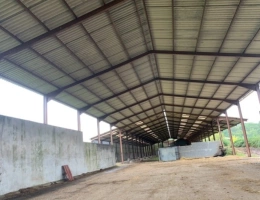
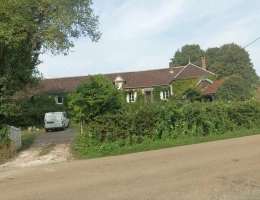
The local farmstead, usually stone-built around a yard, comes with newer sheds alongside. Look at total storage capacity, the condition of fans and ducting, the drier if there is one, the intake pit, the concrete apron and the room for lorries to turn. A crop farm equipped to hold its harvest for months is worth more than one forced to deliver straight off the combine. Where the dwelling forms part of the sale, value it apart from the business: the rail link towards Paris sustains residential demand that distorts comparisons.
The larger structures are found mainly north of a line from Sens to Joigny, in the Sénonais and the Gâtinais, where consolidated blocks and nearby outlets support high prices. The Jovinien and the Serein plain extend that vocation towards Brienon-sur-Armançon and Saint-Florentin. The Tonnerrois and the Chablis country mix broadacre cropping with vineyards, which limits the ground available around the classified communes. The Auxerrois keeps some good plateau units, while the Puisaye, around Toucy, and the Avallonnais at the gates of the Morvan lean towards mixed crop and livestock farming.
The trade-off for a buyer is clear: the north of the department offers the best potential but intense pressure from neighbours seeking to expand, the west and south lower prices and more temperamental soils. Arable land in a single block, close to a collection silo, finds a buyer without waiting. Take time to compare districts, since the difference per hectare can fund a good share of the machinery.
Every takeover falls under the structures control, an authorisation regime that weighs the area taken on against competing applications, and SAFER, notified by the notary, holds a right of pre-emption. Go through the rural leases one by one, checking expiry dates, rent, environmental clauses and the position of the outgoing tenant. In a department where farming companies are common, keep a land purchase clearly distinct from taking over shares, which carries assets and liabilities alike and calls for an accounting review first.
On the ground, check the state of the drains, the validity of abstraction permits and access to water points, the designations attached to drinking-water catchments that restrict practices on certain fields, and the compliance of the crop-protection store and fuel tanks. Make sure as well that the basic payment entitlements are transferred and declared within CAP deadlines, failing which the first season runs without support.
This section is fed by retiring owners, agencies specialising in farmland and local notaries. Match the search to the type of holding and the budget you have in mind, set an alert to follow what comes up, and widen it if needed to the arable farms for sale in Bourgogne-Franche-Comté.