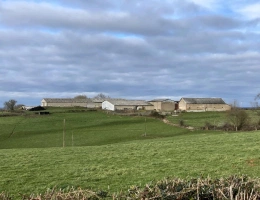
An arable farm for sale in Bourgogne-Franche-Comté may be a large plateau holding farmed without irrigation on shallow limestone soils, or a lowland unit on the deeper silts of the Saône valley. The properties offered come from farmers preparing to hand over, from rural agencies and from notaries; they state the soil type, the rotation in place, how the blocks are spread and what the buildings contain. Wheat, barley, oilseed rape, maize, sunflower, sugar beet and pulses make up cropping plans that vary a great deal with soil depth. These holdings sit within the arable farms for sale listed across France.
Here you get what the listings leave out: where regional cropland prices stand, which departments release the most ground, how to judge a drier or a storage bin, and which documents to ask the seller for. Our white paper « Créer une exploitation agricole » (in French) guides anyone setting up, from the professional qualification to the funding package.
Pricing the land comes first in any plan to buy an arable farm. On the basis of 2025 DVF sales (vineyards excluded), the median in Bourgogne-Franche-Comté works out at €2,773/ha and the average at €2,907/ha, across 1,303 transactions. The central range covering 80% of sales runs from €1,813 to €4,185/ha; nationally the median is €5,307/ha.
The SAFER benchmark, the market's second yardstick, gives €2,740/ha in 2025 for vacant land and pasture (-6.2% over twelve months, -8.1% over ten years), beside a national €6,460/ha; tenanted land is worth about 17% less.
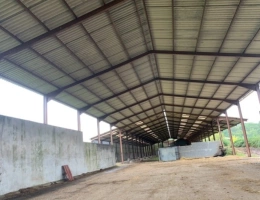
Value is not read off the hectare count alone. The shape of the field pattern and its distance from the farmstead count just as much, along with drains in the cold soils, a shed large enough for the machinery, sound bins, a working drier and the implements included. Add the payment entitlements, the commitment given to a cooperative or a grain merchant and, at times, a seed multiplication contract. Our land price observatory places each district; our financial calculators gauge how much borrowing a takeover can carry.
The first task is to tell deep ground from the shallow soils lying over limestone, which are widespread on the Burgundy plateaux: for the same area, yield and consistency from season to season are nothing alike. Ask for whatever analyses exist, the results block by block and the rotation history, noting whether cover crops and soil conservation techniques have been practised for long. In the heavier clays of the Bresse, the Puisaye and the valley bottoms, the question becomes drainage: scheme plans, installation date and the condition of collectors and outfalls all belong among the documents to obtain before making an offer.
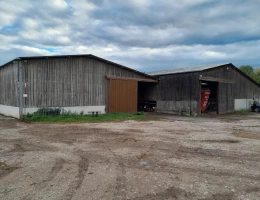
Then comes the working tool. A cereal farm with a good volume of storage keeps control of when it sells, whereas one that delivers everything at harvest takes the price of the day. Look closely at bin capacity, ventilation, the drier, the state of the shed, the washing area and the pesticide store. Machinery, often substantial on holdings of this size, is valued separately, as is the dwelling house when it forms part of the sale.
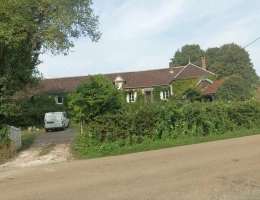
Yonne is the regional cereal benchmark, from the Sénonais to the Tonnerrois by way of the Gâtinais, with silos linked to the waterway running towards the Seine; the heavier Puisaye forms a counterpoint. Côte-d'Or combines the Châtillonnais plateaux with the Dijon plain, where sugar beet and mustard seed round out the rotations. Haute-Saône and Jura offer cropland along the Saône, in the Gray plain, the Bresse jurassienne and the Finage, while Saône-et-Loire alternates arable land in the Saône valley, Charolais pasture and slopes given over to vines. Complete holdings with a farmhouse turn up regularly in these lowland districts.
The remaining departments are quieter. Nièvre devotes most of its area to suckler herds, its cropland gathering towards the Loire and the edges of the Puisaye. In Doubs, the Comté cheese sector pulls land towards grass and dairying, leaving little room for cropping outside the Ognon valley. As for Territoire de Belfort, its size alone limits the number of holdings that reach the market in any year, and the few blocks available tend to interest neighbouring farms looking to round out their cropping.
Most transactions depend on SAFER, the rural land agency, and on an authorisation under the structures control, the French permit regime for taking over farmland: allow time for both, as candidates wanting to expand are numerous on the better ground. A large share of the area is farmed under tenancy; the rural lease passes with the land, the buyer takes on the tenant's obligations and the landlord keeps his rights, including recovery of the land for a direct descendant. Where the sale covers company shares instead, the exercise changes nature and calls for professional advice, since debts and commitments travel with them.
On the technical side, check the allocation and transfer of payment entitlements, the consistency of the current CAP declaration, whether fields fall within a nitrate vulnerable zone, and any water catchment easements restricting practices on the limestone plateaux. Read the borehole and abstraction paperwork where irrigation exists, even on a small scale. Finally, ask for details of stocks, delivery commitments and crops already sown, because the completion date decides who harvests them and how the accounts are settled.
Farmers handing over, rural property professionals and notaries all publish their properties on this page as sales come up. Pick a department, a size bracket or a price range, combine the criteria, switch on an alert to follow new arable land coming to market, then open your search out to every farm for sale in Bourgogne-Franche-Comté.