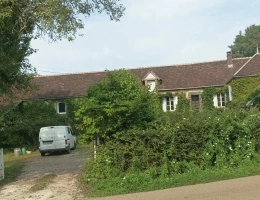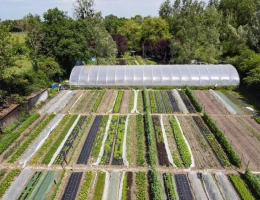
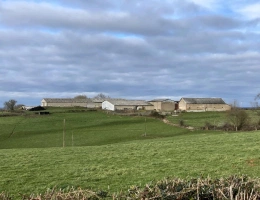
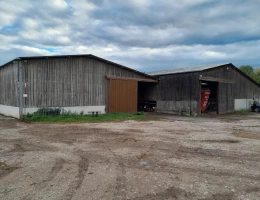
Buying a farm for sale in Bourgogne-Franche-Comté means buying a position in a supply chain as much as a block of land. On the Doubs and Jura plateaux, value rests on the right to supply a village cheese dairy; in the Brionnais and the Charolais, on the suckler herd and the quality of the pastures; on the Yonne and Côte-d'Or plateaux, on the depth of the arable soils; in the Bresse, on poultry and its specification. The region reads as a succession of bands running west to east. On the selling side are stock farmers and arable growers preparing to retire, rural property agencies, notarial offices and specialist handover consultants: their listings set out the land base, the soil types, the occupancy arrangements and the working plant passed on, then feed our nationwide view of farms for sale in France.
Below, the comparisons that actually matter: the price of land from one department to the next, the sectors that sustain each district, the areas where properties genuinely come free and the checks to run before deciding. Between a grassland system under PDO and an arable structure on the plateaux, neither the capital committed nor the length of a takeover is comparable. The administrative route into a first holding appears in our white paper « Créer une exploitation agricole » (in French).
Land forms the base of a farm's value. DVF, the property sales database published by the French tax administration (vineyards excluded), records a 2025 median of €2,773 per hectare in Bourgogne-Franche-Comté, an average of €2,907 and 1,303 sales; four transactions in five fall between €1,813 and €4,185, against a national median of €5,307.
The SAFER land value benchmark sets €2,740 per hectare for vacant land and pasture offered for sale in the same year, -6.2% over one year and -8.1% over ten, against €6,460 nationally. Land sold with a tenancy in place is valued at €2,750, effectively the same level as vacant land, where the national discount runs close to 17%. That near-parity most likely reflects the fact that a sale of let land escapes SAFER's pre-emption right, and that the stated price of vacant land is held down by side arrangements, key money or the separate sale of payment entitlements. The gap is too small to read as anything other than parity.
These figures place regional land values; they do not price a farm, which depends first on its buildings, its herd and its outlets. For department-level detail, see our land price observatory, then cost your purchase with our financial calculators.
| Department | DVF sales 2025 | Median price/ha | SAFER vacant land |
|---|---|---|---|
| Côte-d'Or (21) | 170 | €3,065 | €2,870 |
| Doubs (25) | 132 | €3,314 | €3,280 |
| Jura (39) | 124 | €2,304 | €2,540 |
| Nièvre (58) | 150 | €3,040 | €2,990 |
| Haute-Saône (70) | 156 | €2,615 | €2,660 |
| Saône-et-Loire (71) | 391 | €2,349 | €2,550 |
| Yonne (89) | 164 | €3,094 | €3,140 |
| Territoire de Belfort (90) | 16 | €3,820 * | €3,570 |
The region rests on two foundations. Livestock first: the Charolais cradle of the Brionnais, the Charolais country and the Nivernais carries the most renowned suckler herds in France, while the Jura and Doubs plateaux hold dairy holdings of Montbéliarde cows tied to the PDO cheeses of Franche-Comté. Arable crops then occupy the Burgundy plateaux, the Sénonais and the deep soils of the Saône valley, with cereals, oilseeds and protein crops. Vineyards, the poultry enterprises of the Bresse and peri-urban market gardening complete the picture on smaller areas.
Choosing a system commits far more than the purchase price. A working farm in grassland country is taken over with its herd, its buildings, its permanent pasture and its forage self-sufficiency; a plateau structure is valued on soil quality, machinery and cropping plan. The mixed farming systems of the margins — Auxois, Bazois, Vosges Saônoises, Finage — often strike the best balance between entry capital, flexibility and steady income.
In Burgundy, Saône-et-Loire (71) combines the Charolais cradle of the Brionnais, the Mâconnais and Chalonnais slopes, the Bresse around Louhans and the Saône valley farmland: it is the most active department for handovers. Nièvre (58) sets suckler country beside the grassland and woodland of the Morvan and the crops of the Bazois, on some of the most affordable land in the region. Yonne (89) is an arable department on the Sénonais and Tonnerrois plateaux, with a renowned vineyard to the south-west. Côte-d'Or (21) shares arable plateaux, Auxois livestock and the prestigious vineyard slopes, whose land follows a logic of its own.
In Franche-Comté, Doubs (25) and Jura (39) form the heart of the cheese sector: Montbéliarde cows, permanent pasture, village dairies and delivery under a strict specification, with land held firm by steady local demand. Jura adds its vineyard and, along its western edge, the Bresse and the Finage. Haute-Saône (70) mixes mixed farming, lowland crops and the grassland of the Vosges Saônoises, with affordable structures. Territoire de Belfort (90), the smallest department in the region, has few holdings, mainly dairy and mixed, in a very narrow market.
Listings are most numerous in Saône-et-Loire, Nièvre and Haute-Saône, departments where handovers are frequent and the entry ticket stays moderate. The wine appellations and the core of the cheese country are the other extreme: every parcel released draws several neighbouring applicants, and deals are often agreed before anything is widely advertised.
On the Franche-Comté plateaux, a holding's approval to supply under PDO counts as much as its buildings. The specification sets the breed, feeding on grass and hay, a ban on fermented forage, a minimum area per cow and a defined collection zone. Delivery capacity, managed collectively by the sector, passes with the holding on terms that should be confirmed in writing before any offer, since they govern the economics of the takeover.
Karst soils add a requirement of their own: water travels fast and is strictly protected, which frames manure spreading plans, watering points and catchment areas. On the arable plains, nitrate vulnerable zones, compulsory cover crops and irrigation management shape practice instead.
The regional market is often played out between neighbours: as soon as a holding comes free, several nearby businesses apply in order to expand. SAFER Bourgogne-Franche-Comté, told of the sale by the notary, arbitrates between them when it pre-empts, and puts a new entrant ahead of consolidation. A costed file handed in early counts for more there than a higher offer.
Structural control follows: beyond the areas fixed by the regional plan, farming requires a prefectural authorisation that buying the land does not guarantee. Land already let, finally, stays in the hands of its tenant, who buys in priority: an agricultural property mostly under tenancy does not come free on the hoped-for timetable. For land alone, vacant farmland is negotiated on a different logic.
One practical point of method: in this region, settle the system you want — PDO grassland, suckler beef, plateau arable — before looking at areas, because the capital required differs enormously between the three. Sorting by department then narrows the selection, while an e-mail watch flags every new posting that matches your criteria. From the Sénonais to the Haut-Doubs, sellers and their advisers file their instructions in a matter of minutes. To widen the search beyond the eight departments, open the page of farms for sale in France.