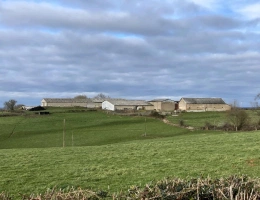
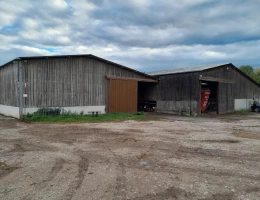
The market for farms for sale in Côte-d'Or sets two worlds back to back on either side of a single ridge line. West and north lie limestone plateaux given over to cereals, oilseeds and malting barley, worked as large structures with little labour. East and south lie the grasslands of the Auxois and the plain, where the suckler herd remains the axis of the system. The instructions placed with us come from farmers preparing to retire, from rural property agencies, from notarial offices in Dijon and Beaune and from succession consultants; they set out the land base, the agronomic quality of the soils, the tenure and the machinery included. They enlarge our national selection of farms for sale in France.
What a buyer lacks at the point of deciding is set out here: the real scale of land values from one slope to the other, the districts where holdings come free, the sectors that shape the department, and the points to have verified before committing. A project still at the intention stage will find the full path, from legal form to cash plan, in our white paper « Créer une exploitation agricole » (in French).
Land forms the base of a farm's value. DVF, the property sales database published by the French tax administration (vineyards excluded), records a 2025 median of €3,065 per hectare in Côte-d'Or (21), an average of €3,183 and 170 sales; four transactions in five fall between €1,942 and €4,620, against a national median of €5,307.
The SAFER land value benchmark sets €2,870 per hectare for vacant land and pasture offered for sale in the same year, -5.9% over one year and -3.0% over ten, against €6,460 nationally. SAFER publishes no local figure for let land, too few sales being recorded; nationally, land sold with a farm tenancy in place trades at a discount of about 17%.
Against the Bourgogne-Franche-Comté region, whose median is €2,773 per hectare, this department sits 11% higher. For commune-level detail and comparisons with neighbouring areas, see our land price observatory, then cost your purchase with our financial calculators.
Arable holdings set the tone on the Châtillonnais and Montagne plateaux, where wheat, oilseed rape, barley and Burgundy mustard seed follow each other on thin soils that only scale makes pay. At the other end, suckler beef enterprises in the Auxois run Charolais cattle on well-regarded clay pastures, either breeding or breeding and finishing; a takeover then bears on the herd and its genetics as much as on the buildings. Between the two, mixed farming remains a realistic entry route for a first purchase.
To these add the specialities the department is known for: blackcurrants on the back slopes, soft fruit, and processing and direct-sale workshops around the Dijon conurbation. Bare farmland also sells on its own, in lots released by inheritance, and usually goes to strengthen a neighbouring structure rather than to create a new steading. A complete working farm, with buildings and stock, is the exception rather than the rule.
The Châtillonnais, in the north, offers the largest areas and the most contained entry prices, at the cost of thin soils and distance from services. The Montagne and the Is-sur-Tille country extend the same arable model. The Auxois, around Semur-en-Auxois, Vitteaux and Pouilly-en-Auxois, is the suckler heartland, with farms lying in one block more often than elsewhere. Further west, the Morvan fringes bring acid grassland and smaller holdings. Eastwards, the Dijon plain, the Vingeanne and the Saône valley line up deep silts, irrigable in places, where spring cropping is practised.
Two zones escape that reading. The Côte and Hautes-Côtes, where vines fix values with no relation to farming use, leave almost no room for another project. The Dijon ring, for its part, takes the residential and logistics pressure that breaks fields into pieces. Opportunities therefore cluster along the north-western axis of the department and on the eastern edge of the plain.
The plain and the Vingeanne fall largely within nitrate vulnerable zones: an action programme, compulsory winter cover, and slurry storage capacity to bring up to standard. The plateaux, meanwhile, hold priority catchments whose supply areas impose constrained rotations. Where a borehole or a river abstraction comes with the property, ask for the consent and the allocated volume, then read the restriction orders of recent summers rather than the seller's account of them.
The general frame then bears examination. SAFER, informed by the notary, holds a pre-emption right it exercises firmly in this department. Clearing structural control comes next: the applicable thresholds sit in the regional farm structure plan for Burgundy and Franche-Comté and are read commune by commune. As for let land, it stays farmed by its tenant, who may buy ahead of anyone else: the area genuinely free on completion is often much smaller than the advertised total.
The pace of new listings follows retirements and estate divisions here, and is heaviest in spring and autumn. Rather than browsing at random, set an e-mail alert on the three things that count in Côte-d'Or: the system you want, the area bracket and the district. Sellers, notaries and rural agencies across the department post a listing in minutes. The step up to regional scale is taken through farms for sale in Bourgogne-Franche-Comté.