In a department that looks towards the Paris Basin, farms for sale in the Yonne rarely take the expected shape: a purchase here very often means buying into the capital of a farming company rather than acquiring land outright, so far have arable structures grown and incorporated. This page covers both cases. Sellers are outgoing partners, farmers without a successor, landowning families of the Sénonais and the Tonnerrois, acting through local notaries and advisers well versed in valuing a handover. Descriptions state the rotation, the nature of the plateau soils, the legal form, the machinery and the tenancy position. They join our national record of farms for sale in France.
What follows places each offer in context: what plateau land is genuinely worth against a field in the grazing country, where expansion absorbs everything and where room remains, and which checks apply when the deal concerns shares rather than hectares. Where setting up is still at the planning stage, our white paper « Créer une exploitation agricole » (in French) marks out the administrative and financial steps.
Land forms the base of a farm's value. DVF, the property sales database published by the French tax administration (vineyards excluded), records a 2025 median of €3,094 per hectare in Yonne (89), an average of €3,294 and 164 sales; four transactions in five fall between €2,385 and €4,500, against a national median of €5,307.
The SAFER land value benchmark sets €3,140 per hectare for vacant land and pasture offered for sale in the same year, -12.3% over one year and -14.7% over ten, against €6,460 nationally. Land sold with a tenancy in place is valued at €3,210, effectively the same level as vacant land, where the national discount runs close to 17%. That near-parity most likely reflects the fact that a sale of let land escapes SAFER's pre-emption right, and that the stated price of vacant land is held down by side arrangements, key money or the separate sale of payment entitlements. The gap is too small to read as anything other than parity.
Against the Bourgogne-Franche-Comté region, whose median is €2,773 per hectare, this department sits 12% higher. For commune-level detail and comparisons with neighbouring areas, see our land price observatory, then cost your purchase with our financial calculators.
Two thirds of the department belongs to grain. Arable holdings hold the limestone plateaux under wheat, barley, oilseed rape and sunflower, on wide rotations run with little labour and heavy machinery. The damp, wooded margins to the west and south-east keep livestock instead: Charolais-bred suckler herds in the hedged country, sheep flocks on steeper grazing, sometimes combined with cropping in borderland systems. The alluvial valleys hold a handful of fruit-growing holdings and specialised crops on small areas.
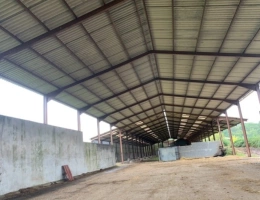
That contrast dictates the financing. A plateau business is bought on its machinery, its rotation and its supply contracts more than on its buildings, which are often no more than sheds and a grain store. An agricultural property in the grazing country is judged instead on pasture quality, fencing and the worth of the herd. Neither demands the same seasonal working capital, nor the same daily commitment.
The Sénonais and the Gâtinais, in the north, continue the cereal plains of the Paris region: deep soils, large units, a closed market where expansion between neighbours absorbs almost everything released. The Tonnerrois and the Jovinien combine wheat plateaux with vineyard edges, the nearby designation areas taking the best slopes out of play. Westwards, the Puisaye, towards Saint-Fargeau and Toucy, keeps its clay-and-pond grazing country, with smaller holdings and far more approachable entry prices.
To the south-east, the Avallonnais and the Terre-Plaine form the transition towards the Morvan: grass, woodland, fragmented parcels and extensive systems. The Auxerrois, in the centre, mixes all of it around a town that exerts its own pressure on farmland at the edges. For a candidate without inherited assets, the Puisaye and the Morvan fringes remain the two compartments where a complete purchase stays achievable.
Where the transaction concerns company shares, the analysis changes in kind: you take on a balance sheet, its borrowings, its seasonal commitments and its tax history along with the business. Have the last few years of accounts audited, together with the true value of the machinery, the live contracts and the partnership agreement, before making any promise. SAFER holds powers over such transfers in certain circumstances, and structural control still applies: buying into the capital does not remove the need for the prefectural authorisation set by the regional structure plan.
Agronomically, look at nitrate-vulnerable classification, water-catchment protection perimeters and the resulting requirements on fertilisation and cover crops. Where irrigation exists, check the abstraction licence and the restrictions imposed during low-flow periods. Finally, much of the plateau land is farmed under tenancy: the tenant holds a priority claim to buy, so occupancy determines how much area is actually released. A share in a farmland holding company is treated differently again.
A great many deals here are settled before any wide circulation, so an e-mail watch is the surest way to be there the day a listing goes live. Set your filters on the form of the deal, land or shares, as much as on area, since the two do not compare. Retiring farmers, outgoing partners and local professionals register their instructions online. One level up you will find farms for sale in Bourgogne-Franche-Comté.