

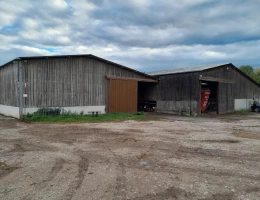
Few French departments still offer this much ground for the capital committed, which is what makes farms for sale in the Nièvre worth a look: holdings usually come in one block, mostly grassland, with livestock buildings standing and fields gathered around the yard. This page collects them as they come up. Behind each one stands a stockman stopping without a successor, a family unwinding joint ownership, a local notary or a rural agent instructed to sell. The description sets out grass and arable area, stocking rate, the state of the buildings, machinery included and whether fields are let. They join our national register of farms for sale in France.
No listing tells you whether the hedged fields can be worked efficiently, whether stock water lasts into September, or what a hectare of Nivernais pasture is genuinely worth. The sections below answer that district by district, then set out the checks whose omission wrecks a purchase. Where the project itself still needs shaping, from company structure to cash-flow plan, our white paper « Créer une exploitation agricole » (in French) provides the framework.
Land forms the base of a farm's value. DVF, the property sales database published by the French tax administration (vineyards excluded), records a 2025 median of €3,040 per hectare in Nièvre (58), an average of €3,182 and 150 sales; four transactions in five fall between €2,013 and €4,156, against a national median of €5,307.
The SAFER land value benchmark sets €2,990 per hectare for vacant land and pasture offered for sale in the same year, +1.7% over one year and -2.9% over ten, against €6,460 nationally. Land sold with a tenancy in place is valued at €2,940, effectively the same level as vacant land, where the national discount runs close to 17%. That near-parity most likely reflects the fact that a sale of let land escapes SAFER's pre-emption right, and that the stated price of vacant land is held down by side arrangements, key money or the separate sale of payment entitlements. The gap is too small to read as anything other than parity.
Against the Bourgogne-Franche-Comté region, whose median is €2,773 per hectare, this department sits 10% higher. For commune-level detail and comparisons with neighbouring areas, see our land price observatory, then cost your purchase with our financial calculators.
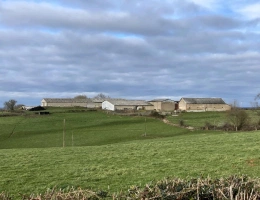
The department lives on grass. Its hedged countryside carries Charolais suckler herds run as breeders or breeder-finishers, on fields ringed by thick hedges where permanent pasture takes the largest share of the area. Buying therefore means buying a complete outfit: breeding females, bulls, fencing, water points, cattle sheds and forage stocks. Sheep enterprises hold the thinner ground, often as a second string. Towards the centre, mixed cropping and livestock combine home-grown cereals, forage maize and a herd, a pattern that absorbs market swings rather better.
The practical consequence fits in one line: entry capital sits in the animals as much as in the soil. A bloodline worked for three decades is not bought back at average market rates, and its genetic value evaporates if the deed covers only land and buildings. Ask for the herd age profile, the health history and the outlet used for store cattle before settling on an offer. Anyone after area alone should treat vacant farmland as a separate negotiation.
Eastwards, the Morvan and its fringes belong to grass and timber: slopes, acid soils, a short growing season, and competition from planting that has taken ground out of farming. The southern bocage, around Luzy, Château-Chinon and Decize, forms the heart of suckler breeding and offers the most coherent units. In the centre, the Bazois and the Amognes, towards Corbigny and Saint-Saulge, add arable to grass and appeal to mixed buyers. Westwards, the Puisaye and the approaches to Cosne-Cours-sur-Loire already lean towards lighter soils and cereal structures.
The Loire terraces around La Charité carry the best arable soils in the department and change hands within a narrow circle of neighbours. Everywhere else, the thin density of farmers favours a candidate from outside: holdings released regularly exceed what neighbours can absorb, and an agricultural property waits longer for its buyer here than in the Bresse or the Saône valley.
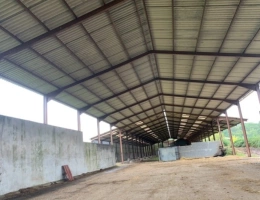
The main risk has a name: the livestock building. A great many cattle sheds date from earlier modernisation programmes and cope poorly with present numbers. Roof structure, bedded area, handling race, slurry store and storage capacity all need surveying before signature, because bringing them up to standard weighs more than the price gap between two comparable holdings. Classified-installation rules apply as soon as numbers cross the thresholds, bringing registration, siting distances and an existing manure plan to take over.
Then comes stock water: ponds, capped springs and shallow boreholes showed their limits during recent dry summers, and the hedge network no longer compensates. Legally, three filters stack up. SAFER, notified of the sale by the notary, may pre-empt. Permission to farm depends on the Bourgogne-Franche-Comté regional structure plan. And any sitting tenant buys first: ask for the schedule of tenancies at the first viewing, since it governs how much land is genuinely available. A share in a farmland holding company follows yet another regime.
Sales cluster in late winter, when retiring farmers decide ahead of the coming season, so an e-mail watch saves you finding a holding once viewings have closed. In this department the filters that really sort the listings are the share of grassland, whether a dwelling comes with it, and the area lying in one block, rather than budget alone. Sellers and local professionals lodge their instructions online. The regional comparison sits here: farms for sale in Bourgogne-Franche-Comté.


