

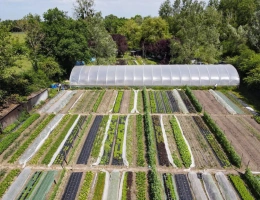
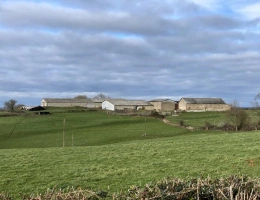
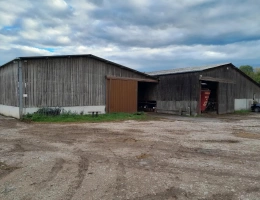

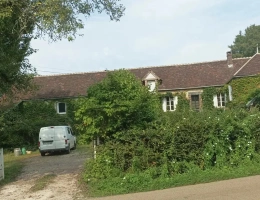
Few departments let you buy farms for sale in Jura to grow maize on the plain, raise free-range poultry in the Bresse, work vines on a marl slope or send milk to a mountain cheese dairy, all within the same boundary. The department climbs from west to east over a short distance and changes its farming logic several times on the way, which obliges a buyer to choose his country before choosing his farm. The properties shown come from farmers handing over, from agencies specialising in rural assets, from notaries in Lons-le-Saunier, Dole and Champagnole and from transfer advisers; they describe the parcels, the rights attached, the buildings and the stock. They swell our inventory of farms for sale in France.
This page adds the elements a decision needs: the hierarchy of land values from one country to the next, the areas where holdings come free, the real weight of each sector and the checks to make before committing. If your set-up is still to be built, our white paper « Créer une exploitation agricole » (in French) sets out the stages, from choosing a legal form to closing the funding.
Land forms the base of a farm's value. DVF, the property sales database published by the French tax administration (vineyards excluded), records a 2025 median of €2,304 per hectare in Jura (39), an average of €2,546 and 124 sales; four transactions in five fall between €1,650 and €4,123, against a national median of €5,307.
The SAFER land value benchmark sets €2,540 per hectare for vacant land and pasture offered for sale in the same year, +3.7% over one year and +12.4% over ten, against €6,460 nationally. Land sold with a tenancy in place is valued at €2,340, a discount of about 8%.
Against the Bourgogne-Franche-Comté region, whose median is €2,773 per hectare, this department sits 17% lower. For commune-level detail and comparisons with neighbouring areas, see our land price observatory, then cost your purchase with our financial calculators.
The mountain and the plateaux belong to dairy holdings supplying cooperative cheese workshops: Montbéliarde herds, dried hay, a majority of permanent pasture and deliverable volumes governed by the appellation. Westwards, the Jura Bresse holds poultry enterprises raising birds on grass runs under a strict specification, often alongside cash crops. The Finage and the Val d'Amour carry arable holdings on Saône silts, with maize, oilseed rape and straw cereals. The Revermont, lastly, bears the Jura vineyard and its own grape varieties.
Mixed farming links these worlds and remains the most affordable formula for a first acquisition, especially along the plateau edge. A working farm combining grass, cereals and a small livestock enterprise is judged on the balance between those blocks: each calls for its own capital, skills and working calendar, and taking on all three at once is seldom realistic.
The Finage, around Dole and Chaussin, lines up the easiest ground in the department and the most mechanised structures; prices there are the highest. The Jura Bresse, from Chaumergy to Beaufort, mixes hedged fields, ponds and small mixed units, with a steady flow of offerings. The Revermont, from Poligny to Saint-Amour, layers vines, grassland and woodland on steep slopes where parcels are fragmented. The Champagnole and Nozeroy plateaux form the classic dairy country. The Haut-Jura, around Morez and Les Rousses, and the Petite Montagne, towards Orgelet and Arinthod, offer the lowest entry prices.
It is in those last two districts that whole holdings most often come up with no local candidate, for want of successors and because of demanding working conditions. Conversely, a sale on the cheese plateaux finds its buyer before it is ever advertised. A purchaser willing to move away from the main roads will therefore find area where others have stopped looking.
Three checks are unavoidable before pricing an offer. On the plateaux, the allocation of deliverable volume does not pass mechanically with the land: the cooperative must decide, and its agreement governs whether the project balances at all. On the Revermont, a parcel becomes appellation vineyard only if it is classified and plantable, which makes its planting history decisive. On the plain, access to irrigation and the orders issued during recent low-flow summers weigh on what maize can achieve.
The regulatory base applies to everyone. SAFER, alerted by the notary, holds a pre-emption right. Permission to farm is granted against the thresholds of structural control, set at Bourgogne-Franche-Comté level. Let land follows its tenant, who has first call on buying: ask for the schedule of tenancies, because it determines the area actually transferred on the day of signature.
Sellers differ as much as the countries do: a plateau dairy farmer leaving with no successor, a Revermont grower giving up his upper parcels, an arable farmer on the Finage winding up a company, a Bresse poultry keeper scaling back. Their instructions arrive here as handovers happen, carried by the department's notaries and rural agencies. Sort by country, by sector, by area or by budget, then let an e-mail alert do the work. For a wider view, open farms for sale in Bourgogne-Franche-Comté.