

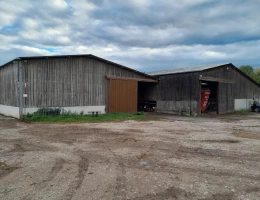
An arable farm for sale in Côte-d'Or belongs to a genuine cropping department: beyond the famous vineyards, the limestone plateaux of the Châtillonnais and the Saône plain carry wheat, barley, oilseed rape and maize, along with mustard seed. The files published here come from farmers organising their handover, rural property specialists and notaries in Dijon, Beaune or Châtillon-sur-Seine, and set out how the fields are laid out, what is owned and what is rented, the storage and the machinery. They sit alongside the arable farms for sale listed throughout France.
This page goes further than the sale particulars: land values recorded in the department, the areas where holdings change hands most often, how to read a Burgundian farmstead and its grain bins, and the obligations that land on a crop farm at the moment of takeover. Our white paper « Créer une exploitation agricole » (in French) sets out the setting-up route in parallel.
Pricing the land comes first in any plan to buy an arable farm. On the basis of 2025 DVF sales (vineyards excluded), the median in Côte-d'Or (21) works out at €3,065/ha and the average at €3,183/ha, across 170 transactions. The central range covering 80% of sales runs from €1,942 to €4,620/ha; nationally the median is €5,307/ha.
The SAFER benchmark, the market's second yardstick, gives €2,870/ha in 2025 for vacant land and pasture (-5.9% over twelve months, -3.0% over ten years), beside a national €6,460/ha; tenanted land is worth about 17% less.
Two farms of the same size can trade at very different levels. Soil depth and agronomic potential come into it, as does how tightly the fields sit around the yard, whether drainage is old or renewed, flat and bin storage capacity, a drier, the age of the harvesting kit, the basic payment entitlements and the contract tying the business to its cooperative or grain merchant. A grain farm sold with real storage and compact fields naturally fetches more. To frame your own valuation, use our land price observatory and our financial calculators.
On the plateaux the clay-limestone soils are often shallow and stony: the rotation is built around wheat, winter barley and oilseed rape, sometimes with mustard or protein crops added. In the Saône plain and the Ouche valley, deep silts allow maize, sugar beet and irrigated crops, provided a licensed borehole goes with the holding. Ask for the cadastral plan, the soil analyses and the harvest records before committing, because that is the only way to judge how steady yields really are from one terroir to the next. Conservation tillage is spreading locally and changes the value of the machinery being taken over.
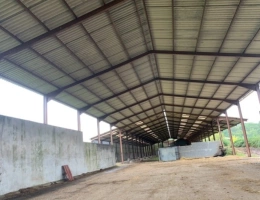
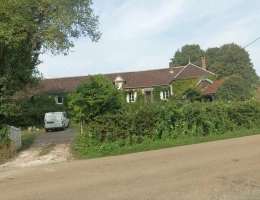
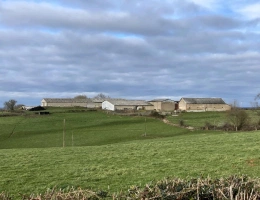
Farmsteads here typically combine old stone buildings with newer steel-framed sheds. Buyers look at storage capacity, the condition of the bins and their ventilation, the presence of a drier, the concrete apron, the intake pit and lorry access. A cereal farm that comes with enough storage lets you choose when to sell the harvest, and that flexibility is priced in. Where a manor house or a long stone dwelling forms part of the lot, have it valued separately: the residential market around Dijon and Beaune follows rules of its own.
The Châtillonnais in the north carries large plateau holdings, with reorganised field blocks and land prices more affordable than elsewhere. The Dijon plain, from Genlis to Auxonne and Pontailler-sur-Saône, holds the best arable land, irrigable in places, and is where competition for deals is fiercest. The Auxois, around Semur-en-Auxois and Vitteaux, remains Charolais beef country: what you find there is mostly mixed systems where cropping supports grassland. The arrière-côte and the Val de Saône round out the picture, often with fragmented parcels.
Price gaps between the north of the department and the plain are wide, and they owe less to the buildings than to soil quality and to the pressure from neighbours looking to expand. Close to Dijon, competition for ground is intense; in the Châtillonnais, an incoming buyer has more room to manoeuvre. Looking at several districts before settling remains the best way to tune your funding plan.
The sale falls under the structures control, the administrative authorisation that governs takeovers and expansion, and SAFER may pre-empt once the notary has notified the deal. Read the rural leases field by field: remaining term, rent level, environmental clauses, the tenant's right of pre-emption. In a department where a large share of the ground is rented, a poorly documented lease or a long-standing verbal occupation can undermine the economics of the whole project. Ask for insurance certificates and, where the business is held in a company, the minutes of its meetings.
Then confirm that the basic payment entitlements are properly transferred and declared within CAP deadlines, that environmental designations, manure plans and drinking-water catchments do not restrict practices on particular fields, and that abstraction permits for irrigation are current. A survey of the fuel tanks, the crop-protection store and the electrical installations avoids unpleasant surprises at the first harvest.
Retiring owners, rural property firms and notaries feed this selection day by day. Sort by area, by budget or by district, save an alert to follow every new listing, and extend the search to the arable farms for sale in Bourgogne-Franche-Comté.


