

The market for an arable farm for sale in Jura plays out almost entirely in the west of the department, down on the plain. Between Dole, Tavaux and the Finage, and on into the Bresse jurassienne, alluvium from the Doubs valley carries maize, wheat, barley and oilseed rape, frequently under irrigation. Properties reaching the market come from farmers organising their exit, rural agencies and notaries in Dole, Lons-le-Saunier or Bletterans, and describe the field layout, the irrigation equipment, the storage and the rented acreage. They appear alongside the arable farms for sale throughout France.
This page supplies what the particulars leave out: benchmarks for Jura land values, the communes where supply actually renews itself, how to read a grain drier or a pumping station, and the obligations attached to a crop farm run on irrigated plain. Our white paper « Créer une exploitation agricole » (in French) takes each stage of setting up in turn.
Pricing the land comes first in any plan to buy an arable farm. On the basis of 2025 DVF sales (vineyards excluded), the median in Jura (39) works out at €2,304/ha and the average at €2,546/ha, across 124 transactions. The central range covering 80% of sales runs from €1,650 to €4,123/ha; nationally the median is €5,307/ha.
The SAFER benchmark, the market's second yardstick, gives €2,540/ha in 2025 for vacant land and pasture (+3.7% over twelve months, +12.4% over ten years), beside a national €6,460/ha; tenanted land is worth about 17% less.
Few things truly drive the value of such a holding, but they weigh heavily: the agronomic potential of the alluvium, access to water and the abstraction permit that goes with it, drainage in the heavier bottoms, how compact the fields are, storage capacity and whether a drier is in place, the age of the combine and the cultivation kit, the basic payment entitlements, and the contract with the cooperative or the merchant. A cereal farm equipped to irrigate is simply not comparable with a dryland one. To put numbers on all of it, see our land price observatory and our financial calculators.
In the Finage, sandy and gravelly soils dry out fast: irrigation shapes everything, and the value of a holding depends directly on its watering equipment, the authorised flow rate and how reliable the resource is. In the Bresse jurassienne the ground is heavier and prone to waterlogging, so drainage governs both yields and how early machinery can travel in autumn. Have a precise inventory drawn up: drain plans, age of the collectors, condition of the ditches, pumps and reels, declared boreholes. The rotation mixes maize, wheat, barley and oilseed rape, sometimes with sunflower or protein crops.
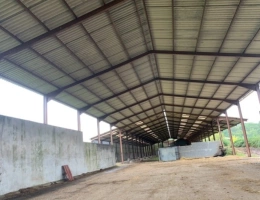
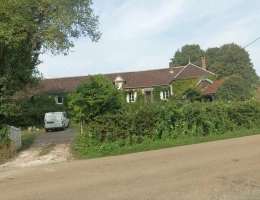
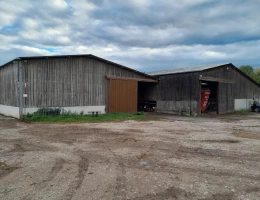
Storage is the second decisive item. A grain farm with ventilated bins and a drier lets you harvest maize without waiting for a slot at the cooperative silo, and that independence shows up in the asking price. Check the load-bearing yard surface, the compliance of the electrical installations and the genuine capacity of the buildings. Where the farm is sold with the house and outbuildings, ask for a clear breakdown: dwelling, production facilities, land, machinery.
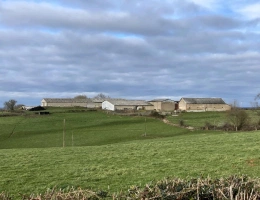
The Dole plain and the Finage, around Dole, Tavaux, Chaussin and Chaumergy, form the cropping heart of the department: large fields, well-developed irrigation, silos and merchants close at hand. The Bresse jurassienne, from Bletterans to Saint-Amour, mixes crops, meadows and livestock, with more fragmented arable land. The Revermont and the first plateau belong to the vineyards and to Comté, and offer only limited ploughable ground. The Haut-Jura, higher still, is out of scope for this kind of project.
Prices follow that geography: highest in the irrigated Finage, more affordable in the Bresse, where handovers are also more frequent given the age profile of local farmers. An incoming buyer does well to weigh a well-equipped plain holding against a Bresse property to be taken on step by step, cheaper to enter but usually needing more work.
Irrigation brings its own paperwork: abstraction permit, meter, allocated volume, possible membership of the collective water management body, and the restriction rules that apply in dry spells. These rarely pass automatically to a buyer and belong in the deed. On the land side, the transaction remains subject to the structures control, the French authorisation regime for farming a given acreage, and to SAFER's pre-emption right. Go through every rural lease: remaining term, rent, environmental clauses, the sitting tenant's right of pre-emption.
Finally, verify the transfer of basic payment entitlements and that the CAP declaration matches the acreage actually farmed, the designations arising from the nitrates directive and from water catchments, and the condition of the crop-protection store and fuel tanks. In areas near the Doubs and the Loue, ask about the flood risk on low-lying fields, which limits what can sensibly be grown there.
Retiring farmers, rural estate agencies and notaries publish their properties here. Pick an area, a budget or a district, set up an alert to follow new files as they arrive, and continue your search among the arable farms for sale in Bourgogne-Franche-Comté.


