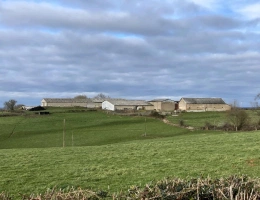
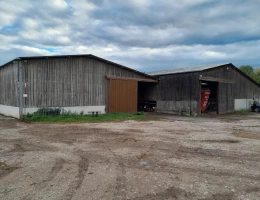
Finding an arable farm for sale in Doubs takes patience: this is Comté cheese country first and foremost, where grass and milk shape the land market. Ploughable ground sits in the Doubs valley, the avant-monts and the Montbéliard area, where wheat, barley, oilseed rape and maize alternate with meadows. The properties offered come from farmers handing over, rural property professionals and notaries in Besançon, Baume-les-Dames or Pontarlier, and state the split between arable and grass, the buildings and the machinery. They join the arable farms for sale listed across France.
Here you will find what no sale particular tells you: where local land values stand, which communes genuinely release ploughable ground, how to judge a shed attached to an old farmstead, and the constraints on a crop farm sitting next to protected-designation dairy units. Our white paper « Créer une exploitation agricole » (in French) fills in the picture for anyone preparing to set up.
Pricing the land comes first in any plan to buy an arable farm. On the basis of 2025 DVF sales (vineyards excluded), the median in Doubs (25) works out at €3,314/ha and the average at €3,569/ha, across 132 transactions. The central range covering 80% of sales runs from €2,485 to €5,000/ha; nationally the median is €5,307/ha.
The SAFER benchmark, the market's second yardstick, gives €3,280/ha in 2025 for vacant land and pasture (+7.9% over twelve months, +27.6% over ten years), beside a national €6,460/ha; tenanted land is worth about 17% less.
Beyond the hectares, several things make such a property worth what it fetches: soil depth and agronomic potential, how compact the fields are, working drainage in the wetter bottoms, covered storage capacity, the state of the bins and the harvesting kit, the basic payment entitlements and the chosen outlet, cooperative or merchant. In this department the presence of dairy units keeps arable land keenly sought after as supplementary ground. To place a price, lean on our land price observatory and our financial calculators.
Ploughed ground is concentrated on the alluvium of the Doubs valley and the silty soils of the avant-monts; on the plateaux, rock comes close to the surface and rotations stay short. Because the Comté specification bans fermented forage, silage maize is absent from the designated zone, which pushes cropping towards wheat, barley, triticale and oilseed rape, with protein crops and, on the warmest slopes, sunflower, plus grain maize on the valley floor. Ask for soil analyses, yield records and the field plan: variability is considerable, even within a single holding.
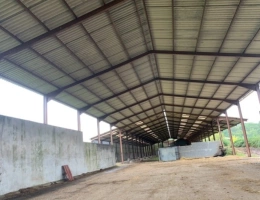
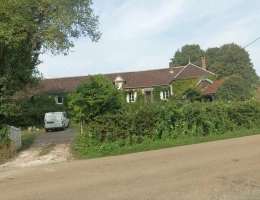
The built element is usually a large Comtoise farmhouse with sheds added over the years. Examine the roof and its frame, the flat storage area, bin ventilation, lorry access in winter and the state of the workshop. A cereal farm equipped with a grain drier is unusual here, and that single item changes the marketing calendar. Where the dwelling is included, insist on three separate figures: house, farm buildings, land. Blurring the three distorts the funding plan.
The Doubs valley, from Besançon through Baume-les-Dames towards L'Isle-sur-le-Doubs, holds the department's best cropland, with more regular fields and easy access to grain stores. The Montbéliard country and the Belfort gap continue that cropping corridor. The avant-monts and the Rougemont area offer mixed systems where cereals support a dairy unit. On the plateaux around Levier, Ornans and the Haut-Doubs, grassland rules and what is ploughed mostly feeds the herd.
The upshot is straightforward: a grain farm with neither grass nor livestock is found almost only in the lower valleys. Elsewhere a buyer takes on a mixed system and then decides how far to swing it towards cropping. Anyone buying purely to crop should therefore map out, before signing, which neighbouring blocks might realistically be rented or bought later. Demand from livestock farmers for forage and spreading ground underpins prices, including on fields of only average quality.
As everywhere, the deal falls under the structures control, the French authorisation regime for taking over farmland, and SAFER may pre-empt once the notary notifies the sale. Doubs stands out for how much ground is rented: ask for every rural lease, its date, remaining term, rent and any environmental clauses, and check the sitting tenant's right of pre-emption. Where the business is held in a company, the purchase may cover shares rather than assets, with different tax and inheritance consequences that are better weighed early.
Confirm the transfer of basic payment entitlements and the filing of the CAP declaration on time. Check the water-related designations, which are numerous on karst ground: catchment protection perimeters, areas prone to rapid transfer towards the rivers, spreading rules. Any doubt about a swallow hole, a sink or a doline in a field deserves a site visit before you make an offer, since such features govern how the ground can be worked and how machinery can safely move across it.
The properties shown come from retiring owners, firms specialising in rural property and notarial offices. Use the area, price and location filters, create an alert so no new listing slips past you, then widen your horizon to the arable farms for sale in Bourgogne-Franche-Comté.