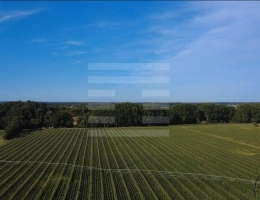
Looking for an arable farm for sale in Tarn-et-Garonne takes you first to the low plains of the Garonne, the Tarn and the Aveyron, then up to the Lomagne hills where durum wheat and sunflower shape the rotation. Maize, sorghum and soya hold the alluvial ground wherever water is secured. The holdings shown here are entrusted to us by farmers arranging their handover, by firms specialising in rural land and by notaries in Montauban, Castelsarrasin and Beaumont-de-Lomagne; they set out the cropping, the irrigated area, the machinery and the sheds included. Each one feeds the national register of arable farms for sale.
To what the particulars describe, this page adds the land values recorded across the department, the districts where holdings most often come free, a method for judging a drier and a set of grain bins, and the checks specific to taking over in an irrigated area. As for setting up in farming, our white paper « Créer une exploitation agricole » (in French) walks through each stage of it.
Pricing the land comes first in any plan to buy an arable farm. On the basis of 2025 DVF sales (vineyards excluded), the median in Tarn-et-Garonne (82) works out at €7,301/ha and the average at €7,959/ha, across 113 transactions. The central range covering 80% of sales runs from €4,458 to €12,529/ha; nationally the median is €5,307/ha.
The SAFER benchmark, the market's second yardstick, gives €7,540/ha in 2025 for vacant land and pasture (+0.7% over twelve months, +20.4% over ten years), beside a national €6,460/ha; tenanted land is worth about 17% less.
Acreage alone never settles the value. Into it come the depth of the local silty and clay-limestone soils, where the water comes from and how much is authorised, bin capacity and whether a drier is in place, how tightly the fields gather around the yard, the age of the combine and the machinery line, the basic payment entitlements and the delivery contract signed with a cooperative or a merchant. A cereal farm equipped for irrigation does not compare with a dry neighbour. To place yourself, open our land price observatory and our financial calculators.
Here the water equipment weighs on income as heavily as the soil does. Check where the water comes from — a river intake, a hillside reservoir, a borehole — the permit behind it, the volume notified for the season and whether it passes to the buyer. Then go over the pump station, the reels or the pivot, the hydrants and the buried mains, which cost a great deal to renew. On storage, measure bin volume against an average harvest, the state of the ventilation, the intake pit and the room lorries have to turn in the yard. A working drier lets you take maize in damp rather than queue at the collective silo.
Machinery is listed item by item, invoices and meters to hand, separating what the business owns, what is held jointly with neighbours and what is contracted out. Many farmsteads pair a recent steel-framed shed with older ranges built of the local flat brick. Where a restored house is part of the sale, insist on a clean split between the dwelling, the working plant and the land: residential demand along the valley blurs the reading of the price of a grain farm.
The low plains of the Garonne, the Tarn and the Aveyron hold the most productive soils, around Castelsarrasin, Moissac, Valence-d'Agen and Montech. Irrigation is common there and orchards and market gardening compete for the ground, which keeps values firm. Westward, the Lomagne, around Beaumont-de-Lomagne, Lavit and Saint-Nicolas-de-la-Grave, lines up clay-limestone slopes given over to durum wheat, sunflower, protein crops and seed multiplication; holdings run to a decent scale and arable land comes at more affordable levels. The north-east, towards Caussade and Molières, mixes cropping, orchards and woodland on lighter ground.
Higher up, the Quercy limestone plateaux and the edges of the Rouergue leave little room for cropland: grass and livestock take over and supply thins out. The Bas-Quercy slopes, between Lafrançaise and Montpezat-de-Quercy, sit in between, with more fragmented fields. Driving several districts before pricing an offer keeps you from paying for agronomic potential that exists only down on the plain.
Water heads the list. The department falls within catchments classified as short of water, where summer abstraction is capped and shared out collectively: make sure the holding is attached to the managing body, that the notified volumes match the irrigated area advertised and that every structure is properly declared. Then examine drinking-water catchment perimeters, the areas covered by a flood risk prevention plan along the Garonne and the Tarn, and the easements attached to dykes and canals, which sometimes restrict where a building may go or how inputs are stored.
Legally, the sale passes through the structures control, the French authorisation required to set up or expand, and the notary notifies SAFER, the rural land agency, which holds a right of pre-emption. Read every rural lease again: remaining term, rent, environmental clauses, the sitting tenant's pre-emption right. Have the transfer of basic payment entitlements confirmed within the CAP declaration calendar, along with any cooperative shares to buy and commitments already entered into, in seed multiplication as in organic production.
Files reach this page by three routes: the seller handling matters himself, the rural agency acting under mandate, the notary's office settling an estate. Narrow the search by area, by budget and by district, then ask to be alerted as soon as an offer matches what you are after. You can widen the watch afterwards to the arable farms for sale in Occitanie.