

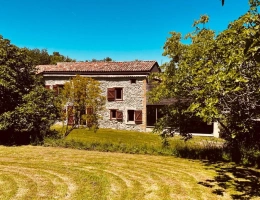
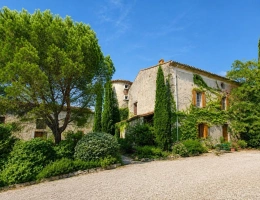
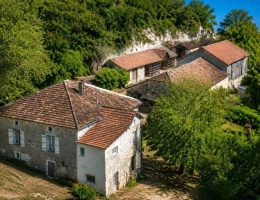
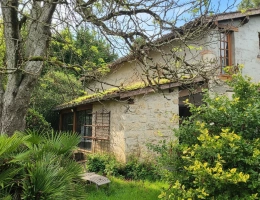
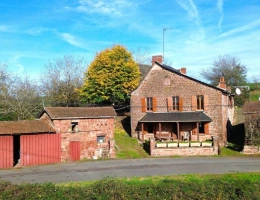
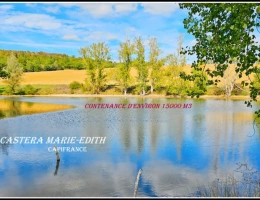
An arable farm for sale in Ariège lies almost entirely in the northern third of the department, where the Pyrenees give way to open plain: the lower Ariège valley from Pamiers to Saverdun and Mazères, the Lèze valley, the Piège hills and the Mirepoix country. Irrigated maize, soft and durum wheat, sunflower, rape and soya follow one another on silty boulbènes and heavier clay-limestone ground. Sales come through farmers handing over, through rural property agencies and through notaries in Pamiers or Foix, with detail on field blocks, irrigation, storage and machinery. Set each one against the arable farms for sale we list.
Here you also get the bearings a listing never gives: the level of ploughland values in the Ariège, the districts that release units, how to appraise a plain farmstead and its irrigation kit, and the checks that apply to a cereal farm depending on a collective water network. Our white paper « Créer une exploitation agricole » (in French) describes the route through a takeover.
Pricing the land comes first in any plan to buy an arable farm. On the basis of 2025 DVF sales (vineyards excluded), the median in Ariège (09) works out at €7,533/ha and the average at €7,099/ha, across 26 transactions. The central range covering 80% of sales runs from €3,541 to €9,991/ha; nationally the median is €5,307/ha. * Fewer than 30 recorded sales: indicative value.
The SAFER benchmark, the market's second yardstick, gives €5,900/ha in 2025 for vacant land and pasture (+0.7% over twelve months, +7.7% over ten years), beside a national €6,460/ha; tenanted land is worth about 17% less.
What separates two neighbouring properties rarely comes down to size. Look at the balance between heavy clay ground and silty boulbènes, any free-draining gravel terraces, access to water and the legal form it takes, the irrigation kit and its age, how compact the blocks are, the bins, the drier, the harvest chain, the basic payment entitlements and the contracts held with a grain buyer. Benchmark the asking figure with our land price observatory and our financial calculators.
The Ariège plain sets two terroirs side by side, and they are not farmed alike. The boulbènes, silty and prone to capping, drain quickly but suffer in a dry summer and compact under repeated passes; the clay-limestone soils of the hills hold water better, can only be worked within a narrow window and crack open in summer. Gravelly river terraces, very free-draining, complete the picture. Ask for analyses, the drainage plan, the soil map and yields by block over several years: without irrigation, the gap between these soils becomes considerable.
Irrigation equipment is therefore central. Check where the water comes from, the subscription to the collective network or the permit for pumping from the river, the volume available, the condition of the pump house, reels and pivots, and whether shares in a scheme pass with the farm. On the harvest side, a grain farm fitted with ventilated bins and a drier controls its own calendar, which matters where maize weighs in the rotation. The old brick-and-cobble farmhouse is valued separately.
The cereal core sits in the Ariège corridor between Saverdun, Mazères, Pamiers and Saint-Jean-du-Falga, where large irrigated fields and the pull of the Toulouse Lauragais keep demand firm. The Lèze valley, around Le Fossat and Lézat-sur-Lèze, extends that zone with smaller units. Eastwards, the Piège hills and the Mirepoix country, out to Mirepoix, Belpech and Camon, offer holdings on heavier ground and broken relief, often marketed at lower levels but more exposed to summer water deficit.
To the south, the Couserans and the upper Ariège turn to mountain country: arable land gives way to meadow and summer pasture, and what cereals there are feed the herd. In between, the edge of the Plantaurel mixes slopes, woodland and landlocked parcels. Before you commit, work out the travel time between the steading, the blocks and the collection point: the relief stretches journeys further than the distance suggests.
Irrigation underpins most plain systems here, and securing it must be settled before any offer. Depending on the area, water comes from a network fed by a reservoir, from river abstraction under permit, or from a declared borehole. Ask for the allocated volume, the charging terms, the record of summer restrictions and the length of any commitment. The takeover then goes through the structures control, the prefectural authorisation that examines the area taken on, and SAFER, the rural land agency, may pre-empt once the notary notifies the sale, readily in favour of a new entrant.
Examine each rural lease: expiry, rent, environmental clauses, the tenant's pre-emption right. Verify that the graphical field register matches the areas sold, that basic payment entitlements transfer, and what agri-environmental commitments are running. The Ariège, Lèze and Hers valleys include flood-prone ground that limits building and carries requirements of its own: read the risk prevention plan. Close out with the pesticide store, the red diesel tank and the electrical certificate.
The properties on this page are sent to us by farmers at the end of their careers, by firms specialising in rural land and by notarial offices in the Ariège. Filter on your own criteria for area and budget, hold them in an alert, then broaden the field to arable farms for sale in Occitanie.


