

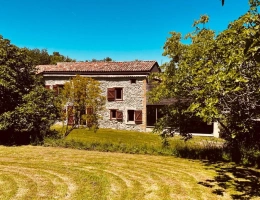
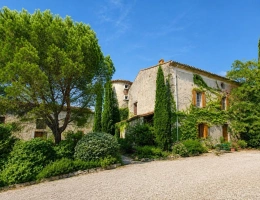
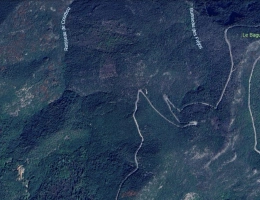
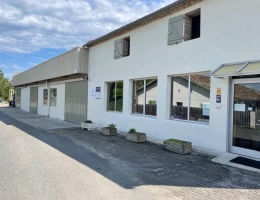
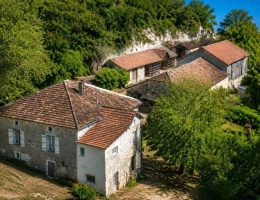
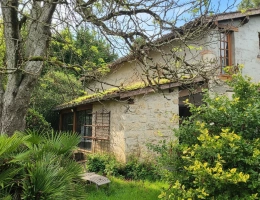
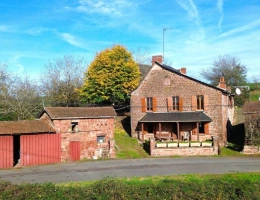
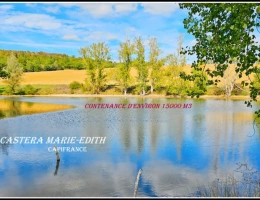
Buying an arable farm for sale in Lozère bears no resemblance to taking over a lowland holding: altitude, a long winter and shallow soils confine cash crops to a few sheltered areas, while the rest of the department lives on grass, cattle and sheep. The files gathered here come from livestock and cereal farmers preparing their handover, from rural land agencies and from notarial offices in Mende, Marvejols or Saint-Chély-d'Apcher, and they set out the ploughable share, the rotation followed, the buildings and the machinery transferred. All of them belong to our wider view of arable farms for sale.
This page adds what listings omit at the moment of deciding: land values recorded in the department, the areas where holdings come free, how to read a building designed for snow load, and the checks specific to mountain farming systems. Our white paper « Créer une exploitation agricole » (in French) walks through the preparation of a setting-up project.
Pricing the land comes first in any plan to buy an arable farm. On the basis of 2025 DVF sales (vineyards excluded), the median in Lozère (48) works out at €3,079/ha and the average at €3,523/ha, across 18 transactions. The central range covering 80% of sales runs from €1,858 to €6,253/ha; nationally the median is €5,307/ha. * Fewer than 30 recorded sales: indicative value.
The SAFER benchmark, the market's second yardstick, gives €4,330/ha in 2025 for vacant land and pasture (-21.0% over twelve months, +14.9% over ten years), beside a national €6,460/ha; tenanted land is worth about 17% less.
Value here depends less on area than on soil bearing capacity and aspect, on the length of the growing season, on the split between ploughland, meadow and rough grazing, on the quality of the farmhouse and the cattle housing, on bins and a dryer where they exist, on the tractor and harvest line, on basic payment entitlements and on the allowances attached to less-favoured areas. To frame a budget, consult our land price observatory and then our financial calculators.
The cereals grown here, barley, triticale, oats and rye on the coldest ground, often feed the livestock enterprise before any grain is sold: a crop farm in Lozère is seldom specialised, and the share actually marketed has to be established season by season. A buyer examines soil depth, stoniness, the aspect of each slope and the average date at which growth resumes, all of which decide which species can be grown. On the building side, roof structures must carry snow load, cattle sheds and machinery barns are judged on volume, ventilation and winter access, and grain storage usually stays modest.
Machinery matters more than elsewhere, because shared equipment rings and contractors do not cover every district: the tractor, cultivation kit suited to stony ground, a baler and, less often, a combine form an item to value independently of the land. The farmhouse, built in granite or basalt and frequently large, belongs to a separate residential market driven by second homes, and bringing it up to a decent thermal standard belongs in the funding plan from the start.
The steadiest cropped areas lie in the Lot valley around Mende, in the Marvejols plain and on the Terres d'Apcher, where alluvial and volcanic soils deepen. The Margeride, towards Saint-Alban-sur-Limagnole and Langogne, carries hardy cereals interleaved with meadows and conifer plantations. On the Aubrac, around Nasbinals and Fournels, grass and summer grazing rule unchallenged. The causses of Sauveterre and Méjean open out into wide plateaus, but on thin, drought-prone soils historically given over to dairy ewes. In the Cévennes and the Vallée Française, slope and chestnut woodland rule out broadacre cropping.
Properties coming to market are therefore concentrated in the north and west, where complete holdings change hands with their land, their buildings and sometimes their stock. Values stay more accessible than in the French cereal plains, but yield potential follows the same scale. Always ask for the schedule of blocks: the distance between the yard and the furthest fields shapes the whole organisation of work.
A wide part of the department falls under schemes that frame farming practice: mountain-area classification, Natura conservation sites, water catchment perimeters and, in the south-east, the core and buffer zones of the Cévennes national park, where certain works and buildings are regulated. Have the designations spelled out field by field before the preliminary contract. Legally, check the remaining term of each rural lease, the rent, the often verbal grazing agreements, and the rights of use over sectionaux, the communal land whose allocation can weigh heavily on the forage balance of a holding run alongside a herd.
Taking over remains subject to the structures control, the authorisation to farm issued by the prefect, and SAFER, the rural land agency, may step into the sale. Ask next about the transfer of basic payment entitlements, the state of any agri-environment commitments in force, since breaking them triggers repayment, and the position of the livestock buildings under animal health and classified-installation rules. An assessment of the water resource, private springs and catchments included, usefully rounds off the visit.
The properties shown come from private vendors, from rural property professionals and from notarial offices based in the department. Narrow by area, by price or by type of system, create an alert to follow new listings week by week, and then carry on towards arable farms for sale in Occitanie.


