

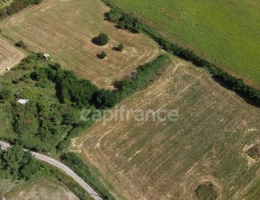
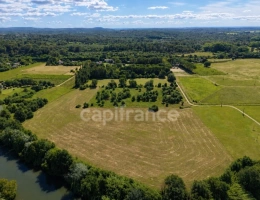

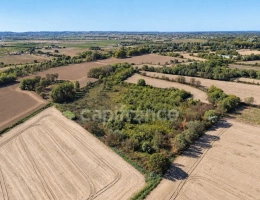
Buying an arable farm for sale in Gard almost always points south, where the plain takes over from the garrigue scrubland and the Cévennes: the Vistrenque around Nîmes, the Costières between Bellegarde and Vauvert, the Camargue gardoise and the lower Rhône valley, where durum wheat, rice, maize, rape and sunflower grow on largely irrigated ground. Rural property agencies, notaries and farmers preparing to step back set out the irrigable area, the watering method, the buildings and the machinery included. Each of these holdings also appears in our national selection of arable farms for sale.
Then comes what a listing never tells you: where local land values sit, which districts see a cereal farm released, what state the sheds, watering mains and dryer are really in, and which checks belong to irrigated ground. To shape an entry project, lean on our white paper « Créer une exploitation agricole » (in French), which covers both procedures and funding.
Pricing the land comes first in any plan to buy an arable farm. On the basis of 2025 DVF sales (vineyards excluded), the median in Gard (30) works out at €14,000/ha and the average at €13,165/ha, across 39 transactions. The central range covering 80% of sales runs from €6,532 to €20,675/ha; nationally the median is €5,307/ha.
The SAFER benchmark, the market's second yardstick, gives €14,360/ha in 2025 for vacant land and pasture (+8.5% over twelve months, +48.8% over ten years), beside a national €6,460/ha; tenanted land is worth about 17% less.
Here worth is read first through access to water and the equipment that carries it: a connection to the regional irrigation network or a permitted borehole, hydrants, reels, laser-levelled fields for the rice ground, sheds, ventilated bins and a dryer. Add the regularity of the blocks, soil salinity along the Camargue edge, and the contracts held with a co-operative or grain merchant. Set the whole against our land price observatory, then test how solid the plan is with our financial calculators.
On this plain, water governs the rotation and therefore the price. Examine where the supply comes from, an abstraction from the Rhône through the regional network, a declared borehole or membership of a growers' water association, then the contracted flow, the age of the pumps, the condition of buried mains, hydrants and reels. Buildings follow: a sound shed, ventilated bins, a dryer, a concrete apron, a workshop. Rice holdings add items found nowhere else, laser levelling, sluice gates and a drainage network, whose upkeep weighs on the trading account and must be costed before an offer.
Machinery is negotiated line by line: tractors, cultivation equipment, drill, sprayer, mobile watering gear, and a harvest chain either owned outright or shared through a machinery co-operative. Where a mas or a substantial farmhouse comes with the land, its value belongs to the local residential market, which is buoyant near Nîmes and Uzès: separate it plainly from the working unit, or the returns on show will mislead you. Stocks, the growing crop and payment entitlements are handled by their own documents.
The strongest arable land lies in the Vistrenque, between Nîmes, Saint-Gilles and Beauvoisin, on the Costières where cereals and vines share the stony terraces, and in the Camargue gardoise around Saint-Gilles, Vauvert and Aimargues, the only rice-growing district in the department. The Beaucaire plain and the lower Rhône valley complete the picture, with orchards and vegetable growing competing hard for the better soils. Further north, the Gardonnenque and the Uzège offer lighter ploughland, farmed partly without irrigation. The Cévennes, the garrigue and the back country of the Vidourle belong to other kinds of farming altogether.
Pressure on land is real in the ring around Nîmes and along the Rhône corridor, where housing, infrastructure and ground-mounted solar projects compete with growers for the same parcels: holdings find a buyer quickly there and leave little room to haggle. Further north towards the Uzège and the first foothills, values ease, in exchange for a less dependable water supply and markedly shallower soils.
The water file comes before everything else: the abstraction permit, the volumes allocated, the agreement with the network operator, the charges, and the summer restrictions imposed by prefectural order. The second point is particular to this department: much of the plain is exposed to flooding, from the Rhône, the Vidourle or the gardons. Read the flood prevention plan applying to each parcel and to the farmstead itself, since it governs insurance as much as any future building work. A takeover then needs clearance under the structures control, France's authorisation regime for farmland, and must pass SAFER.
Go through the rural leases in force, their remaining term, the rent and any environmental clauses, which are common near the wetlands and protected sites of the Camargue. Ask for the cropping history, the quality of the drainage, the state of the channels and ditches, and a schedule of parcels in nitrate vulnerable zones. An organically certified holding passes on its conversion date, its inspection record and its production contracts, all worth confirming with the certification body.
Retiring farmers, rural transaction firms and notarial offices across the department keep adding properties to this page. Set your criteria for area, budget and irrigable share, put an alert in place so new entries reach you, and carry the search on to arable farms for sale in Occitanie.


