

Taking on a goat farm for sale in Nièvre means settling in a grassland department long shaped by Charolais cattle, where goats hold a small but steady place. Herds graze for much of the year, on the meadows of the Bazois, the slopes of the Morvan or the heavy clays of the Puisaye, and the milk is usually turned into cheese on the farm itself. Properties reaching the market come from breeders preparing their retirement, from firms specialising in rural estates and from notaries in Nevers, Clamecy or Cosne-Cours-sur-Loire; each offer sets out herd, acreage and processing equipment. You will find them among the goat farms for sale tracked across France.
Beyond the dairy goat holding adverts shown online, this page gathers what really weighs on a purchase: where local land values stand, which areas have handovers taking shape, the condition to expect of the buildings, and the checks to run on a farm dairy. A setting-up project is also built with our white paper « Créer une exploitation agricole » (in French).
Land weighs heavily on the budget for a goat farm. Transfers published by the French tax authorities (DVF, excluding vineyards) put the median for farmland in Nièvre (58) at €3,040/ha in 2025, with an average of €3,182/ha over 150 sales. Eight transactions in ten settle between €2,013 and €4,156/ha, where the national median is €5,307/ha.
A second reference, the SAFER land value benchmark, sets vacant land and pasture at €2,990/ha for 2025, +1.7% in a year and -2.9% over a decade; the French average is €6,460/ha, and a sitting tenant costs a plot roughly 17% of its value.
Once the land is costed, value lies elsewhere: in the goat shed itself, in the milking plant and the chilled milk room, in the presence of a cheese room and a ripening cellar, in the kit for cutting and drying hay, in the state of the grazing fences. Then come the herd, its genetics and the steadiness of its yield, and finally the goodwill built around markets, box schemes and producer shops. Our land price observatory and our financial calculators help you split a budget across those items.
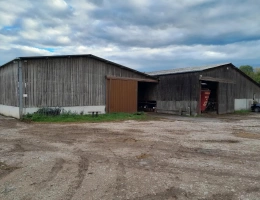
In a department of scattered farmsteads and old stonework, the goat shed often occupies a converted timber-framed barn, extended by an open shelter facing the grazing. A buyer looks at the roof, the strength of the frame, ventilation, drainage of the bedded area, then the parlour: stand, plant, washing point, bulk tank. Where milk is processed on site, the cheese room, drying room and cellar amount to a second production tool, and bringing them up to standard often costs more than upgrading the animal housing. The size of the forage barn governs winter self-sufficiency, which matters on soils that carry stock late in spring.
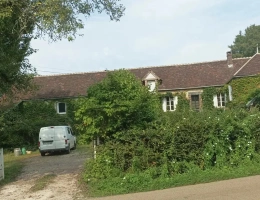
On the animals, inspection covers the number of milking does, the share of replacement kids, the kidding pattern, recorded milk results and health status. Alpine goats cope with the broken grazing of the Morvan, Saanen with a more intensive indoor system, and a few breeders keep Poitevine stock. Where the dwelling house comes with the working tool, ask for the price to be broken down: locally, a handsome stone house can carry most of the sum being asked on its own.
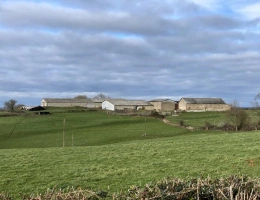
The Bazois, around Châtillon-en-Bazois and Corbigny, lines up permanent pasture and stock farms at still moderate values, in country largely given over to suckler cattle. The Morvan, from Château-Chinon to Lormes and Montsauche-les-Settons, offers grass and woodland, modest competition for land and holidaymakers around the lakes. The Puisaye, towards Saint-Amand-en-Puisaye and Saint-Sauveur, keeps a tradition of small farmhouse dairies. To the west, the Loire valley and the Donziais, from Cosne-Cours-sur-Loire to Donzy and Pouilly-sur-Loire, benefit from traffic along the river corridor and from the neighbouring vineyards.
That geography carries a direct commercial consequence: the protected designation area for Crottin de Chavignol goat cheese extends onto the western edge of the department, opening up, provided the specification is met, an outlet found nowhere else locally. A goat cheese farm close to Nevers, Clamecy or the Loire valley sells its output more easily than an isolated unit in the middle of the department.
A goat unit falls within the classified installations regime, the French environmental permitting system, as soon as the herd passes the threshold set in the official nomenclature, moving from declaration to registration with size, with notice to the prefecture when the operator changes. Processing requires either health approval or the benefit of the exemption for direct retail sale: ask for the food safety plan, the results of own-checks and batch traceability before entering negotiation. Also check effluent storage capacity and whether the spreading plan matches the land you are genuinely taking on.
Land deserves the same care: the share of rented parcels, continuation of rural leases with the landlords' agreement, the structures control, the French authorisation regime for taking over farmland, and SAFER's pre-emption right in a market where grazing ground also attracts outside investors. In the Morvan, grazing inside protected natural sites or wetlands can limit stocking rates and the grazing calendar. Finally, the customer base of a cheesemaking farm passes on through presence: negotiate an overlap period with the seller.
Retiring farmers, agencies geared to rural property and local notarial offices supply the selection visible on this page. Sort by forage area, by budget or by the presence of a processing workshop, then set an alert: a smallholding of this kind finds a buyer within weeks. The search can equally be opened up to goat farms for sale in Bourgogne-Franche-Comté.