

This Burgundian department keeps a low profile on the French goat map, which makes every goat farm for sale in Côte-d'Or all the more sought after. Herds are generally run on a farmhouse model, with cheese made and sold on site, on the grassland of the Auxois, the upper slopes above the vineyard or the Châtillonnais. No protected goat cheese designation covers the department: milk is valued through the farm's own name and through the custom of the wine country and nearby towns. Sales come from retiring owners, rural property firms and notaries in Dijon, Beaune or Semur-en-Auxois. They complete the goat farms for sale listed across France.
Here you will find what the listings leave out: where Burgundian land values stand, which areas concentrate handovers, how to judge a livestock building housed in an old farmstead, and what obligations weigh on a farmhouse dairy. Our white paper « Créer une exploitation agricole » (in French) sets out the route to setting up alongside it.
Land weighs heavily on the budget for a goat farm. Transfers published by the French tax authorities (DVF, excluding vineyards) put the median for farmland in Côte-d'Or (21) at €3,065/ha in 2025, with an average of €3,183/ha over 170 sales. Eight transactions in ten settle between €1,942 and €4,620/ha, where the national median is €5,307/ha.
A second reference, the SAFER land value benchmark, sets vacant land and pasture at €2,870/ha for 2025, -5.9% in a year and -3.0% over a decade; the French average is €6,460/ha, and a sitting tenant costs a plot roughly 17% of its value.
With this kind of property, use value counts far more than acreage. It rests on the shed and its milking parlour, on a compliant cheese room and ripening cellar, on forage harvesting machinery, on herd genetics and productivity, and finally on the order book: weekly markets, box schemes, wine cellars, restaurants. A dairy goat holding with an established outlet is negotiated quite differently from a bare set of buildings. To ground the arithmetic, consult our land price observatory and our financial calculators.
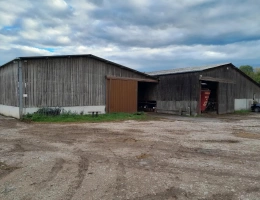
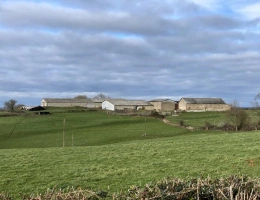
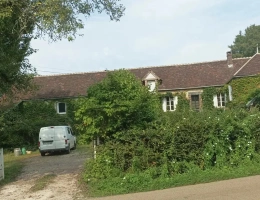
The typical local goat shed occupies a converted barn or a simple roofed building opening onto fenced grazing. Inspection covers the roof and frame, natural ventilation, the floor of the bedded area, the quality of the milking block and compliance of the milk room. Where the farm processes, the cheese room, the drying room and the cellar matter as much as the animal housing: their compliance determines whether the business can carry on from day one. Outbuildings such as a forage barn, a workshop or a cold room set how far you can grow without building anything new.
The herd is judged on the number of milking does and replacement kids, the kidding pattern, milk results and health status. Alpine and Saanen animals dominate, sometimes crossed with hardy breeds for selling kids. Where the dwelling house and land are part of the package, insist on separate valuations: in a department where rural housing is in demand, the price of the house can mask how weak the production tool actually is.
The plateaus of the Auxois, around Semur-en-Auxois, Pouilly-en-Auxois and Vitteaux, bring together natural grassland and farms available at more moderate prices than elsewhere. The Châtillonnais to the north offers large grass and woodland properties but scattered settlement. The upper slopes and Hautes-Côtes, above the Nuits and Beaune vineyards, combine small acreages with dense visitor traffic. The Saône valley and the Dijon plain, geared to arable cropping, hold few goat units and contested land. The Morvan fringe towards Saulieu rounds off the picture with isolated grassland holdings.
The outlet often dictates the area: a goat cheese farm near Dijon or the wine slopes sells its output with little commercial effort, whereas setting up in the Auxois or the Châtillonnais means organising rounds and sales points, in return for a more contained purchase price.
A goat unit falls under the classified installations regime, the French environmental permitting system, as soon as the herd passes the threshold set in the official nomenclature: declaration first, then registration for larger flocks, with mandatory notice to the prefecture when the operator changes. If milk is processed, the workshop needs health approval or must fall under the exemption for direct retail sale, with a food safety plan, batch traceability and documented own-checks. Also verify effluent storage capacity and whether the spreading plan matches the land you are actually taking on.
Land deserves the same rigour: identify which parcels are owned and which are rented, confirm that rural leases continue with the landlord's agreement, allow for the structures control, the French authorisation regime for taking over farmland, and watch SAFER's pre-emption right, which is actively used in Burgundy. On the animals, ask for health reviews, CAEV monitoring and milk analyses. Finally secure the handover period: a few months working alongside the seller beats a clean break.
Farmers, rural estate agencies and notarial offices are what feed the offers visible on this page. Select by forage area, by budget or by the presence of a processing workshop, then set up an alert: a smallholding of this type is scarce here and goes quickly. The search can equally be widened to goat farms for sale in Bourgogne-Franche-Comté.