
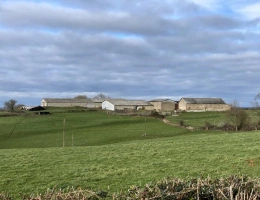

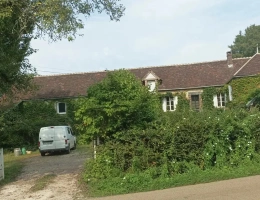
Looking for a goat farm for sale in Bourgogne-Franche-Comté brings you to a region where goat keeping holds a quiet but steady place, between the cheese country of the Mâconnais and the Charolais, the hedged farmland of the Morvan and the high pastures of the Haut-Jura. Sellers are keepers reaching the end of their working life, long-established rural agencies and notaries, and a dairy goat holding is described in detail: herd size, breeds kept, pasture and rough grazing, milking set-up and whether cheese is made on site. They round out our national selection of goat farms for sale.
Here you get the benchmarks a listing never carries: what land and pasture are worth from one department to the next, where handovers are becoming frequent, the expensive items hiding in an ageing building and the permits to verify. Before committing to a herd and its buildings, our white paper « Créer une exploitation agricole » (in French) helps you build the funding plan and secure the setting-up process.
Land weighs heavily on the budget for a goat farm. Transfers published by the French tax authorities (DVF, excluding vineyards) put the median for farmland in Bourgogne-Franche-Comté at €2,773/ha in 2025, with an average of €2,907/ha over 1,303 sales. Eight transactions in ten settle between €1,813 and €4,185/ha, where the national median is €5,307/ha.
A second reference, the SAFER land value benchmark, sets vacant land and pasture at €2,740/ha for 2025, -6.2% in a year and -8.1% over a decade; the French average is €6,460/ha, and a sitting tenant costs a plot roughly 17% of its value.
Beyond the acreage, value rests on the working tool and on the outlet: the goat house and its feed passage, the parlour, the milk room and bulk tank, the hay storage, then the cheese room where there is one, with its drying area, cellar and approvals. The herd counts through its health status and its yield, and so does the goodwill, meaning a market pitch, a round of delivered boxes or a contract with a collecting creamery. Weigh all this against our land price observatory, then test your assumptions with our financial calculators.
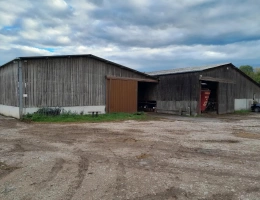
Many goat houses here were fitted into older structures, sometimes handsome stone barns: look first at headroom under the roof, then at airflow, daylight and how easily muck can be cleared out, because those three govern herd health as much as they govern your working day. Next come the milking platform, the milk line, automatic washing and the tank, then silos and hay and straw storage, frequently undersized where the herd grew and the buildings did not. A holding with a sick bay and a separate kid-rearing space carries a clear premium over one without.
The herd is assessed in its own right: Alpine and Saanen dominate, sometimes crossed, and you look at the age profile, how mating is managed, recorded yields and how steady output stays through the year. One or two bucks of sound origin also count, as does self-sufficiency in hay and forage, which tells on the accounts every winter. Where the house is included in the sale, separate from the first visit what belongs to the working unit, what belongs to residential comfort and what belongs to the goodwill: the three are not financed in the same way.
Saône-et-Loire carries the strongest tradition: the Mâconnais and the Charolais each give their name to a protected goat cheese, so an approved goat cheese farm changes hands with real working value attached. The Nièvre, around the Morvan, holds modest herds that almost all process on the farm and sell through short supply chains. Côte-d'Or is more varied, between the Auxois, the Châtillonnais and the Hautes-Côtes, where a few goat farms sit alongside vines and cereals. In the Yonne, supply is scattered and the land is largely given over to arable cropping.
Eastwards, the Doubs and the Jura remain cow's milk country, with their comté cooperatives: goat units are a minority there, usually at altitude or on the edges of the cattle designation zones, and almost always geared to direct sale, markets and visitors. Haute-Saône offers farmsteads and pasture at some of the most moderate entry prices in the region, with takeovers within reach of a first project. The Territoire de Belfort, small as it is, yields few properties but sits beside a close and loyal customer base.
Depending on herd size, the unit is governed either by the departmental health rules or by the classified installations regime, which means a declaration or a registration and notification of the change of operator to the prefecture. Check the order in force, the distances to third parties, which in hillside villages can rule out any extension, how much effluent can be stored and whether the spreading plan really fits the area under your control. In areas designated vulnerable under the nitrates rules, spreading windows and pit covers call for investment that is better costed before you make an offer.
On health, ask for the herd history, CAEV and paratuberculosis screening results, milk analyses and the vet's follow-up. Land deserves close attention as well: running rural leases, scattered parcels, access tracks and rights of way, together with the structures control, the French authorisation regime for taking over farmland, and SAFER's possible intervention. Where cheese is made under a protected designation, the right to use it depends on the new operator meeting the specification, and should be confirmed with the body that manages it.
The properties shown here are put up for sale by owners, by rural estate agencies and by notaries working across the region. Whether you are after a full dairy operation or a smallholding, sort by department, by area or by type of unit, ask to receive new listings by e-mail, and take a broader view by browsing every one of the farms for sale in Bourgogne-Franche-Comté.