

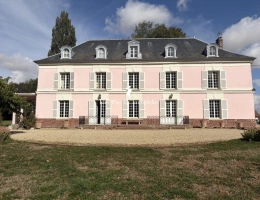
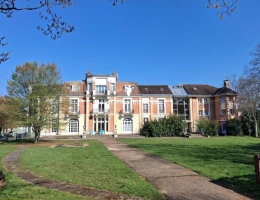
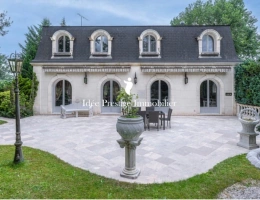
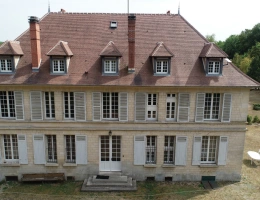
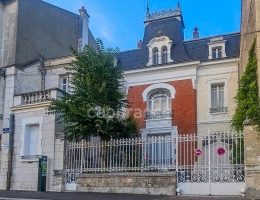
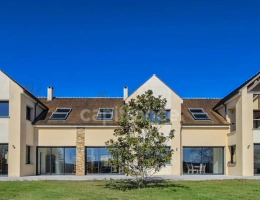
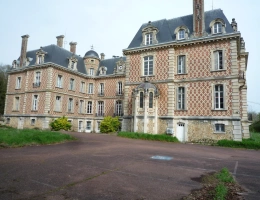
A historic monument for sale in Val-de-Marne is mostly found around the Bois de Vincennes and along the Marne river, where mansion houses, riverside villas and a few seventeenth and eighteenth-century convent complexes remain, in Saint-Maur-des-Fossés, Nogent-sur-Marne or Champigny-sur-Marne. A century of continuous urbanisation has greatly reduced the number of large properties, but a few classified or registered parks and residences remain, inherited from the Marne riverside once favoured by Parisians at the turn of the twentieth century. These riverside villas differ markedly from the convent-derived residences further inland, both in scale and in the works they require. Browse the historic monuments for sale listed by the department's private owners, agencies and notaries.
This page reviews the protected building types found in Val-de-Marne, the areas concerned, the obligations tied to classified or registered status and the checks to make, while pointing towards neighbouring departments offering a noticeably wider choice of protected residences. To place this project within a broader strategy, read our guide to buying prestige property in France.
The riverside villa of Val-de-Marne, in millstone rubble or rendered stone, stands out for its verandas, turrets and gardens running down to the water, a legacy of Parisians' fondness for the Marne riverside in the late nineteenth century. In Saint-Maur-des-Fossés and Nogent-sur-Marne, a few former convent complexes converted into private residences round out this heritage, with plainer facades and outbuildings arranged around an inner courtyard. Wrought cast-iron balconies and hipped roofs, typical of this riverside architecture, are among the features most closely reviewed at listing.
A residence to restore of this kind often combines a well-preserved nineteenth-century structure, panelling and ironwork included, with a plot reduced by surrounding land pressure. The outbuildings, where they survive, are usually limited to a gatehouse or an ice-house, and the closeness of the Marne calls for particular care over damp in basements and foundations. Gardens sloping down to the river also need regular upkeep of retaining walls, sometimes old and weakened.
The areas richest in protected buildings remain Saint-Maur-des-Fossés, Nogent-sur-Marne, Champigny-sur-Marne and the fringes of the Bois de Vincennes, where mansion houses and old parks still stand. Elsewhere in the department, overwhelmingly urbanised, this type of property remains uncommon and is negotiated quickly between private owners, specialist agencies and notaries. The Marne loop, between Joinville-le-Pont and Bry-sur-Marne, also retains a few riverside villas built at the turn of the twentieth century.
No station in Val-de-Marne has TGV service; RER A and D and the Transilien network provide local links, with Paris-Bercy station and the stations within central Paris remaining the access points to high-speed lines. Given the scarcity of supply, buyers often widen their search towards Seine-et-Marne, Yvelines, Essonne or Val-d'Oise, where protected large residences are more numerous. This broader approach often makes it easier to compare properties of similar status and period.
First check whether the property is classified or registered: a classified building requires approval from the regional heritage office for any work, a registered building a lighter prior notification. Around the Bois de Vincennes or a protected park, the Architecte des Bâtiments de France may also review projects on unclassified neighbouring plots situated within the surroundings perimeter. Also check the flood-risk zoning, common along the Marne, which affects certain basement works.
The historic-monument tax regime remains applicable under strict conditions, to be checked before committing. Selling a classified building requires the buyer to be informed of its status and the administration notified; entrust facade, roofing and ironwork works to a qualified contractor, and have the foundations checked near the Marne, exposed as they are to variations in the water table. Finally, check the terms of any Fondation du patrimoine grant for restoring the original ironwork, and ask whether previous owners already obtained one for comparable works.
The limited number of historic monument listings in Val-de-Marne are placed by private owners, agencies specialising in character properties and notaries; filter them by protection type and municipality, and set an e-mail alert to follow new listings. To widen the search, browse the historic monuments for sale in Île-de-France.