

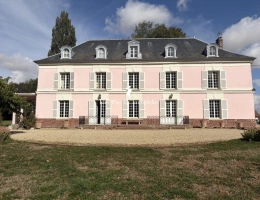
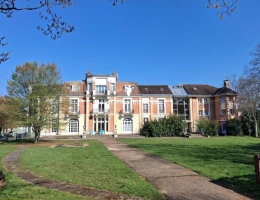
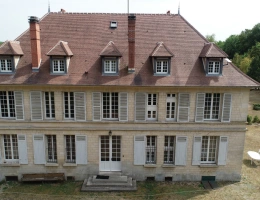
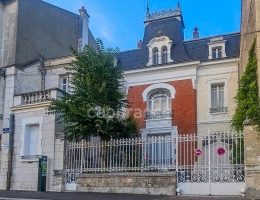
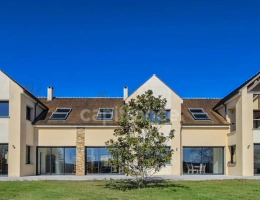
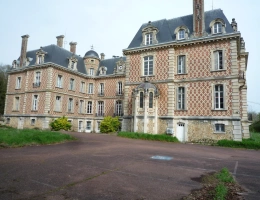
A historic monument for sale in Île-de-France can mean a royal chateau on the banks of the Seine, an abbey in the Chevreuse valley, a classified Parisian townhouse or a hunting lodge in the Fontainebleau forest. From the Seine-et-Marne to the Val-d'Oise, by way of the Yvelines and the Essonne, the region holds one of the densest ranges of protected heritage in France, the legacy of eight centuries of royal and aristocratic presence. Here you will find a classified building restored down to its outbuildings just as readily as a registered residence still fully awaiting renovation. Browse the historic monuments for sale listed by the region's private owners, agencies and notaries.
This page sets out the protected typologies found across Île-de-France, the areas where they cluster, the obligations and grants attached to a classified or registered building, and the checks to carry out before buying. To place this project within the wider approach to purchasing a character residence, read our guide to buying prestige property in France.
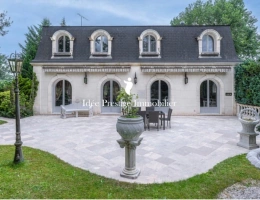
Dressed limestone, quarried locally since the Middle Ages, and steeply pitched slate dominate the region's protected buildings, with classical mansard-roofed façades inherited from the seventeenth and eighteenth centuries. The dominant typologies are the royal or seigneurial chateau set within its park, the abbey or priory of the Chevreuse and Yerres valleys, the forest hunting lodge and the town mansion, notably in royal towns such as Fontainebleau or Saint-Germain-en-Laye. Mills on the Essonne or the Marne complete this protected heritage.
Outbuildings, farm buildings, an orangery, a private chapel and a formal French garden, often count among the protected elements on the same footing as the main house. Many of these residences retain original panelling, fireplaces and parquet floors, while still standing as a residence to restore to a high standard, particularly the slate roofing and old roof timbers. Recent projects favour materials that meet heritage requirements and contractors trained in classical techniques.
The Seine-et-Marne, around Fontainebleau and the Grand Morin valley, and the Yvelines, between the Chevreuse valley and the Seine valley, hold the highest concentration of protected estates. The Essonne, from the Hurepoix to the Yerres valley, completes this outer-ring core. The Val-d'Oise, around the Oise and the Vexin français, adds chateaux and abbeys close to the Montmorency forest. The Hauts-de-Seine, the Seine-Saint-Denis and the Val-de-Marne, in the inner ring, retain a handful of protected buildings scattered through a heavily built-up fabric, but offer few rural properties; for an estate with a park and outbuildings, the outer-ring areas listed above remain better suited.
Marne-la-Vallée–Chessy, Massy TGV in the Essonne and CDG 2 airport in the Val-d'Oise all offer TGV access, while the Yvelines has no TGV station of its own, with Versailles-Chantiers seeing only a handful of services. The most sought-after areas remain the Chevreuse valley and the surroundings of Fontainebleau, while eastern Seine-et-Marne and the northern Val-d'Oise offer more affordable protected residences of comparable size.
Begin by confirming whether the property is classified or only registered: in the first case, the Architecte des Bâtiments de France and the regional heritage office must approve any intervention, including to its surroundings, whereas the second case leaves more freedom for maintenance work. The historic-monument tax regime, which allows certain costs to be deducted, applies under conditions, to be checked with a notary, along with any grants available from the Fondation du patrimoine or the Île-de-France regional heritage office.
Keep in mind that selling a protected property obliges the seller to inform the buyer of its status and, for a classified building, to notify the administration; get confirmation that this has already been done. On the technical side, have the roof timbers and slate covering checked, since they are often old, along with the condition of classified panelling and joinery and the drainage system in less built-up areas; entrust restoration quotations to a qualified contractor trained in classical Île-de-France heritage techniques.
Historic monument listings in Île-de-France come from private owners, agencies specialising in protected residences and notaries; filter them by protection status, outbuildings and works already carried out, and set an e-mail alert to follow new listings. To widen your search to the region's full range of high-end properties, browse prestige property for sale in Île-de-France.


