

A historic monument for sale in Seine-Saint-Denis is rarely found: the department, shaped by continuous industrial and then residential urbanisation for more than a century, has kept few large private properties with classified or registered status, apart from a handful of former factories, mansion houses and parks tied to the history of the Plaine Saint-Denis, Le Raincy or Livry-Gargan. The noble residences that still stood in the nineteenth century have mostly disappeared under housing estates and business parks. What does remain is often tied to a former industrial fortune rather than to landed nobility, a distinction that shapes the character of these buildings. Browse the historic monuments for sale listed by the department's private owners, agencies and notaries.
This page presents the few protected building types remaining in Seine-Saint-Denis, the areas where they stand, the obligations tied to classified or registered status and the checks to make, while pointing towards better-provided neighbouring departments where the choice of protected residences is considerably wider. To build a broader project, read our guide to buying prestige property in France.
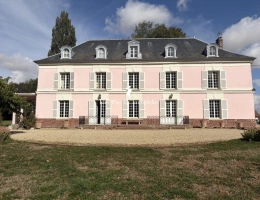
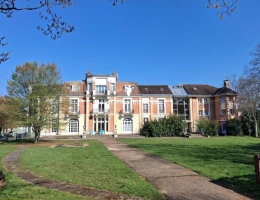
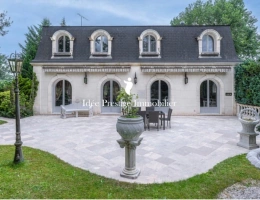
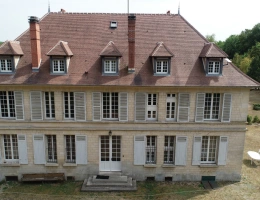
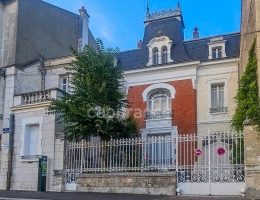
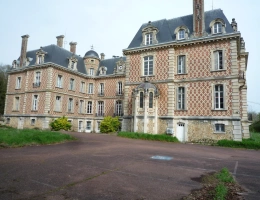
What remains is mostly the mansion house in millstone rubble or brick, built for the industrial or Parisian bourgeoisie in the late nineteenth century, sometimes accompanied by a private chapel or a gatehouse protected for its architectural interest. Around Le Raincy and Livry-Gargan, a few wooded parks still hold orangeries or ice-houses, the last traces of once larger properties, now mostly subdivided. Some facades retain glazed-brick or ceramic decoration, typical of Paris-basin bourgeois architecture from that period.
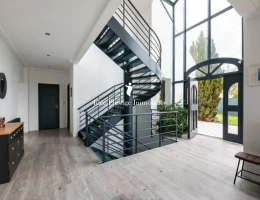
A residence to restore of this kind usually shows well-preserved nineteenth-century interior volumes, panelling and flooring included, but a plot much reduced compared with its original extent. The outbuildings, where they have not been demolished, are generally limited to a coach house or a lodge, whose condition depends heavily on the upkeep provided by successive owners. Renewing the slate roofs and the original ironwork is often the heaviest item of works on this type of property.
The municipalities most concerned remain Le Raincy, Livry-Gargan and the fringes of the Plaine Saint-Denis, where a few mansion houses and park remnants survive amid a largely residential and industrial fabric. Elsewhere, urban density and the redevelopment of large land holdings leave very little room for this type of property. The Bondy regional forest and the fringes of the Parc de la Poudrerie retain a few buildings linked to former estates now broken up.
No station in the department has TGV service; RER B, D and E lines and the Transilien network provide local links, with the nearest TGV station located within central Paris. Given the scarcity of supply, buyers often widen their search towards Seine-et-Marne, Yvelines, Essonne or Val-d'Oise, where protected large estates remain markedly more numerous and more accessible. This wider search often allows properties of comparable status to be compared across a broader radius around Paris.
First establish the exact status of the property: a classified building requires approval from the regional heritage office before any works, a registered building a simple prior notification. In areas close to a historic park or a protected building, the Architecte des Bâtiments de France may also review projects on unclassified neighbouring structures, once they lie within the surroundings perimeter. Also check the property's compatibility with the local development plan, regularly revised in this fast-changing department.
Under precise conditions, the historic-monument tax regime allows a deduction of part of the restoration costs, something only a professional can confirm before committing. When a classified building is sold, the buyer must be informed of its status and the administration notified; reserve roofing, facade and period masonry works for a qualified contractor, and have the services checked, as they are often dated in this type of building. Finally, request a full structural survey before negotiating, since disrepair can weigh heavily on the restoration budget.
The limited number of historic monument listings in Seine-Saint-Denis are placed by private owners, agencies specialising in character properties and notaries; filter them by protection type and municipality, and set an e-mail alert to follow new listings. To widen the search, browse the historic monuments for sale in Île-de-France.


