

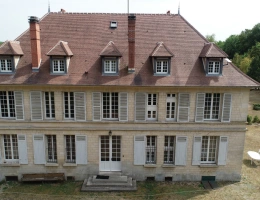
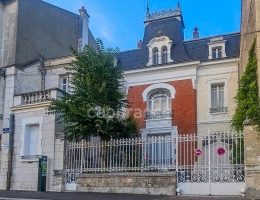
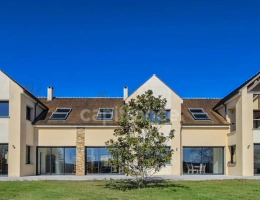
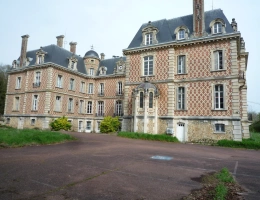
A historic monument for sale in Hauts-de-Seine remains a rare opportunity: the department, densely built up since the nineteenth century, has mostly retained townhouses and a handful of classified or registered park pavilions, often absorbed into the residential fabric of Neuilly-sur-Seine, Saint-Cloud or Sèvres. The large estates that once lined the Seine at Meudon, Suresnes and Rueil-Malmaison have mostly been subdivided or turned into public parks, leaving only a few original residences available to buy. Browse the historic monuments for sale listed by the department's private owners, agencies and notaries.
This page reviews the protected building types still found in Hauts-de-Seine, the areas concerned, the obligations tied to classified or registered status, and the checks to make. Given the limited supply in this highly urban area, it also points towards better-provided outer departments. To frame this project, read our guide to buying prestige property in France.
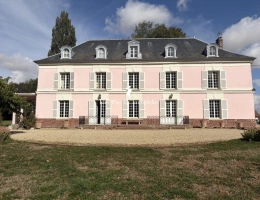
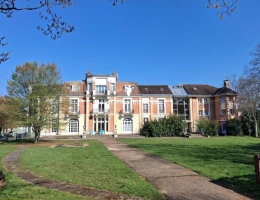
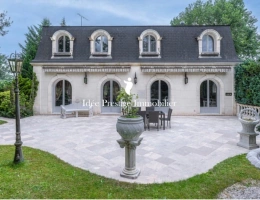
What remains is mostly the nineteenth-century townhouse, in millstone rubble or dressed stone, with a winter garden and street railings, rather than a chateau standing alone in its own land. A few gatehouses, orangeries or garden follies, remnants of former large estates now broken up, can still be found around Meudon, Sèvres and Saint-Cloud, protected for their architectural interest or their link to a nearby historic park. Cast-iron gates and millstone-rubble boundary walls, preserved through successive land subdivisions, still mark the limits of the former estates.
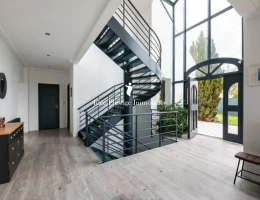
A residence to restore of this kind often combines nineteenth-century interior volumes, panelling and marble fireplaces, with a garden reduced to its simplest form, land pressure having eaten into the original grounds. The outbuildings, where they survive, are usually limited to a coach house or a former lodge, itself sometimes protected for its consistency with the main building. The close proximity of neighbouring buildings often calls for particular technical solutions when renewing roofs and facades.
The municipalities most likely to offer a protected building remain Neuilly-sur-Seine, Saint-Cloud, Meudon and Sèvres, where a handful of townhouses and pavilions linked to former estates still stand. Elsewhere, the density of contemporary building leaves little room for this type of property, and opportunities, when they arise, are negotiated quickly between private owners, specialist agencies and notaries. Municipalities bordering the Bois de Boulogne and the Parc de Saint-Cloud also retain a few pavilions linked to former Parisian country retreats.
The department has no station served by TGV; the RER and Transilien network, along with the TGV stations at Massy in Essonne or within central Paris, remain the nearest access points. Given how scarce the supply is in this territory, buyers most often widen their search towards Seine-et-Marne, Yvelines, Essonne or Val-d'Oise, where large estates and their protected outbuildings are markedly more numerous. A purchase project therefore gains from being considered across several Paris-region departments rather than within Hauts-de-Seine alone.
Check the exact level of protection first: a classified building requires approval from the regional heritage office for any work, a registered building a less demanding prior notification. In such a built-up setting, the Architecte des Bâtiments de France also reviews projects on unprotected neighbouring plots, once they lie within the surroundings perimeter of a classified or registered building. Also check the setback and overlooking rules applicable to adjoining buildings, often stricter around a protected monument.
The historic-monument tax regime can apply under strict conditions; have it checked before committing, bearing in mind that a reduced garden sometimes limits scope for extension. Selling a classified building requires the buyer to be informed of its status and the administration notified; entrust any work on facades and roofs to a qualified contractor, since shared-ownership or party-wall rules can further complicate the works. Finally, ask about the upkeep of underground services, sometimes shared with neighbouring properties in these former large estates now subdivided.
The few historic monument listings in Hauts-de-Seine come from private owners, agencies specialising in character properties and notaries; filter them by protection type and municipality, and set an e-mail alert to hear about new listings. To widen the search, browse the historic monuments for sale in Île-de-France.


