

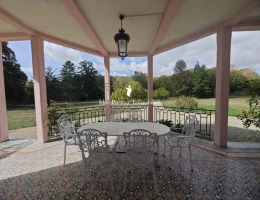
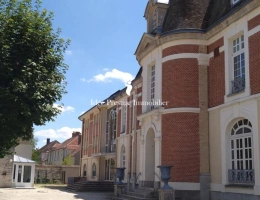
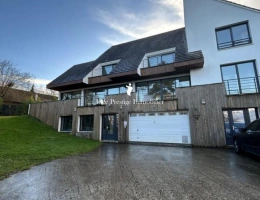
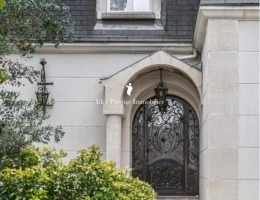
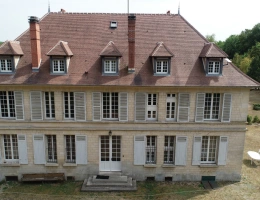
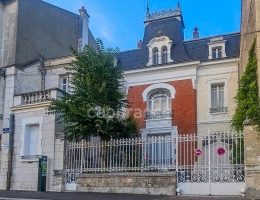
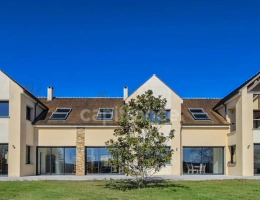
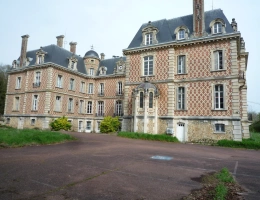
A manor house for sale in Val-de-Marne is an almost impossible find: this inner-suburban department, shaped by the Seine and the Marne but very largely built up, has kept only rare traces of old rural building with attached land, mainly around the Vincennes woods and a few still-preserved valleys such as the Bièvre. The older residences that survive, around Saint-Maur-des-Fossés or the Marne valley, are more like nineteenth-century villas than complete farming manors, built originally as country retreats for Parisian families rather than as working estates. You will still find the manor houses for sale listed by private owners, agencies and notaries across the department and its surrounding areas.
This page honestly sets out what the Val-de-Marne market genuinely offers in character residences, the few areas worth knowing and why a search for a manor with land usually moves to neighbouring Seine-et-Marne or Essonne, both within easy reach for a weekend viewing trip. To approach this kind of purchase as a whole, read our guide to buying prestige property in France.
DVF land registry data does not identify manor houses as such: the benchmarks below cover sales of houses over 300 m² of living space on 0.05 to 10 ha, above €1,000/m², tracked by our observatory. They frame the market for large residences without describing it entirely: an estate with 30 ha of parkland or a listed monument sold with its farmland falls outside this scope.
This inner-suburb department has no rural municipalities: the benchmarks below are those of the Île-de-France region. Across the Île-de-France region, the 2025 median stands at €1,445,000* (90 sales), against €822,000 in France in 2025 (981 sales).
| Scope | Sales | Median price | Floor – ceiling (P10–P90) | €/m² living space (median) |
|---|---|---|---|---|
| Île-de-France (2025) | 90 | €1,445,000* | €700,000 – €3,496,500 | 4,247 |
| France (2025) | 981 | €822,000 | €428,000 – €3,100,000 | 2,308 |
The breakdown by stratum (coastal, rural tourist, ordinary rural) and the five-year trend are in our observatory of prestige property prices in France (in French). Before making an offer, work out purchase costs and borrowing capacity with our financial tools and calculators.
Source: DVF (DGFiP), transactions from 1 January 2021 to 31 December 2025, processed by ma-propriete.fr; prices rounded to the nearest €100. * Fewer than 100 sales: read as an indication only.
Val-de-Marne has kept several large landscaped parks inherited from former seigneurial estates or pleasure residences, such as the grounds of the Grosbois château on the department's edge or the promenades laid out along the Marne, but these grounds now mostly belong to public authorities. Private rural building with attached farmland, of the kind found further out in the greater ring, has almost entirely disappeared here in favour of dense post-war housing estates and more recent large-scale developments built along the main transport corridors serving central Paris.
The few character properties still privately for sale sit along the Marne, in Saint-Maur-des-Fossés, Champigny or Chennevières, and take the form of bourgeois villas with a garden rather than manors with farm outbuildings. A residence with a barn and attached land, of the kind still found in Seine-et-Marne, is now an exception in this department, where available land is usually measured in a few hundred square metres rather than hectares, and where most gardens border a neighbouring plot on at least two sides.
The Marne valley, from Saint-Maur-des-Fossés to Chennevières and Champigny, holds the rare older houses with gardens still available, while the south of the department, around Villeneuve-Saint-Georges and the Seine valley, keeps a few more wooded plots. The rest of the territory, very densely built from Créteil to Vitry-sur-Seine, offers almost no property of this kind. A buyer seeking a genuine manor with land naturally turns to Seine-et-Marne to the east or Essonne to the south, some thirty minutes away by road, where real choice and genuinely rural surroundings return.
The department has no TGV station; links run on RER A, RER D and Transilien services into Paris, plus Orly airport. This very dense network for commuter travel brings, however, nothing particular to a search for a rural property with parkland and farm outbuildings.
Within Val-de-Marne itself, the rare wooded plots still in private hands often fall under a restrictive local development plan or a protected woodland designation that severely limits any new building; check this status before considering an extension or land-division project, which local officials increasingly discourage. Near a historic monument or the Vincennes woods, exterior works require the approval of the Architecte des Bâtiments de France.
If your search widens toward Seine-et-Marne or Essonne, have the private drainage system checked, common outside built-up areas, the condition of old roof timbers, and the municipal or private status of access tracks to isolated properties, points rarely encountered within the urban fabric of Val-de-Marne but essential once the search genuinely turns rural, along with any shared boundary maintenance obligations.
The few listings for older residences in Val-de-Marne are placed by private owners, agencies and notaries; filter them by price, living space and land, and set an e-mail alert to hear as soon as a matching property is published in the department or in the nearby areas worth watching closely. To widen the search toward a genuine manor with land and outbuildings, browse the manor houses for sale in Île-de-France.


