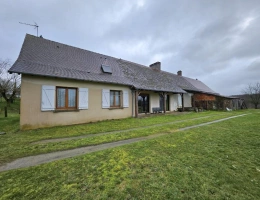
Searching for a poultry farm for sale in Nouvelle-Aquitaine means looking at the most varied region in France for this production. It raises label rouge chickens outdoors, guinea fowl and turkeys, fattening ducks in the south-western tradition, and laying-hen units supplying packing centres. The listings brought together here come from farmers handing over their business, specialist rural agencies and notaries, and describe the buildings, the outdoor ranges, the quality scheme and the downstream partner. They sit alongside the full range of poultry farms for sale in France.
Here you will find what the listings leave out: farmland prices across the region, the departments where supply is deepest, what to inspect inside a building, and the checks attached to the sector. To prepare a setting-up project, our white paper « Créer une exploitation agricole » (in French) covers the whole route, from the agricultural qualification to financing.
Land remains the largest item when buying a poultry farm. According to sales recorded by the French tax administration (DVF, vineyards excluded), the median price of agricultural land in Nouvelle-Aquitaine stood at €4,538/ha in 2025, with an average of €5,135/ha across 2,103 sales; 80% of transactions fall between €2,500 and €8,190/ha, against a national median of €5,307/ha.
The SAFER benchmark of land values (2025 figures) puts vacant land and pasture at €5,770/ha (+5.5% year on year, +7.1% over ten years), against a national average of €6,460/ha; land already let sells around 17% lower.
On this market, hectares are rarely what makes the difference. What counts first is the number and age of the huts or houses, their insulation and ventilation, the feeding and watering equipment, the silos and, for quality-scheme production, the size and grass quality of the ranges. Then come the specification being met, the remaining term of the current contract and, where the farm processes on site, the health approval and the goodwill attached to the customer base. Place the holding with our land price observatory, then cost your takeover with our financial calculators.
The region holds very different kinds of building: mobile huts and small fixed houses for free-range poultry, long standard broiler houses, duck rearing buildings and force-feeding rooms, and aviaries or floor units for eggs. Check the frame and roof covering, the insulation and ventilation, the heating, the silos and feed auger, then the biosecurity entry room, the washing area and lorry access. On duck units, whether the feeding equipment complies and when it was commissioned weigh heavily on the price being asked.
Many farms work to a label rouge specification, a protected geographical indication or organic certification, under a contract binding the farmer to a production organisation. Check the remaining term, the conditions for taking it over and how often batches are renewed. A unit with its own processing room and a local customer base is valued on a different basis: the goodwill, the health approval and the outlets count as much as the fabric. Where a holding comes with a house and land, ask for a detailed breakdown of the asking price.
The Landes are the heart of the sector, with farmhouse birds reared outdoors under the pines and a strong duck presence; Dordogne, Lot-et-Garonne and Pyrénées-Atlantiques extend that south-western basin, where fattening ducks and free-range chickens sit side by side. Deux-Sèvres and Vienne carry units grafted onto arable and livestock holdings, on more accessible land. Charente and Charente-Maritime offer scattered units between vines, cereals and marshland. In Gironde, poultry remains marginal next to winegrowing, and land is expensive.
Across the former Limousin, Corrèze, Creuse and Haute-Vienne offer the lowest entry prices in the region: poultry units attached to grassland systems, generally more modest buildings, affordable land and spreading area readily available. This is where new entrants find the best balance between purchase cost and room to develop, provided they accept being further from slaughtering and packing facilities.
As elsewhere, a unit falls under the classified installations regime according to flock size, with declaration, registration or authorisation, and notification of any change of operator to the prefecture. The most sensitive issue in this region remains avian influenza: south-western France has been through several major episodes, which led to tighter biosecurity, controls on stocking density and required changes to ranges and entry rooms. Ask for the site's health history, the work already carried out and the requirements still outstanding before you make an offer.
Next, check the spreading plan, manure storage capacity and whether the area is classified as a nitrate vulnerable zone. On land, the rural lease continues with the buyer subject to the landlord's agreement, and the transaction remains subject to the structures control, the French authorisation regime for taking over farmland, and to SAFER's pre-emption right. In the winegrowing departments, competition for land can weigh on any plan to expand: measure what is genuinely available around the buildings before committing.
It is private sellers, rural estate agencies and notaries who place the listings on this page. Filter by department, production or building area, set up an alert so you do not miss a sale, and continue your search among all farms for sale in Nouvelle-Aquitaine.